
Virtual View Windows
Window Installation Illinois
Window Installation Illinois: Midwest-Rated Performance from Chicago to Carbondale
Few states in the country push residential windows harder than Illinois. Chicago winters bring wind chills that plunge to negative 30 degrees, while central and southern Illinois summers deliver weeks of humid heat above 90 degrees with overnight lows that barely allow a home to recover. That extreme back-and-forth of cold and heat is what separates Illinois window installation from a generic home improvement task and turns it into a precision building science decision. Virtual View Windows is an Illinois-focused window installation company serving homeowners across Chicago, Naperville, Rockford, Aurora, Joliet, Springfield, Peoria, and communities statewide, bringing certified expertise, fully code-compliant products, and transparent pricing to every project.
If you have been searching for reliable window installation near me or looking for trusted window services near you that understands Illinois’s new 2024 IECC energy code requirements, Chicago’s permitting process, and the utility rebate programs available right now.
Choosing the Right Window Material for Illinois Climate
Not all window frames perform equally under Illinois conditions. Here is how the most common materials compare:

Free On-Site Estimate
A certified project advisor visits your home, measures every opening, evaluates frame and sill conditions, and provides a written, itemized quote with no pressure and no surprises.
Product Selection
We guide you through window styles, frame materials, glass packages, and color options suited to your home's architecture and your energy goals.

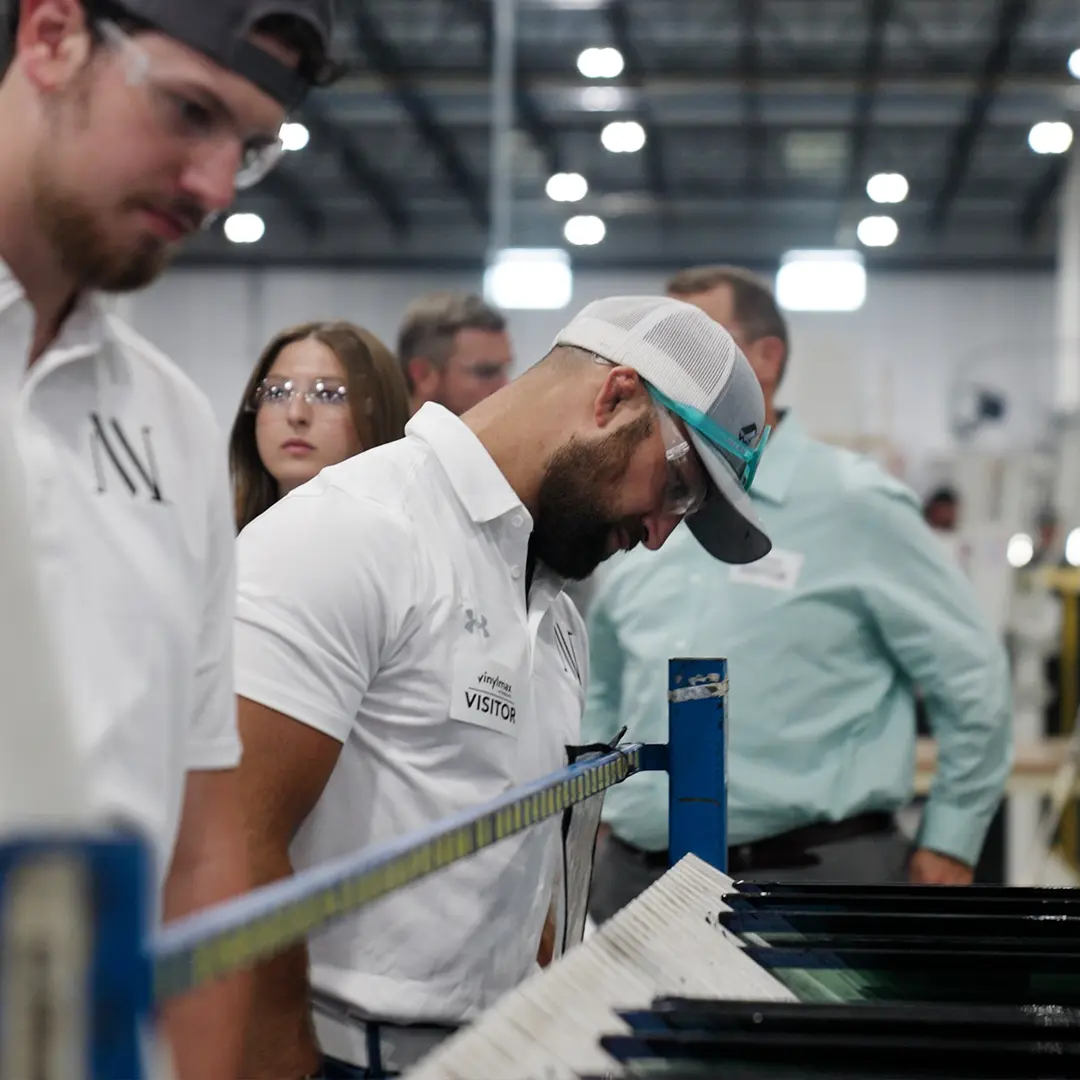
Custom Order and Delivery Confirmation
Your windows are ordered to your exact specifications. Before scheduling installation, we inspect every unit at delivery to verify accuracy and confirm there are no defects.
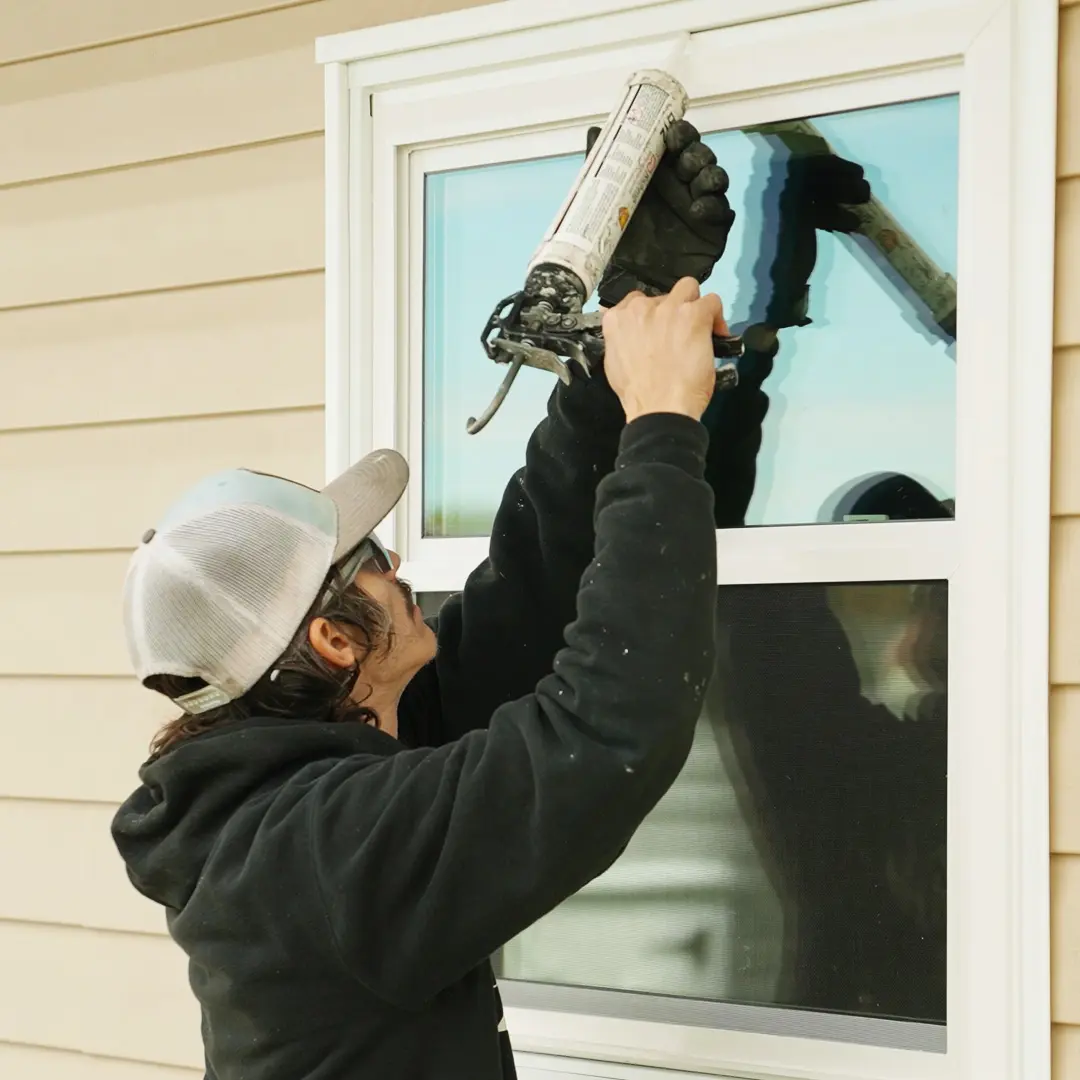
Professional Installation
Our licensed Illinois installation crews work cleanly and efficiently. All interior surfaces are protected, old windows are removed and disposed of responsibly, and new units are installed with commercial-grade flashing, foam insulation, and weathertight caulk.

Final Inspection and Walkthrough
We review every installed window with you before we leave, demonstrate proper operation, and provide documentation of your product warranties.
Illinois Winters and Summers: Why Your Windows Face Unique Stress
Illinois occupies two distinct ENERGY STAR climate zones that define what your replacement windows must be able to do. Climate Zone 5 covers the northern third of the state including Chicago, Rockford, and the entire Chicagoland metro, where heating degree days regularly exceed 6,000 per year. Climate Zone 4 covers central Illinois including Peoria, Bloomington, and Champaign-Urbana, where the heating load is slightly lower but summer cooling demand intensifies. Southern Illinois communities around Carbondale and Marion sit at the boundary with Zone 4 conditions.
The U.S. Department of Energy estimates that 25 to 30 percent of a residential home’s heating and cooling energy is lost through windows. In Illinois, that figure has a significant dollar value. For the average Chicagoland home spending over $2,000 per year on energy, that means $500 to $600 annually may be escaping through windows that have aged past their effective service life. Industry data from competing Illinois window contractors confirms that a full replacement of 8 medium-sized double-hung windows in an Illinois home typically costs between $4,800 and $8,000, a range that most homeowners recover within 8 to 12 years through energy savings alone before accounting for any available rebates or tax credits.
Illinois windows face a compounding stress cycle that accelerates wear faster than in single-season climates. During winter, cold temperatures cause frames and sealed insulated glass units to contract. During summer, intense UV exposure and humidity cause expansion. Frames that cannot accommodate this cycling without deforming or cracking their weatherseals will begin to allow air infiltration, which shows up as drafts in winter, humidity infiltration in summer, and condensation trapped between glass panes as a clear visual sign that the insulated unit seal has failed.
Illinois's 2024 IECC Window Requirements: What Changed on November 30, 2025
Illinois is required by statute to adopt the latest edition of the International Energy Conservation Code (IECC). Following the adoption of the 2021 IECC effective January 2024, the state moved further forward. The Illinois Capital Development Board (CDB) adopted the 2024 IECC with state-specific amendments, and that version became mandatory for all new residential construction and permitted window installations as of November 30, 2025.
Under the 2024 IECC as adopted in Illinois, fenestration requirements for replacement and new construction windows in Climate Zone 5 call for a maximum U-factor of 0.30 and a maximum Solar Heat Gain Coefficient (SHGC) of 0.40. For Climate Zone 4 covering central and southern Illinois, the U-factor requirement is 0.30 with an SHGC of 0.40. The 2024 IECC also introduced life-cycle cost analysis data, with a PNNL study confirming a positive net present value for these fenestration improvements across all Illinois climate zones, meaning that homeowners who install compliant windows will recover the cost premium above minimum-code products within the warranty period of modern window assemblies.
Beyond the statewide base code, the Illinois Climate and Equitable Jobs Act (CEJA) of 2021 directed the Capital Development Board to develop an Illinois stretch energy code, which individual municipalities can adopt in place of the base code. As of January 1, 2025, Public Act 103-0510 requires Illinois municipalities to report their adopted building codes to the CDB through the Illinois Municipal Code Directory. If your municipality has adopted the stretch code, the window performance requirements may be more stringent than the base IECC thresholds. Virtual View Windows verifies the code status of your specific municipality at the time of every estimate to ensure full compliance from day one.
In Chicago specifically, the Chicago Express Permit Program provides a streamlined permitting pathway for like-for-like window replacement in existing openings for buildings up to seven stories. Modifying opening sizes or changing window locations requires architectural plans and a standard permit application. Virtual View Windows handles all permit research and application coordination as part of our standard service in every Illinois municipality.
Window Services Near You: What Virtual View Windows Offers Across Illinois
From the dense residential neighborhoods of Chicago’s North Side to the newer subdivisions of the Collar Counties to central Illinois farmhouse properties and southern Illinois single-family homes, Virtual View Windows provides window services near you with the licensing, product depth, and code knowledge to handle any project type anywhere in the state.
For new homes, additions, and full gut-rehab projects, Virtual View Windows installs new construction window packages that satisfy the 2024 IECC as adopted in Illinois from the framing stage forward. New construction installations use a nailing-fin frame secured directly to the wall framing, creating the most weathertight installation method available. We work directly with general contractors and custom builders to coordinate delivery schedules and installation sequencing.
Replacement window installation is the most common project type in Illinois’s existing housing stock. Insert replacement, also called pocket installation, fits a new window unit into an existing structurally sound frame, preserving interior and exterior trim and minimizing disruption. Full-frame replacement is appropriate when existing frames show rot, water damage, lead paint issues, or dimensional distortion from years of Illinois temperature cycling. Virtual View Windows assesses every opening individually and recommends the correct approach based on actual frame conditions.
All windows we install are NFRC certified and meet or exceed the 2024 IECC requirements for both Illinois climate zones. Our standard specification for Zone 5 Chicago-area installations includes dual-pane low-E glass with argon gas fill in a multi-chamber vinyl or fiberglass frame, delivering U-factors well within the required 0.30 threshold. For homes in Zone 5 north of Chicago or for north-facing exposures with high heating loads, triple-pane options with krypton gas fill are available and deliver U-factors as low as 0.19.
Illinois building codes require egress windows in all sleeping rooms for emergency escape. Basement egress window installations require careful coordination with the existing foundation and may require excavation to create a proper egress well. Virtual View Windows handles all aspects of egress window installation including sizing verification, permit coordination, well excavation coordination, and installation to code. We also install tempered glass in hazardous locations as required under Illinois safety codes.
Virtual View Windows serves retail storefronts, office buildings, apartment complexes, condominium properties, and multi-unit residential buildings across Illinois. Our commercial team manages permitting, coordinates with building owners and property managers, and handles installations on buildings where tenant disruption must be minimized. Chicago’s specific commercial permitting requirements are handled by our team as part of every commercial project scope.
Illinois Window Installation Incentives and Rebates Available in 2025 and 2026
Illinois homeowners installing energy-efficient windows in 2025 and into 2026 have access to a strong set of financial programs at the federal, state, and utility level. Some programs require specific documentation and contractor compliance, which Virtual View Windows prepares as a standard component of every project.
- Federal Energy Efficient Home Improvement Credit (25C): Through December 31, 2025, Illinois homeowners can claim 30 percent of the cost of qualifying ENERGY STAR windows as a federal tax credit, up to $600 for windows and skylights per tax year. This nonrefundable credit applies to the primary residence and requires NFRC-certified products meeting ENERGY STAR Northern climate zone criteria for Zone 5 installations.
- Illinois Home Energy Performance-Based Rebates (HER / Section 50121): The Illinois EPA Office of Energy administers the HER program, funded by the Inflation Reduction Act’s Section 50121. This whole-home rebate program rewards homeowners who achieve measured energy reductions of 20 percent or more. Window installation as part of a broader air-sealing and weatherization project can contribute to the qualifying energy savings threshold. Households at or below 80 percent of Area Median Income can receive up to $8,000. Households between 80 and 150 percent AMI can receive up to $4,000.
- ComEd and Nicor Gas Home Energy Savings Program: ComEd, Nicor Gas, Peoples Gas, and North Shore Gas jointly offer free home energy assessments through the Home Energy Savings (HES) program, available to both market-rate and income-eligible households. The assessment identifies window air leakage and insulation opportunities. Income-eligible homeowners flagged through the assessment may qualify for a referral to retrofit services through local Community Action Agencies. As of 2026, ICC-approved utility plans expanded energy efficiency program budgets for all four major Illinois utilities.
- Illinois Home Weatherization Assistance Program (IHWAP): Income-eligible Illinois homeowners may receive free home weatherization services through IHWAP, administered by the Illinois Department of Commerce and Economic Opportunity. Qualifying improvements include window air sealing and insulation work that complements window installation projects. Applications are submitted through local Community Action Agencies.
- ComEd Smart Assistance Manager (SAM) Tool: ComEd customers can use the SAM online tool to identify which utility and state financial assistance programs they qualify for based on income, household size, and energy usage. The tool consolidates multiple program eligibility checks in one place and has become a key resource for Illinois homeowners navigating the full incentive landscape.
Virtual View Windows prepares NFRC documentation, contractor invoices formatted for program submission, and written project summaries for every client as part of our standard project closeout. We make sure no eligible savings are left unclaimed.
Choosing the Right Window Frame Material for Illinois's Extreme Seasons
Illinois’s dual climate challenge, with Zone 5 winters that rank among the coldest in the continental United States and humid summers that rival parts of the Gulf South, eliminates several frame materials that perform adequately in milder conditions. Here is how the most relevant options compare for Illinois homeowners.
Multi-Chamber Vinyl
High-quality multi-chamber vinyl is the most widely installed window frame material in Illinois and the most field-proven option for the state’s conditions. The key performance requirement for Illinois is cold-temperature dimensional stability: vinyl frames must maintain their weatherseal compression at temperatures well below zero without becoming brittle or developing cracks that allow air infiltration. Premium vinyl formulations with UV-stabilized compounds, fusion-welded corners, and three or more insulating chambers have a track record in Chicagoland of delivering consistently within their rated performance specifications across 20-plus year service cycles. Lower-grade single-chamber vinyl or vinyl with mechanical corner joints has performed poorly in Illinois winters and should be avoided regardless of price point.
Fiberglass Frames
Fiberglass is the highest-performing frame material for Illinois’s temperature extremes. It expands and contracts at nearly the same rate as glass, which protects insulated glass unit seals from stress during Illinois’s wide daily temperature swings. In a University of Illinois at Urbana-Champaign building science context, fiberglass frames consistently outperform vinyl in thermal cycling endurance testing, maintaining dimensional accuracy and seal integrity at both temperature extremes. For homeowners in northern Illinois or Chicago neighborhoods with high-wind exposure from Lake Michigan, fiberglass frames with their superior rigidity also deliver noticeably better performance in reducing air infiltration under wind-driven pressure loads.
Composite and Wood-Clad Frames
Wood-clad composite frames are common in Illinois’s older housing stock and in high-value residential neighborhoods where architectural character and interior wood aesthetics are priorities. Composite frames that use aluminum or fiberglass exterior cladding over a wood structural core perform well in Illinois when the cladding joints and sill pan assembly are properly sealed against moisture intrusion during freeze-thaw cycles. Illinois’s spring and fall transition seasons, with frequent precipitation and wide temperature swings, are the periods that expose any moisture vulnerability in poorly detailed wood-clad installations. Virtual View Windows uses fully encapsulated exterior assemblies rated for cold and wet exposure on all wood-clad installations.
Aluminum Frames
Standard aluminum frames conduct heat readily and are not recommended for conditioned living spaces in Illinois’s Zone 5 climate without a thermal break. Thermally broken aluminum is a viable specification for contemporary commercial applications and for architectural projects where slim sight lines are required. Residential applications in Zone 5 should default to vinyl or fiberglass unless architectural requirements specifically call for aluminum, and even then thermally broken systems with effective sill pan drainage and vapor management are essential for performance in Chicago-area conditions.
How to Verify a Window Installation Contractor Near Me in Illinois
Illinois has a large and fragmented residential construction market, and the quality gap between qualified, insured, code-compliant window installers and operators who cut corners on permitting, product specification, and weathersealing is substantial. A poorly installed window forfeits every performance advantage of the product itself and creates liability exposure for the homeowner when unpermitted work is discovered during a future sale.
Before committing to any window installation near me contractor in Illinois, verify the following:
- Illinois Residential General Contractor Registration: Illinois requires residential contractors to hold a valid registration under the Residential General Contractor (RGC) license administered by the Illinois Department of Financial and Professional Regulation (IDFPR). Verify registration status at idfpr.illinois.gov before signing any contract.
- Chicago-Specific License: For projects within the City of Chicago, contractors must hold a current City of Chicago General Contractor license. This is in addition to the state RGC registration. Request the contractor’s Chicago license number for any Chicagoland project.
- General Liability and Workers Compensation Insurance: Request current certificates of insurance before any work begins. Both general liability and workers compensation coverage must be active and held by the contracting entity performing the work, not a subcontractor.
- Permit Coordination: Confirm that the contractor handles permit research and application for your municipality. Any installer who advises skipping a permit for a project that legally requires one is exposing you to code violation liability and potential issues at future property sale.
- NFRC Product Certifications: Request product specification sheets showing U-factor and SHGC values for every window proposed. Confirm values meet the 2024 IECC requirements for your Illinois climate zone and any additional municipality-specific stretch code requirements.
- Written Itemized Contract: Illinois law requires home improvement contracts to be in writing and include a detailed description of work, materials with specifications, price, payment schedule, and warranty terms. This is non-negotiable regardless of project size.
Virtual View Windows maintains active Illinois RGC registration, Chicago General Contractor licensing, full insurance coverage, 2024 IECC compliant NFRC-certified products, and handles all permit coordination in every municipality we serve. All credentials are provided to clients before any contract is signed.
Frequently Asked Questions About Window Installation in Illinois
How much does window installation cost in Illinois in 2025?
Window installation in Illinois typically costs between $400 and $1,200 per window fully installed, depending on window size, style, frame material, glass package, and local labor rates. A full replacement of 8 medium-sized double-hung windows in a typical Illinois home falls between $4,800 and $8,000. Chicagoland projects may carry slightly higher labor costs than downstate markets. Virtual View Windows provides free, itemized, no-obligation on-site estimates that specify every window by product, NFRC rating, and price before you commit.
What energy code applies to window installation in Illinois in 2025?
Illinois adopted the 2024 IECC with state-specific amendments, which became mandatory for residential window installations on November 30, 2025. Climate Zone 5 (Chicago and northern Illinois) and Zone 4 (central Illinois) both require a maximum window U-factor of 0.30 and SHGC of 0.40. Individual municipalities that have adopted the Illinois stretch code may have stricter requirements. Virtual View Windows verifies your municipality’s current code status at the time of every estimate.
Do I need a permit for window installation in Chicago?
Yes, in most cases. Chicago offers the Express Permit Program for like-for-like window replacement in existing openings for buildings up to seven stories, which streamlines the permitting process. Projects involving changes to opening size or location require a full permit with architectural plans. Virtual View Windows handles all Chicago and Illinois permit research and application as a standard part of every project. Unpermitted window work creates code violation exposure and complications at future property sales.
What rebates are available for window installation in Illinois right now?
Illinois homeowners can access the federal 25C Energy Efficient Home Improvement Credit of up to $600 for qualifying ENERGY STAR windows through December 31, 2025. The Illinois EPA administers the Home Energy Performance-Based Rebates (HER) program, offering up to $8,000 for income-eligible households achieving 20 percent whole-home energy savings. ComEd, Nicor Gas, Peoples Gas, and North Shore Gas jointly offer free home energy assessments. The Illinois IHWAP program provides free weatherization for income-qualified homeowners. Virtual View Windows identifies all applicable programs at the time of your free estimate.
How do I find reliable window installation services near me in Illinois?
Verify Illinois RGC registration at idfpr.illinois.gov and, for Chicago projects, confirm an active Chicago General Contractor license. Request current certificates of general liability and workers compensation insurance. Ask for NFRC product data sheets confirming 2024 IECC compliance for your climate zone. Request a written itemized proposal before signing anything. Virtual View Windows provides window services near you across Illinois with full state and city licensing, complete insurance coverage, code-compliant certified products, and transparent pricing. Contact us to schedule your free in-home estimate.
Take the First Step Toward a More Comfortable, Code-Compliant Illinois Home

Illinois homes face a window performance gauntlet that most states never have to deal with. The same frames that must hold an airtight seal against a Chicago wind-chill of negative 25 degrees in January must also resist warping and UV degradation during a July heat index of 105 in the suburbs. Getting that balance right demands products specified correctly for Illinois climate zones and installation craftsmanship that prioritizes long-term performance over speed.
Virtual View Windows brings all of that to every project. Our crews are trained specifically for Illinois conditions, our product line meets the 2024 IECC requirements now in force statewide, and our project team handles everything from permit applications to rebate documentation so you can focus on enjoying the results. With the federal 25C tax credit available through the end of 2025 and the ComEd and Nicor utility programs delivering free energy assessments that can unlock additional program eligibility, there has rarely been a stronger case for Illinois homeowners to act now.
Whether your home is in a Chicago bungalow neighborhood, a Naperville subdivision, a Rockford two-flat, or a central Illinois ranch house, Virtual View Windows is ready to assess every opening, specify the right products for your climate zone and home style, and deliver an installation that is built to last through decades of Illinois seasons. Reach out today for your free estimate and discover what window installation near me looks like when it is done right for Illinois.
Get Your Free Estimate | Call or Request Online | Serving All of Illinois
Other Service Areas
Arizona
- Phoenix AZ
California
Sacramento CA
Colorado
- Colorado Springs CO
- Denver CO
- Grand Junction CO
- Atlanta GA
Idaho
- Boise ID
- Pocatello ID
Illinois
- Chicago IL
Indiana
- Indianapolis IN
Kentucky
- Lexington KY
- Louisville KY
Maine
- Portland ME
Maryland
- Baltimore MD
Montana
- Billings Montana
Massachusetts
- Boston MA
Michigan
- Detroit MI
Minnesota
- Minneapolis MN
Missouri
- Kansas City MI
- Springfield MI
- St Louis MI
New Hampshire
Manchester NH
North Carolina
- Charlotte NC
- Greensboro NC
- Raleigh NC
Ohio
- Cleveland OH
- Akron OH
- Dayton OH
- Columbus OH
- Cincinnati OH
Oklahoma
- Oklahoma City OK
Oregon
- Portland OR
Pennsylvania
- Philadelphia PA
- Pittsburgh PA
Texas
- Arlington TX
- Austin TX
- Houston TX
Tennessee
- Nashville TN
- Knoxville TN
Utah
- Salt Lake City UT
- St George UT
Washington D.C
- Seattle WA
- Spokane WA
Wisconsin
- Madison WI
- Milwaukee WI