
Window Types
Awning Windows
Awning Windows: Benefits, Features, Energy Efficiency & Buying Guide
Awning windows are a smart, stylish solution for homeowners looking to improve ventilation, energy efficiency, and weather protection without sacrificing design. Known for their top-hinged, outward-opening operation, awning windows allow fresh air to flow in even during light rain, making them one of the most practical window styles available today.
In this comprehensive guide, you’ll learn what awning windows are, how they work, their benefits, energy-efficiency performance, ideal placements, costs, and how to choose the right awning windows for your home.
What Are Awning Windows?
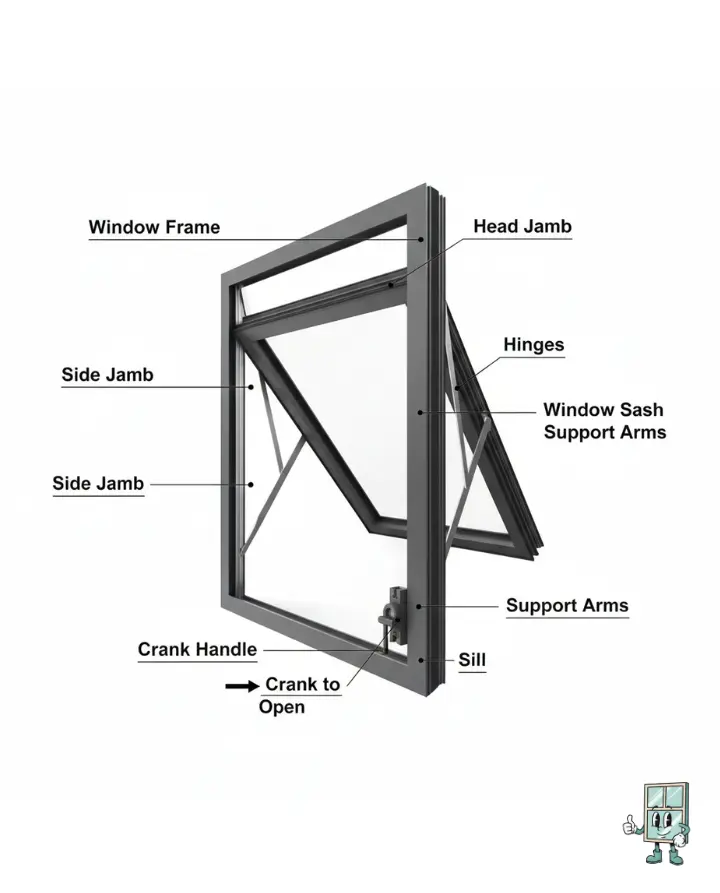
Awning windows are top-hinged operable windows that open outward from the bottom using a crank or lever mechanism. When open, the glass sash forms an awning-like shape, which helps shield the interior from rain while still allowing airflow.
Because of their design, awning windows are often installed higher on walls, above countertops or fixtures, or paired with fixed or picture windows to enhance ventilation and natural light without compromising privacy.
How Awning Windows Work
Awning windows operate on a hinge-and-operator system:
- The window is hinged at the top
- A crank, handle, or lever pushes the bottom outward
- Multi-point locking systems seal the sash tightly when closed
This design creates a strong compression seal, making awning windows one of the most energy-efficient operable window styles available. Their angled opening also directs air into the home rather than allowing it to escape upward.
Key Benefits of Awning Windows
Excellent Ventilation Even in the Rain
Unlike many window styles, awning windows can remain open during light rain. The outward-tilting sash helps block water while still pulling fresh air inside, making them ideal for unpredictable weather conditions.
Superior Energy Efficiency
Awning windows are known for their tight seals and low air leakage rates. When closed, the sash presses firmly against the frame, reducing drafts and heat transfer.
When paired with:
- Double- or triple-pane glass
- Low-E coatings
- Argon or krypton gas fills
awning windows can help reduce heating and cooling costs by 7%–15%, depending on climate and home efficiency.
Improved Weather Protection
Thanks to their top-hinged design, awning windows provide excellent resistance to:
- Wind-driven rain
- Dust and debris
- Temperature fluctuations
This makes them especially effective in coastal, rainy, or windy regions.
Enhanced Security & Privacy
Awning windows are harder to force open because:
- The sash opens outward
- Locking mechanisms are embedded in the frame
- Many models feature multi-point locks
Their higher placement also makes them a popular choice for rooms where privacy is important.
Versatile, Modern Aesthetic
Awning windows complement both modern and traditional home designs. They are often used in combination with picture windows or stacked vertically for a clean, architectural look that maximizes light and airflow.
Ideal for Hard-to-Reach Areas
Awning windows work exceptionally well in locations such as:
- Above kitchen sinks
- Bathrooms
- Basements
- Laundry rooms
Their crank-style operation allows easy opening and closing, even in tight spaces.
Awning Windows vs. Other Window Types
Awning vs. Casement Windows
- Both open outward
- Awning windows hinge at the top, casement windows at the side
- Awning windows perform better in rain
Awning vs. Sliding Windows
- Awning windows seal tighter and are more energy efficient
- Sliding windows offer larger openings but higher air leakage
Awning vs. Double-Hung Windows
- Awning windows provide better weather sealing
- Double-hung windows offer more traditional styling and easier exterior cleaning
Each style has its place, but awning windows excel in energy performance, weather resistance, and ventilation control.
Awning Window Materials & Customization Options
Awning windows are available in a variety of materials to match your home’s performance and aesthetic needs:
Vinyl Awning Windows
- Low maintenance
- Excellent insulation
- Cost-effective
Wood Awning Windows
- Classic, warm appearance
- Custom paint or stain options
- Requires regular maintenance
Aluminum-Clad Wood
- Natural wood interior
- Weather-resistant exterior
- Premium look and durability
Customization options include:
- Frame colors and finishes
- Decorative grilles
- Obscure or privacy glass
Fiberglass Awning Windows
- Extremely durable
- Resistant to warping and temperature changes
- Excellent long-term performance
Energy Efficiency & Performance Ratings
When evaluating awning windows, pay attention to key performance metrics:
- U-Factor: Measures heat loss (lower is better)
- Solar Heat Gain Coefficient (SHGC): Controls solar heat entry
- Visible Transmittance (VT): Indicates natural light levels
ENERGY STAR® certified awning windows are tested to meet strict efficiency standards for your specific climate zone, ensuring year-round comfort and reduced energy use.
Best Places to Install Awning Windows
Awning windows are especially effective in:
- Bathrooms: Ventilation + privacy
- Kitchens: Above sinks or countertops
- Basements: Fresh air without sacrificing security
- Living areas: Paired with fixed windows for airflow
Their flexibility makes them a favorite for both remodels and new construction.
Awning Window Installation
Proper installation is critical to ensure:
- Maximum energy efficiency
- Smooth operation
- Long-term durability
- Weather resistance
Professional installation ensures the window is correctly sealed, leveled, and secured preventing air leaks, water intrusion, and premature wear.
Awning Window Cost Guide (2025–2026)
The cost of awning windows depends on size, materials, glass options, and installation requirements.
Average installed cost ranges:
- Vinyl awning windows: $400 – $900
- Fiberglass or wood models: $800 – $1,500+
- Custom or oversized units: $1,500 – $2,500+
Upgrades such as triple-pane glass, specialty finishes, and structural modifications may increase pricing.
Maintenance & Longevity
Awning windows are easy to maintain with basic care:
- Clean glass and frames regularly
- Lubricate hinges and operators annually
- Inspect seals and weatherstripping
With proper installation and maintenance, quality awning windows can last 20–30 years or more.
Pros & Cons of Awning Windows
Pros
- Excellent energy efficiency
- Ventilation during rain
- Strong weather sealing
- Ideal for privacy areas
Cons
- Can obstruct walkways when open
- Smaller opening compared to sliding windows
- Not typically used as egress windows
Frequently Asked Questions About Awning Windows
Are awning windows energy efficient?
Yes. Awning windows are among the most energy-efficient operable window styles due to their tight compression seal.
Are awning windows hard to maintain?
Absolutely. They’re commonly placed above counters, sinks, and fixtures.
Can awning windows be installed high on the wall?
No. Routine cleaning and occasional hardware lubrication are usually sufficient.
Do awning windows provide good security?
Yes. Their outward-opening design and multi-point locks enhance security.
Why Awning Windows Are a Smart Investment
Awning windows offer an ideal combination of ventilation, energy efficiency, durability, and modern design. Whether you’re upgrading a bathroom, improving airflow in your home, or pairing them with fixed windows for a custom look, awning windows deliver long-term value and comfort.
Ready to Upgrade to Awning Windows?
Schedule a Awning Windows consultation to explore awning window styles, materials, and energy-efficient options tailored to your home. With expert guidance and proper installation, awning windows can dramatically enhance comfort, efficiency, and curb appeal.