
Double Hung vs. Casement Windows: The Window Type That Actually Matches Your Home
A few years ago, I stood in the middle of a gutted living room paint swatches taped to the walls, flooring samples spread across the subfloor and realized I had completely forgotten about the windows. They were original to the house, drafty, and painted shut in two of the rooms. When the contractor asked which style I wanted as replacements, I answered with the confidence of someone who absolutely did not know what they were talking about: ‘Just regular ones, I suppose.’
If you have found yourself in a similar position, this article is for you. Choosing between double hung and casement windows is one of the most consequential decisions in a home renovation project and yet it is often treated as an afterthought. The right choice can reduce your energy bills, enhance curb appeal, improve ventilation, and complement your home’s architectural character. The wrong choice can result in years of minor frustration every time you try to open a window.
This guide walks through every meaningful difference between the two styles, grounded in current industry data and practical experience, so that by the end you will know exactly which window belongs in your home.
Understanding the Basics: What Separates These Two Window Styles
Before comparing performance, it is worth establishing what each window actually is because the operational difference between them drives every other distinction on this list.
Double Hung Windows
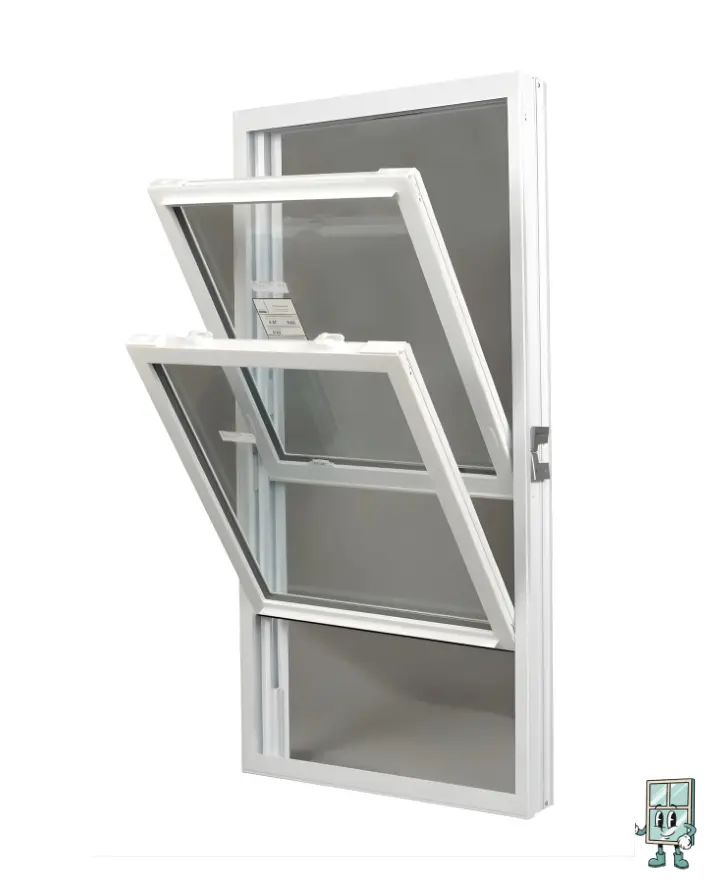
A double hung window contains two sashes one upper and one lower that slide vertically within the frame. Both sashes are independently operable, meaning you can open the top, the bottom, or both simultaneously. This dual-sash design gives homeowners precise control over ventilation: opening the top sash allows warm air to escape while the lower sash admits cooler air from outside, a principle of passive cooling that has made double hung windows the standard in American homes for centuries.
📊 Data Point: Double hung windows account for approximately 60% of the residential window market in the United States, reflecting their enduring popularity across nearly every home style. [Source: ZMR Window and Door, 2024 verify for most current figures]
Casement Windows

A casement window is hinged on one side and opens outward, like a door, via a crank mechanism located at the base of the frame. When fully open, the entire glass panel is unobstructed, which creates both maximum ventilation and an uninterrupted sightline to the outdoors. The crank mechanism, while more mechanically complex than a sliding sash, makes casement windows especially practical in hard-to-reach locations above kitchen sinks, over bathtubs, or anywhere a traditional push-up window would require an uncomfortable reach.
📊 Market Trend: The casement window market is projected to grow at a compound annual rate of 4.8% through 2031, driven by increased demand for energy-efficient home upgrades and modern architectural design. [Source: ZMR Window and Door, 2024]
Energy Efficiency: Where the Numbers Favor Casement
Energy efficiency is frequently the primary driver in window replacement decisions and with good reason. According to the U.S. Department of Energy, heat gain and heat loss through windows are responsible for 25 to 30 percent of a home’s residential heating and cooling energy use. That is a significant source of ongoing cost that better windows can measurably reduce.
On this dimension, casement windows hold a clear advantage. Because the sash presses firmly against the frame on all four sides when closed and locked, casement windows form an airtight seal that effectively eliminates air infiltration. Double hung windows, by contrast, rely on sliding tracks and those tracks must be loose enough to permit movement, which inherently creates small gaps where air can escape or enter.
💡 Expert Insight: The seal quality of your windows directly influences the workload placed on your HVAC system. A poorly sealed window forces your heating and cooling equipment to run longer and more frequently to compensate for air leakage, which shortens equipment lifespan and raises monthly utility costs. Homeowners who upgrade to tightly sealed windows particularly casement models often report noticeable reductions in HVAC cycling, especially during peak summer and winter months. If you are also working on other areas of your home’s envelope, such as insulating the garage or upgrading entry points, pairing window improvements with services like garage door repair Houston TX can provide a more comprehensive improvement to your home’s overall energy performance, reducing drafts and improving climate control throughout the entire structure.
That said, double hung windows are not without solutions. Weatherstripping applied to the sash tracks can meaningfully improve their seal, and modern double hung models from reputable manufacturers have greatly reduced the air leakage issues that characterized older designs. ENERGY STAR-rated windows of either style can save homeowners between $126 and $465 annually on energy bills, depending on regional climate and installation quality.
📊 Stat to Include: ENERGY STAR-certified windows save homeowners $126–$465 annually on energy bills. [Source: U.S. Department of Energy cite directly in the article for E-E-A-T credibility]
For homeowners in climates with extreme winters or summers, the tighter seal of a casement window may represent a worthwhile premium investment. For those in temperate climates, a high-quality double hung with proper weatherstripping will perform admirably.
Ventilation and Airflow: A Matter of How You Live
Ventilation is one area where the two window styles approach the problem from fundamentally different angles and the best choice depends on your specific priorities and home layout.
Casement windows, when fully open, expose the entire glass area to incoming air. Because the open sash acts as a directional sail, it can capture and funnel cross breezes into a room with impressive efficiency. This makes casement windows an excellent choice for kitchens, bathrooms, and any space where you want thorough air exchange.
Double hung windows offer a different kind of ventilation advantage: control. By opening the upper sash to release rising warm air while simultaneously cracking the lower sash to admit cooler outdoor air, you can engineer a natural convection current within a room. This makes double hung windows particularly well-suited to bedrooms, where you may want to moderate airflow without fully committing to an open window.
There is also a practical consideration that rarely appears in specification sheets. In homes with window boxes, narrow walkways, patios, or dense landscaping directly outside, casement windows that swing outward can become an obstacle. Before selecting casement windows for any given room, it is worth measuring the clearance available on the exterior side.
Cost and Long-Term Value: What to Expect at Every Price Point
Window replacement is a significant financial investment, and understanding the cost structure of each style helps set realistic expectations before you speak with a contractor.
Double hung windows are the more affordable option across the board. Installation costs typically range from $400 to $900 per window, depending on size, frame material, and glass options. Their broad availability and simpler mechanical design keep prices competitive, particularly in markets with multiple window dealers.
Casement windows carry a modest premium typically 10 to 15 percent higher than comparable double hung models due to the added cost of crank mechanisms, multi-point locking hardware, and airtight sealing systems. Installed costs generally run from $430 to $1,060 per window.
📊 ROI Data: According to the 2024 Cost vs. Value Report, vinyl window replacement recouped approximately 67–69% of project costs at resale. Homeowners replacing windows across a full home can add $8,000–$15,000 to their property’s market value. [Source: Remodeling Magazine Cost vs. Value Report 2024]
The long-term financial calculus tends to favor casement windows for energy savings particularly in homes that have not been updated in 15 or more years while double hung windows present a lower barrier to entry and remain an excellent value for most replacement scenarios.
It is also worth noting that double hung windows are generally less expensive to repair over time. Sash replacement components are widely available and standardized across manufacturers, while casement crank mechanisms can require more specialized parts if servicing is eventually needed.
Architectural Fit: Matching the Window to the Home
This is the consideration that often gets dismissed in favor of specifications, and it is, in many ways, the most important one. A technically superior window that clashes with your home character is still the wrong window.
When Double Hung Windows Are the Right Choice
Double hung windows carry centuries of architectural precedent. They are the defining window type for Colonial, Cape Cod, Craftsman, Georgian, Federal, and Traditional Victorian homes. If your home was built before 1970, there is an excellent chance it was designed around the proportions and visual rhythm of double hung windows and replacing them with casement windows would be architecturally inconsistent in a way that may reduce property value in historically sensitive neighborhoods.
The horizontal check rail that divides the upper and lower sashes is not merely functional; it contributes to the visual cadence of a traditionally styled facade. When paired with divided-light grille patterns, double hung windows reinforce the character of heritage homes in a way no other window style replicates.
When Casement Windows Are the Right Choice
Casement windows align naturally with modern, contemporary, mid-century modern, and minimalist architectural styles. Their uninterrupted glass panels and clean sightlines suit homes that prioritize open views, abundant natural light, and streamlined aesthetics. If you are renovating a home built in the 1950s through 1980s with horizontal emphasis and large window openings, casement windows will likely feel architecturally native to that space.
There is also a practical argument for casement windows in specific rooms regardless of overall home style. Over a kitchen sink, above a deep countertop, or in a bathroom with limited wall clearance, the crank-operated casement window is simply easier to use than a double hung that requires you to push up and inward while leaning over fixtures.
💡 Anecdote: When I finally replaced the windows in that gutted living room, I chose double hung on the street-facing facade to preserve the home’s 1940s Colonial character and casement windows on the rear of the house, where the kitchen looks out over the garden. Both choices felt correct the moment they were installed.
Cleaning, Maintenance, and Long-Term Durability
Neither window style requires extraordinary maintenance, but the practical differences are worth understanding before you commit.
Most modern double hung windows feature tilt-in sashes a mechanism that allows both the upper and lower sashes to pivot inward so that the exterior glass surface can be cleaned from inside the home. This is a meaningful quality-of-life advantage for upper-story windows where exterior access would otherwise require a ladder.
Casement windows address the cleaning challenge differently. Some models offer an Easy Wash hinge design that creates a gap between the open sash and the frame wide enough to reach through and clean the exterior glass from inside. On lower floors, the outward-swinging sash allows direct exterior access. On upper floors without this hinge feature, exterior cleaning requires the same ladder access as any other window.
On the durability front, double hung windows benefit from their simpler mechanical profile fewer moving parts means fewer potential failure points. Casement crank mechanisms are robust in quality models, but they do require periodic lubrication and may eventually need replacement after a decade or more of regular use. Exposure to the elements when open also subjects casement hardware to more weathering than the enclosed tracks of a double hung.
Security and Safety Considerations
Both window styles offer solid security when properly installed, but there are meaningful distinctions. Casement windows, when closed and locked, engage a multi-point locking system in which the sash presses firmly into the frame on all sides. This configuration is more difficult to force from the exterior than a standard double hung sash lock, and it eliminates the gap that sliding-track windows can present.
Double hung windows have the advantage of partial opening you can raise the lower sash just a few inches, secured with a window stop, to allow airflow while preventing an opening large enough for a child or intruder to pass through. This makes double hung windows a practical choice for homes with young children, where casement windows that open fully in one motion may present a greater safety consideration.
Quick Decision Guide: Which Window Fits Your Situation?
If your home has traditional or historic architecture → Double Hung
If your home has modern, contemporary, or mid-century design → Casement
If energy efficiency is your top priority → Casement
If budget is a primary constraint → Double Hung
If the window is above a sink or countertop → Casement
If young children are present in the home → Double Hung (with window stops)
If you are in a high-wind or storm-prone region → Double Hung
If maximum ventilation in a single room is the goal → Casement
If exterior clearance is limited (walkways, patios) → Double Hung
The Bottom Line
There is no universally correct answer in the double hung versus casement debate only the answer that is correct for your home, your climate, your budget, and your daily habits. Both window styles are well-engineered, energy-efficient when properly selected, and capable of serving a home for 20 years or more with basic maintenance.
What matters is that you choose deliberately rather than by default. Consider the architectural language of your home’s exterior before making a decision that will define its appearance for decades. Walk through each room and think about how the window will be used who will operate it, from what position, and how often. Factor in your climate and whether the premium energy performance of a casement window justifies its higher upfront cost in your specific context.
The best window is the one you thought about carefully before you bought it. Fortunately, you are already doing that.
Frequently Asked Questions
Are casement windows more expensive than double hung windows?
Yes. Casement windows typically cost 10 to 15 percent more than comparable double hung models, primarily due to the crank mechanism and multi-point locking hardware. Both styles range from roughly $400 to $1,060 per window installed.
Which window type is more energy efficient?
Casement windows are generally more energy efficient because they press tightly against the frame on all four sides when closed, creating a more airtight seal than the sliding tracks of a double hung window.
Do double hung windows work well for older or historic homes?
Yes double hung windows are the historically appropriate choice for Colonial, Cape Cod, Georgian, and Craftsman-style homes, and are often preferred in renovation projects where architectural character is a priority.
Can casement windows be used above kitchen sinks?
Casement windows are actually the preferred choice above sinks and countertops because the crank mechanism can be operated with one hand without leaning over fixtures, unlike a double hung that requires pushing the sash upward.
How much value do replacement windows add to a home?
According to the 2024 Cost vs. Value Report by Remodeling Magazine, vinyl window replacement recoups approximately 67 to 69 percent of its cost at resale, with total added home value typically ranging from $8,000 to $15,000 depending on the scale of the project.
Which window style is better for homes with young children?
Double hung windows offer a safety advantage in homes with young children they can be opened partially and secured with a window stop, creating a ventilation gap too narrow for a child to pass through.