

Double vs. Triple-Pane Windows: The Honest Answer Every Homeowner Needs
Why This Decision Is More Complicated Than Most Window Companies Admit
When homeowners begin researching replacement windows, one question comes up more than almost any other: should I go with double or triple pane? Walk into most showrooms and you will get a slanted answer based on which product carries the higher margin. Read most competing blogs and you get a generic comparison with no real decision framework. That is exactly what this guide is designed to fix.
At Virtual View Windows, we give every homeowner an honest assessment. For some homes in some climates, triple pane is the smarter investment by a significant margin. For others, a high-quality double pane window with proper coatings and professional installation delivers 90 percent of the performance at a meaningfully lower cost. Neither product wins universally. The right answer depends on your climate, your current windows, your budget, and what you are trying to solve.
This guide walks through the real differences, the real numbers, and the real questions you need to answer before you commit. Whether you are just beginning to search for a Window Company near me or you already have quotes in hand, the information below will help you decode what those quotes actually mean.
What the Data Actually Shows
| Data Point | Source / Finding |
| Energy lost through windows in the average home | 25% to 30% of total heating and cooling costs (U.S. Department of Energy) |
| Annual savings upgrading to energy efficient windows | 12% to 33% reduction in heating and cooling costs (U.S. DOE) |
| Triple pane thermal performance advantage over double pane | 20% to 30% better insulation, U-factors as low as 0.15 to 0.20 (2026 industry data) |
| Heat escape rate: double pane vs. triple pane | Double pane allows up to 10% heat escape; triple pane reduces that to 3% (This Old House, 2026) |
| Triple pane window R-value vs. double pane | Triple pane: up to R-5. Double pane: R-3 to R-3.7 |
| Average cost: triple pane vs. double pane per window | Triple pane averages $1,000 per window installed. Double pane typically costs 25% to 40% less per unit. |
| Payback period for triple pane (cold climates, zones 6 to 8) | 8 to 14 years in high-energy-rate cold regions (MyHomeQuoter, 2025) |
| Home resale value recovery from window upgrades | Homeowners typically recover 70% to 80% of window project cost at resale (Remodeling Magazine Cost vs. Value) |
| Noise reduction from triple pane glass | 30% to 40% reduction in outside noise vs. double pane (Natural Resources Canada) |
| Triple pane premium above double pane project cost | 15% to 30% more upfront; incremental savings of 2% to 3% annually over double pane |
What Is Actually Inside a Double Pane and a Triple Pane Window?
Before comparing performance, it helps to understand exactly what you are buying with each option. Both double and triple pane windows are built as insulated glass units, or IGUs, where the glass panes are sealed together with a spacer system and a gas fill between each chamber.
Double Pane Construction

A double pane window contains two panes of glass separated by a single sealed chamber. That chamber is typically filled with argon gas, which is denser than air and transfers heat less efficiently. The interior-facing surface of one or both panes is usually treated with a Low-E (low-emissivity) coating, a microscopically thin metallic layer that reflects infrared radiation to reduce heat transfer. This combination of argon gas and Low-E glass has made double pane windows the dominant option in residential construction for the past two decades. A well-made double pane window typically achieves a U-factor in the range of 0.25 to 0.35, and an R-value between 3 and 3.7.
Triple Pane Construction
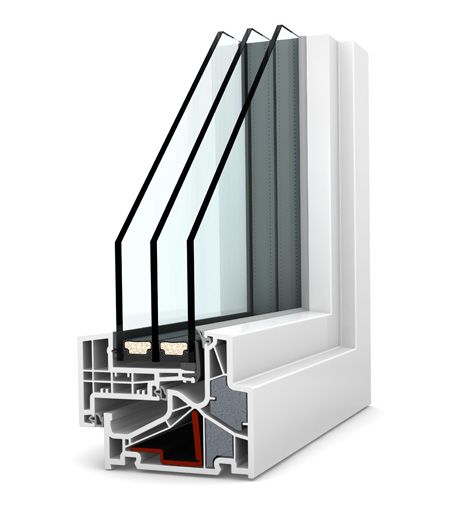
A triple pane window adds a third pane of glass, creating two sealed chambers instead of one. This architecture allows for two separate gas fills (usually argon in both, or krypton in the inner chamber for higher performance in thinner profiles) and the ability to apply Low-E coatings on multiple surfaces. The result is a measurably more insulating unit. Triple pane windows typically achieve U-factors between 0.15 and 0.22, and R-values up to 5. The third pane also adds mass to the unit, which plays a meaningful role in blocking sound transmission. The tradeoff is weight: triple pane windows are significantly heavier, which requires sturdier hardware, a sound rough opening, and careful installation to prevent premature seal failure.
The Performance Comparison Homeowners Actually Need
Thermal Insulation
This is where the gap between double and triple pane is most measurable and most honest. Triple pane windows allow only 3% of home heat to escape through the glass, compared to up to 10% for double pane units, according to This Old House research published in 2026. That represents a 20% to 30% improvement in thermal performance. However, the incremental annual energy savings of triple pane over a properly specified double pane unit averages 2% to 3% on your total heating and cooling bill. In a home spending $2,000 per year on HVAC, that is an additional $40 to $60 per year in savings above what a good double pane unit would already deliver. Over a 10-year period, that is $400 to $600 in additional savings from the upgrade premium.
The thermal advantage of triple pane is most pronounced in homes with rooms that feel chronically cold near windows during winter, particularly in northern climate zones where sustained below-freezing temperatures drive large temperature differentials across the glass. In these situations, the comfort difference is tangible and immediate, even if the energy bill math requires years to fully justify the premium.
Noise Reduction
Triple pane windows outperform double pane on sound attenuation, but the gap is often smaller than marketing materials suggest unless the units are specifically engineered for acoustic performance. The additional mass of the third pane and the asymmetric glass thicknesses that some manufacturers use in triple pane units disrupt sound wave transmission more effectively than a standard double pane setup. Homes near highways, airports, rail lines, or busy urban streets are the clearest candidates for triple pane on acoustic grounds alone. Research from Natural Resources Canada indicates triple pane configurations can reduce outside noise by 30% to 40% compared to double pane alternatives. For homes in quieter suburban or rural settings, the noise difference between the two is unlikely to change daily quality of life in a meaningful way.
Condensation Control
One of the less-discussed advantages of triple pane windows is their effect on indoor condensation. Because the interior glass surface stays closer to room temperature in cold weather, the window is far less likely to develop condensation during winter months. This is not merely a comfort issue. Persistent window condensation contributes to mold growth, wood rot in frames, and deteriorating interior paint around the window opening. For homes in climates where outdoor temperatures regularly drop below 15 to 20 degrees Fahrenheit, triple pane windows provide a meaningful benefit in reducing this risk.
Solar Heat Gain
Here is an area where triple pane does not automatically win. In cold northern climates, a higher Solar Heat Gain Coefficient (SHGC) is actually desirable, because it allows passive solar warmth to enter the home and offset heating loads. Triple pane units often have lower SHGC values due to the additional glass layers, which can work against you in a cold-climate home with southern exposure. Careful specification matters. In hot southern climates, the low SHGC of a well-coated double pane unit can perform just as effectively as triple pane, and often at significantly lower cost.
Cost Breakdown and What You Should Expect to Pay in 2026
Cost is the most common sticking point in this decision, and it helps to have real numbers rather than vague percentage ranges. Here is what homeowners are actually paying for both options in 2026.
| Cost Factor | Double Pane | Triple Pane |
| Average cost per window (installed) | $300 to $700 | $600 to $1,200 |
| Whole-house project (10 to 15 windows) | $4,500 to $10,500 | $7,500 to $18,000 |
| Premium above double pane | Baseline | 25% to 40% more per window |
| Typical additional upfront cost for triple pane | N/A | $150 to $300 per window on average |
| Payback from incremental triple pane savings (cold climate) | N/A | 8 to 14 years (zones 6 to 8, high energy rates) |
| Payback from incremental triple pane savings (moderate climate) | N/A | 15 to 20+ years (zones 3 to 5) |
Replacing all windows at once typically reduces per-window installation costs by 10% to 20% compared to replacing windows individually, according to 2025 project cost research. This means timing your full-home project rather than replacing windows one at a time delivers real savings regardless of which glazing type you select.
It is also worth noting that window replacement consistently delivers strong resale returns. According to Remodeling Magazine’s Cost vs. Value Report, homeowners typically recover 70% to 80% of their window project cost in increased home value. In cold climate markets where buyers actively look for energy performance, triple pane windows can recover close to their full incremental premium at resale.
Which Window Is Right for Your Climate Zone?
Climate is the single most important variable in this decision. The performance advantage of triple pane compounds in colder environments and diminishes significantly in mild or warm climates. Here is the honest breakdown by region.
Northern Climates: Zones 6 to 8 (Midwest, Northeast, Mountain West, Pacific Northwest Interior)
This is the strongest case for triple pane windows. Under the updated ENERGY STAR Version 7.0 standards effective in 2026, northern climate zones now require a U-Factor of 0.22 or lower to qualify for ENERGY STAR certification. Achieving that threshold with standard double pane construction is extremely difficult for most manufacturers, which means triple pane has effectively become the standard for certified performance in these regions. The payback period for the premium is 8 to 14 years in areas with high energy rates and long heating seasons, and the comfort improvement during those winters is immediate. For cold climate homeowners with rooms that feel drafty or chronically cold near the glass, triple pane delivers a qualitatively different indoor experience, not just a different number on an energy bill.
Mixed and Transitional Climates: Zones 4 to 5 (Mid-Atlantic, Upper South, Mountain Foothills)
In transitional zones, the math is closer. High-quality double pane windows with Low-E coating, argon fill, and a well-insulated frame can satisfy both ENERGY STAR certification requirements and the practical comfort needs of most homeowners in these regions. Triple pane is a reasonable upgrade for homeowners building to high-performance standards, planning to stay in the home for 20 or more years, or dealing with specific noise or comfort challenges. The payback period extends to 15 to 20 years in these zones from energy savings alone, so the decision should weigh comfort and noise factors more heavily alongside the financial calculation.
Southern and Hot Climates: Zones 1 to 3 (Gulf Coast, Southwest, Deep South, Southern California)
For most southern homeowners, a well-specified double pane window with a low Solar Heat Gain Coefficient of 0.23 or lower and appropriate Low-E coating is the most cost-effective choice. The primary energy challenge in hot climates is blocking solar heat gain, not preventing conductive heat loss through the glass, and the SHGC specification of the Low-E coating matters far more in these zones than the number of glass panes. Triple pane windows in southern climates often carry a payback period that extends well beyond 20 years on energy savings alone, and can actually reduce passive solar warmth in winter months due to their lower SHGC values. The exception is homes near major noise sources or homeowners building to passive house or ultra-high-efficiency standards.
The Upgrade Decision Framework
CONTENT INSTRUCTION: Format this as a visual decision tree or flowchart widget on the live page. Interactive decision tools dramatically increase engagement metrics and time on page.
Rather than giving a single answer that does not apply to every home, use this framework to work through the decision for your specific situation.
Choose triple pane windows if most of these conditions apply to your home:
- You are located in ENERGY STAR climate zones 5 through 8
- You currently have single pane or pre-2000 double pane windows and plan to stay in the home for 10 or more years
- Your home has rooms with chronic cold spots, drafts near the glass, or persistent condensation in winter
- You live within 300 feet of a highway, rail line, airport, or other major noise source
- You are building or renovating to a high-efficiency or passive house standard
- Your annual heating and cooling cost exceeds $2,500 per year
Choose double pane windows with Low-E coating if most of these conditions apply:
- You are located in ENERGY STAR climate zones 1 through 4
- You are replacing moderately inefficient double pane windows from the 1990s or early 2000s rather than single pane glass
- Your primary goal is energy savings, not maximum thermal comfort near the glass
- Your project budget is constrained and installing fewer windows to afford triple pane is not an appealing tradeoff
- You are in a hot climate where solar heat gain management outweighs conductive insulation needs
Why Frame Material Can Matter as Much as the Glass
A common mistake homeowners make is evaluating glazing type in isolation from the frame. You can invest in a premium triple pane glass unit and still underperform a well-made double pane window if the frame is poorly insulated or dimensionally unstable. Here is how the most common frame materials compare.
| Frame Type | Thermal Performance | Durability | Best For |
| Fiberglass | Highest (U-factors to 0.15) | 30 to 40 year lifespan | Cold climates, high-performance builds |
| Vinyl (multi-chamber) | Very good | 20 to 30 year lifespan | Most climates, best value-to-performance ratio |
| Wood (clad exterior) | Good when properly maintained | Variable, maintenance-dependent | Historic homes, aesthetics-focused projects |
| Aluminum (standard) | Poor without thermal break | Very durable structurally | Mild climates only, not recommended for cold zones |
The principle to internalize: a fiberglass or high-quality multi-chamber vinyl frame paired with a double pane Low-E unit will outperform a budget vinyl frame carrying triple pane glass. Always evaluate the complete window system, not just the glazing specification.
Installation Is Not Optional. It Is the Variable That Determines Everything.
The window industry has a problem that most companies do not talk about openly. You can buy the most technically advanced triple pane, krypton-filled, warm-edge-spaced glass unit available in 2026 and end up with a drafty, inefficient, failure-prone installation if the work is done poorly. The U.S. Department of Energy states explicitly that even the most energy-efficient window must be properly installed to ensure actual energy performance and comfort. Poor installation voids warranties, compromises air sealing, invites water infiltration, and eliminates most of the performance you paid for.
At Virtual View Windows, our certified installers follow manufacturer-specific installation protocols for every unit, use proper low-expansion foam insulation and vapor-permeable flashing tape, and document each installation with a written record that protects your warranty from day one. This is the standard that every homeowner searching for Window Services Near You should insist on.
Before signing with any window contractor, ask these questions directly:
- Are you licensed and insured in this state, and can you provide documentation before work begins?
- Do you follow the manufacturer’s published installation instructions, and does your warranty depend on that compliance?
- How do you handle air sealing around the frame perimeter, and what flashing system do you use?
- What is your process if a seal fails or a unit develops a defect within the first year?
- Can you provide references from recent installations of the same window type I am considering?
Common Myths About Double and Triple Pane Windows
Myth: Triple pane windows are always worth the extra cost
In hot and mild climates where the incremental energy savings from triple pane over quality double pane runs 2% to 3% per year, payback from energy savings alone can exceed 20 years. For these homeowners, a high-specification double pane window with proper coatings and a quality frame is the correct choice.
Myth: Double pane windows are outdated in 2026
Not true. Double pane windows with Low-E coatings, argon fill, and quality frames remain the most appropriate and cost-effective choice for millions of U.S. homes, particularly in warmer and transitional climate zones. The updated ENERGY STAR Version 7.0 standards tighten requirements for northern climates, but in most of the country a high-quality double pane unit still meets and exceeds certification thresholds.
Myth: More panes always means better sound blocking
Noise reduction depends on the total mass of the glass, the asymmetry of pane thicknesses, and the gas fill density, not simply the number of layers. A double pane unit with laminated glass or asymmetric pane thickness can outperform a standard triple pane unit for acoustic performance. If noise reduction is your primary goal, specify acoustic performance requirements explicitly when requesting quotes.
Myth: You can skip professional installation and save money
DIY window installation almost universally results in air sealing failures, flashing problems, and voided warranties. The labor cost of professional installation is also the cost of protecting your product warranty, your home’s moisture barrier, and the actual energy performance you bought. This is not a corner to cut.
Frequently Asked Questions
What is the actual difference in energy savings between double and triple pane windows?
Triple pane windows typically save 2% to 3% more annually on heating and cooling costs compared to a high-quality double pane unit with Low-E coating and argon fill. That figure sounds modest, but in a cold climate home spending $3,000 per year on HVAC, it represents $60 to $90 in additional annual savings above what the double pane window already delivers. The larger energy gain comes from replacing single pane or early double pane windows entirely, where total savings of 12% to 33% are achievable with either glazing type. The choice between double and triple pane is primarily about maximizing that gain, not creating it from scratch.
Are triple pane windows worth it in cold climates in 2026?
For homeowners in ENERGY STAR climate zones 5 through 8, triple pane windows are increasingly the recommended choice in 2026. The updated ENERGY STAR Version 7.0 standard now requires a U-Factor of 0.22 or lower for northern zone certification, a threshold that most double pane constructions cannot reach. Beyond certification, the comfort improvement from a warmer interior glass surface, reduced condensation, and lower air infiltration is tangible during cold winters. In areas with high energy rates and long heating seasons, the payback period from incremental savings runs 8 to 14 years, and the home value benefit adds to that return. Contact Virtual View Windows for a free consultation and climate-specific recommendation for Window Services Near You.
How much more do triple pane windows cost compared to double pane?
Triple pane windows cost on average 25% to 40% more per window than comparable double pane units. In 2026, a triple pane window installed averages $600 to $1,200 per window depending on size, frame type, and style, while a comparable double pane unit typically ranges from $300 to $700 installed. For a whole-home project replacing 10 to 15 windows, the premium for triple pane typically adds $1,500 to $4,500 to the total project cost. Replacing all windows at once can reduce per-window labor costs by 10% to 20% regardless of which type you choose.
Do triple pane windows reduce noise significantly better than double pane?
Triple pane windows generally reduce outside noise by 30% to 40% more than double pane alternatives, according to research from Natural Resources Canada. The third pane adds mass and creates an additional sound-damping chamber that disrupts transmission of sound waves at a broader frequency range. However, the acoustic gap between standard double and triple pane is smaller than many homeowners expect. For maximum noise reduction, ask specifically for acoustic-specification windows with laminated glass or asymmetric pane thickness rather than simply specifying triple pane. A window company near me specializing in Window Services Near You can help identify the right specification for your noise environment.
Which is better for a home in a hot climate, double pane or triple pane?
For most homes in hot climates including ENERGY STAR zones 1 through 3 covering the Gulf Coast, Southwest, Deep South, and Southern California, high-quality double pane windows with a low Solar Heat Gain Coefficient of 0.23 or lower are the most effective and cost-efficient choice. The primary energy challenge in hot climates is blocking solar heat gain, not preventing conductive heat loss, and this challenge is best addressed by Low-E coating specification rather than by adding a third pane. Triple pane windows in hot climates carry payback periods exceeding 20 years from energy savings alone and can inadvertently reduce beneficial passive solar warming during cooler months. Virtual View Windows can assess your specific home and climate to recommend the right glazing specification. Search for a reliable Window Company near me and ask for a climate-matched quote.
The Honest Answer Is That It Depends on Your Home
If there is one thing this guide should leave you with, it is this: the best window for your home is the one that matches your climate, your current situation, your budget, and your goals, installed by a team that knows what they are doing. Triple pane windows are the right choice for cold climate homeowners who want maximum comfort, plan to stay in the home long term, and are ready to invest in performance that pays dividends over decades. Double pane windows with proper glazing and frame specifications remain the right choice for millions of homeowners in warmer and transitional climates where the financial and performance case for triple pane simply does not hold up.
What we have found working with homeowners throughout the region is that most people asking this question are not really asking about panes. They are asking whether their investment will actually make their home more comfortable, lower their bills, and hold its value. The answer to all three of those questions is yes, for both options, when the product is right for your climate and the installation is done correctly.
Virtual View Windows provides Window Services Near You with certified window specialists who give honest, climate-specific recommendations. We are not here to upsell you on triple pane if your home does not need it, and we are not going to steer you toward a cheaper product when the performance case for triple pane is clear.
If you found this guide useful, share it with a neighbor or family member who is weighing the same decision. Drop a comment below with your biggest question about this comparison and we will answer it directly. And when you are ready to see what the right window looks like for your specific home, contact Virtual View Windows for a free in-home estimate. Our team is ready to walk through your home room by room and give you the recommendation you can actually trust. Start your search with a trusted Window Company near me and get the straight answer your home deserves.