

Vinyl, Wood, or Fiberglass Windows: Stop Guessing, Here’s the Data
Window frame material is the decision that outlasts every other choice you make during a window replacement project. The glass package you select matters. The installation quality matters. But the frame material you commit to will still be in place 20, 30, or 40 years from now, affecting your energy bills, your maintenance schedule, and the curb appeal of your home every single day until it is replaced again.
Here is the problem with most window frame comparison guides: they present opinions as facts and skip the numbers. The contractor who only sells vinyl will tell you vinyl is best. The company that pushes fiberglass will cite its strength advantages. And somewhere in the middle, the homeowner is left with conflicting claims and no data to evaluate them.
This guide from Virtual View Windows does something different. We compare vinyl, wood, and fiberglass windows using actual data from verified homeowner surveys, material science measurements, real cost ranges, and long-term performance figures. By the end, you will not just know which material is ‘better.’ You will know which material is right for your specific situation.
The Data First: What Homeowners Actually Choose and Why
Before diving into the material-by-material breakdown, here is what the research says about how homeowners actually make this decision in 2025 and what outcomes they report afterward.
Verified 2025 Data: Window Frame Material Market
- 32 percent of homeowners who purchased replacement windows in 2025 chose vinyl. 23 percent chose fiberglass. Wood accounts for a smaller but significant share among homeowners prioritising aesthetics and historic accuracy. (Source: This Old House 2025 survey of 1,000 homeowners)
- The average cost per window in 2025: vinyl averages $558, fiberglass averages $651, wood averages $800 to $1,200 or higher depending on species and cladding. (Source: This Old House 2025 homeowner survey)
- Fiberglass is 8 times stronger than vinyl by structural tensile strength. This is not a marketing claim; it is the material science difference between glass-fiber-reinforced composite and PVC polymer. (Source: Multiple manufacturers including Virtual View Windows product data)
- Fiberglass windows have an average U-factor of 0.20, compared to vinyl at 0.30 for standard configurations. Lower U-factor means less heat escapes. A 0.10 difference translates to measurable annual energy savings. (Source: This Old House fiberglass vs vinyl technical comparison, 2025)
- Energy efficiency was the top purchase driver for more than 40 percent of window buyers in the 2025 This Old House homeowner survey, ranking above cost, aesthetics, and warranty.
- Both vinyl and fiberglass windows typically recoup 60 to 70 percent of the project cost at resale. Wood windows in historic or high-value homes can recoup more when maintained correctly. (Source: Energy Swing Windows, citing homeowner ROI data, 2025)
- A properly installed ENERGY STAR certified window of any frame material can reduce annual heating and cooling costs by 10 to 15 percent. (Source: ENERGY STAR / U.S. EPA)
Vinyl Windows – The Market Leader: Affordable, Reliable, and Misunderstood
Vinyl windows, manufactured from polyvinyl chloride (PVC) with UV stabilisers added to resist sun degradation, hold the largest share of the U.S. residential replacement window market. The dominant market position is not primarily a marketing success story: it reflects a genuinely strong value proposition for the widest range of homeowners.
What Vinyl Does Well
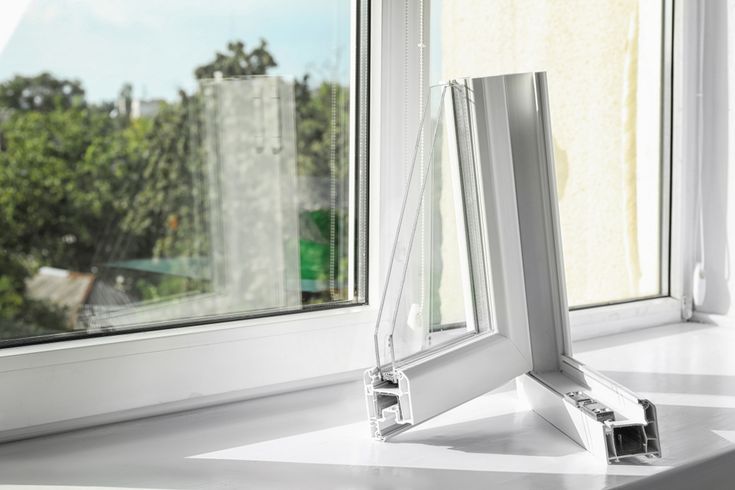
Vinyl frames contain no wood fibers, so they cannot rot, swell with moisture, or attract insects. They require no painting, staining, or annual sealing. A vinyl window cleaned once or twice a year with mild soap and water will look the same in year fifteen as it did in year one, provided it was manufactured with quality UV stabilisers.
Multi-chamber vinyl frames create pockets of trapped air within the frame profile that function as insulating barriers. Combined with Low-E glass and argon gas fill in the glass unit, modern vinyl windows can achieve U-factors of 0.27 or lower and meet ENERGY STAR Version 7.0 certification requirements for all U.S. climate zones.
Vinyl also accommodates custom shapes more readily than fiberglass or wood due to its flexibility as a material, which means it is commonly used for arched, curved, and specialty geometric window designs that rigid materials cannot replicate.
Where Vinyl Has Limitations
Vinyl expands and contracts with temperature changes more than fiberglass. In extreme temperature swing climates (think Minnesota winters followed by Minnesota summers), this thermal cycling gradually stresses the seal between frame and glass over time. Modern premium vinyl formulations handle this better than basic vinyl, but it remains a measurable disadvantage compared to fiberglass in extreme climates.
Standard vinyl comes in five to ten colour options and cannot be painted after manufacture. If you want an exact colour match or want to change the frame colour in fifteen years, vinyl does not allow it. Some premium vinyl lines offer woodgrain texture finishes, but these are visual only: the texture does not replicate the feel or workability of actual wood.
The average expected lifespan of vinyl windows in most climates is 20 to 30 years. In climates with intense UV exposure and large daily temperature swings, the lower end of that range is more typical.
Vinyl Windows: At a Glance
- Average cost per window: $558 (This Old House 2025 survey)
- Average U-factor: 0.30 (standard); as low as 0.20 with premium foam-fill packages
- Expected lifespan: 20 to 30 years in most climates
- Maintenance: Wash twice yearly; no painting, sealing, or staining required
- Colour options: 5 to 10 standard colours; cannot be repainted after manufacture
- Best for: Budget-conscious homeowners, rental properties, full-home replacements, custom shapes
- ENERGY STAR eligible: Yes, when specified with appropriate glass package
Wood and Clad-Wood Windows The Timeless Choice: Unmatched Aesthetics With a Trade-Off You Need to Know
Wood windows have been the standard in residential construction for most of American architectural history, and they remain the material of choice for homeowners who want the warmth, depth, and customisability that no synthetic material fully replicates. However, recommending wood without addressing its maintenance requirements is doing a disservice to any homeowner who will actually own these windows for the next twenty years.
What Wood Does Well
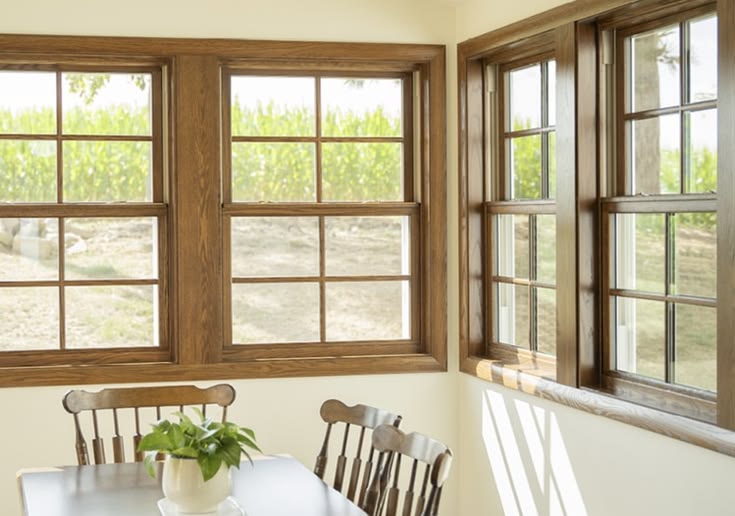
Wood provides natural thermal insulation through the grain structure of the material itself. A well-maintained wood window with quality glazing delivers energy performance competitive with vinyl in most climate zones. Wood can be painted or stained any colour imaginable, customised to historic profiles, and worked on-site to fit non-standard openings with a precision that factory-extruded vinyl or fiberglass profiles cannot match.
For homes in historic districts, HOA-controlled neighbourhoods with architectural requirements, or simply homes where the architectural character matters as much as the energy bill, wood provides a visual authenticity that no synthetic material has fully matched.
Clad-wood windows, which are the current industry recommendation for almost all wood window applications, combine wood interiors (for aesthetics and interior paintability) with a protective exterior shell of aluminium or fiberglass. The cladding handles weather exposure, UV, and moisture, dramatically extending service life compared to bare wood exteriors.
Where Wood Has Limitations
Bare wood exteriors require inspection and repainting or restaining every three to seven years depending on climate and exposure. Moisture infiltration into an unsealed or cracked wood frame causes rot, which can progress from cosmetic to structural quickly. This maintenance requirement is not optional: a wood window that goes years without attention will fail faster than a neglected vinyl window.
The expected lifespan of quality clad-wood windows is 20 to 30 years. A fully maintained wood interior with quality exterior cladding can perform at the top of that range. A neglected wood frame degrades toward the bottom or below it.
Cost is also a significant factor. Wood and clad-wood windows typically cost $800 to $1,200 per window or more at the standard end, with premium brands including Andersen, Marvin, and Pella commanding higher figures. For full-home replacements on a budget, wood is rarely the most financially practical choice.
Wood and Clad-Wood Windows: At a Glance
- Average cost per window: $800 to $1,200+ (standard clad-wood; varies widely by brand and species)
- Expected lifespan: 20 to 30 years (clad-wood); 10 to 20 years (bare wood without maintenance)
- Maintenance: Exterior cladding requires minimal upkeep; wood interior requires periodic inspection and refinishing
- Colour options: Unlimited (paintable interior and exterior in some configurations)
- Best for: Historic homes, high-value properties, architecturally significant renovations, homeowners prioritising aesthetics
- NOT recommended: Bare-wood-only windows in high-humidity or heavy-rain climates
- ENERGY STAR eligible: Yes, when specified with appropriate glazing package
Fiberglass Windows The Performance Leader: Higher Cost, Longer Life, and Why the Math Changes Over Time
Fiberglass windows are manufactured from glass fibers embedded in a polymer resin matrix, producing a composite material that is fundamentally different in structure from both PVC and wood. The material science advantages of fiberglass over vinyl are not marketing claims: they are measurable properties of the material that translate directly into window performance.
What Fiberglass Does Well
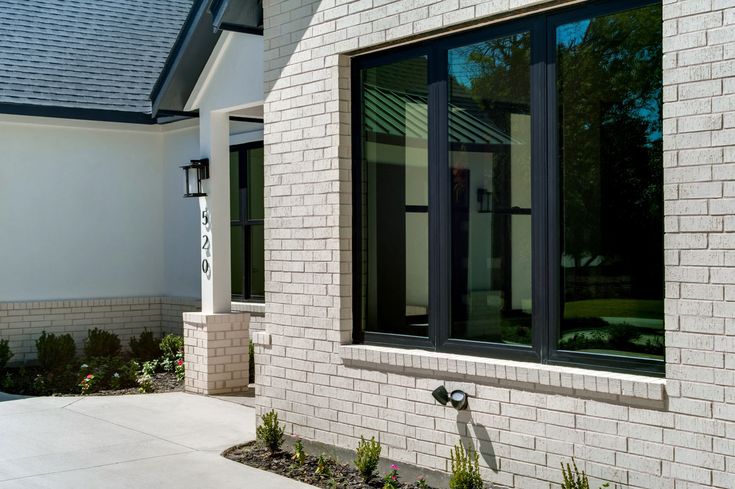
Fiberglass is 8 times stronger than vinyl by structural tensile strength. This strength allows manufacturers to build fiberglass frames with narrower profiles that let in more light than equivalent vinyl frames. The material does not expand and contract significantly with temperature change, which means the seal between frame and glass remains tight through decades of temperature cycling in ways that vinyl cannot fully match.
The average expected lifespan of fiberglass windows is 40 to 50 years, which is roughly double the expected lifespan of vinyl in the same climate. Premium fiberglass manufacturers including Marvin, Pella, and Andersen commonly back their products with 20 to 30 year warranties specifically because the material’s durability justifies it.
Fiberglass accepts paint, which means the colour choices are essentially unlimited and can be changed in twenty years when your design preferences or the home’s exterior evolve. The material can be textured to realistically mimic wood grain, giving homeowners who want the visual warmth of wood without the maintenance requirement a genuine alternative.
On energy performance, fiberglass achieves an average U-factor of 0.20 compared to vinyl’s standard 0.30. That 0.10 difference in U-factor represents measurably less heat loss through the frame, which compounds over the 40-year lifespan of a fiberglass window into real energy cost savings.
Where Fiberglass Has Limitations
Cost is the primary constraint on fiberglass adoption. The premium over comparable vinyl windows runs 15 to 40 percent depending on brand and specification, which translates to an additional $1,500 to $4,500 on a full-home replacement of 15 windows. For homeowners on tighter budgets, the upfront cost makes vinyl the more accessible choice even when the long-term math favours fiberglass.
Fiberglass is also less available in some regional markets. Not every window retailer or installer carries fiberglass lines, and the installer experience base is smaller than for vinyl because vinyl installations are far more common. Choosing fiberglass may require more research to find a certified installer with genuine product experience.
Finally, fiberglass is less flexible than vinyl, which means it is less suitable for custom curved or specialty geometric shapes. For standard rectangular window openings, this is not a constraint. For architecturally complex openings, it matters.
Fiberglass Windows: At a Glance
- Average cost per window: $651 (This Old House 2025 survey); fully installed ranges $600 to $1,100+
- Average U-factor: 0.20 (versus vinyl at 0.30)
- Expected lifespan: 40 to 50 years with minimal maintenance
- Structural strength: 8 times stronger than vinyl by tensile strength
- Maintenance: Wash twice yearly; paintable to any colour at any point in ownership
- Best for: Extreme climates, high-value homes, long-term performance buyers, homeowners who want wood aesthetics without wood upkeep
- ENERGY STAR eligible: Yes; typically achieves higher certification ratings than comparable vinyl
Head-to-Head Data Comparison: Vinyl vs Wood vs Fiberglass
This table compiles the verified data points from the most current research available in 2025. Use it as a reference when comparing quotes or evaluating contractor recommendations.
| Category | Vinyl | Clad-Wood | Fiberglass |
| Average cost per window (2025) | $558 (This Old House survey) | $800 to $1,200+ | $651 (This Old House survey) |
| Premium full-install cost range | $500 to $950 | $900 to $2,000+ | $600 to $1,100+ |
| Expected lifespan | 20 to 30 years | 20 to 30 years (with maintenance) | 40 to 50 years |
| Average U-factor (frame) | 0.30 (standard) | Varies by species; competitive | 0.20 (average) |
| Structural strength | Baseline (PVC polymer) | Good (natural timber) | 8x stronger than vinyl |
| Maintenance level | Very low (wash only) | Low exterior; interior inspections needed | Very low (wash; paintable) |
| Paintable after install | No (standard vinyl) | Yes (interior and exterior options) | Yes (any colour) |
| Custom shape flexibility | Excellent | Good | Limited (rigid material) |
| Colour options (standard) | 5 to 10 colours | Unlimited (paint/stain) | Fewer standard; unlimited with paint |
| Thermal expansion | Higher (expands/contracts more) | Moderate | Very low (glass-like expansion rate) |
| Resale ROI | 60 to 70 percent | 60 to 80 percent (condition-dependent) | 60 to 70 percent |
| ENERGY STAR eligible | Yes | Yes | Yes (typically higher ratings) |
| Best climate fit | Most climates; some limits in extremes | Most climates; humidity concerns with bare wood | All climates; best in extremes |
| Market share (2025) | 32 percent of buyers | Smaller specialty share | 23 percent of buyers |
The Decision Matrix: Which Material Is Right for Your Specific Situation
The data does not produce a single universal winner. It produces a clear winner for each type of homeowner. Here is how to read your own situation against the data.
| Your Priority | Recommended Material | Why the Data Supports It |
| Lowest upfront cost for a full-home replacement | Vinyl | $558 average per window; lowest total project cost; ENERGY STAR eligible |
| Longest service life and lowest lifetime cost | Fiberglass | 40 to 50 year lifespan at 8x structural strength; pays back premium over 20+ years |
| Architectural authenticity for a historic home | Clad-wood | Only material that provides authentic wood interior profile and finish options required for historic overlay approval |
| Maximum energy efficiency in extreme climates | Fiberglass | U-factor of 0.20 versus vinyl at 0.30; minimal thermal expansion maintains seal integrity through decades of cycling |
| Budget upgrade on a rental property | Vinyl | Competitive performance at lowest cost; no painting needed; lowest maintenance burden |
| High-value home preparing for sale | Fiberglass or premium clad-wood | Buyer expectations at $600K+ price points favour visible quality; fiberglass slim sightlines and clad-wood warmth signal premium craftsmanship |
| Unusual or custom window shapes | Vinyl | Flexibility of PVC allows curves, arches, and geometric shapes that rigid fiberglass cannot match |
| Noise reduction priority (near roads or commercial areas) | Fiberglass (with triple-pane) | Higher structural rigidity combined with triple-pane glass provides superior sound transmission reduction |
| Want wood look without wood maintenance | Fiberglass | Textured fiberglass realistically mimics wood grain; fully paintable to match any trim colour |
Climate Matters: How Your Local Weather Should Affect Your Material Choice
The right window frame material is partly a national decision (based on cost and aesthetics) and partly a regional decision (based on what your climate actually does to window frames over 30 years).
| Climate Type | Recommended Material | Key Reasoning |
| Cold and humid (Northeast, Great Lakes, Pacific Northwest) | Fiberglass or premium vinyl | Fiberglass resists freeze-thaw seal stress better; moisture-resistant frames prevent condensation damage |
| Hot and humid (Southeast, Gulf Coast, Florida) | Premium vinyl or fiberglass | Moisture resistance critical; fiberglass resists UV degradation better in prolonged sun exposure |
| Dry and extreme temperature swings (Mountain West, Plains) | Fiberglass strongly preferred | Low thermal expansion rate prevents seal failure from repeated large temperature swings; vinyl more vulnerable in this climate type |
| Mild and moderate (Pacific Coast, mild Mid-Atlantic) | Any material performs well | Climate advantage goes to vinyl here for value; all three materials deliver good lifespan in mild climates |
| Hurricane or high-wind zones | Impact-rated fiberglass or impact vinyl | Fiberglass structural strength allows impact-resistant designs; check local building codes for specific impact rating requirements |
Protect Your Whole-Home Investment Beyond the Windows
When you’re making a significant investment in new windows, it’s worth thinking about the other entry points of your home as well. Your garage door is one of the largest and most used openings in your home’s exterior, and a malfunctioning one can compromise security, insulation, and curb appeal just as quickly as a failing window. Unexpected breakdowns don’t always happen at a convenient time, which is why having access to reliable emergency garage door repair is a smart part of any whole-home upgrade plan — ensuring every entry point of your home stays secure and functional, not just your windows.
Total Cost of Ownership: Why the Cheapest Window Is Not Always the Least Expensive Window
This is the calculation that most comparison guides skip, and it is the one that most changes the outcome when you run the numbers.
Consider a homeowner replacing 15 windows. The upfront cost difference between vinyl and fiberglass is approximately $1,500 to $4,500 for the same project according to published installer data. That gap feels significant at the moment of purchase.
Now extend the calculation over the lifetime of each material. Vinyl windows at the 25-year mark will likely need replacement. Fiberglass windows at the 25-year mark are typically at the midpoint of their service life with minimal degradation. The second replacement of a vinyl window adds another $8,000 to $15,000 in today’s costs to the total lifetime expenditure, all at once, while the fiberglass windows are still performing.
Energy performance also compounds. A U-factor difference of 0.10 between fiberglass (0.20) and standard vinyl (0.30) translates to approximately $100 to $200 in annual energy savings depending on climate and home size. Over 40 years, that is $4,000 to $8,000 in accumulated savings before inflation adjustments.
30-Year Total Cost of Ownership: Illustrative Comparison (15 Windows)
- Standard vinyl (15 windows): Upfront $8,370 average + second replacement at year 25 ($9,000 to $15,000 in projected costs) + higher annual energy cost over lifetime = Total estimated 30-year cost: $20,000 to $28,000
- Premium fiberglass (15 windows): Upfront $9,765 average + no replacement within 30 years + lower annual energy cost = Total estimated 30-year cost: $12,000 to $17,000
- Clad-wood (15 windows): Upfront $12,000 to $18,000 + periodic exterior maintenance costs + energy performance similar to vinyl at standard spec = Total estimated 30-year cost: $15,000 to $25,000 depending on maintenance adherence
All figures are illustrative based on 2025 survey and published installer data. Actual costs depend on local labour rates, specific product selection, and individual home conditions. Contact Virtual View Windows for accurate local pricing.
The Data Has Spoken. Now Make the Decision That Fits Your Home.
The numbers tell a clear story. Vinyl is the right choice for most full-home replacement projects where budget is the primary constraint and climate conditions are moderate. Fiberglass is the right choice for homeowners prioritising long-term performance, extreme climates, and total cost of ownership over the full service life of the windows. Wood and clad-wood remain the right choice for homeowners where architectural authenticity is non-negotiable and maintenance is part of the ownership plan.
What the data cannot tell you is the specific fit between these materials and your home’s particular openings, architectural style, and local climate zone. That requires a trained eye and an accurate in-home measurement, which is what the team at Virtual View Windows does on every project.
Stop Guessing. Talk to a Window Company Near Me You Can Actually Trust.
Virtual View Windows specialises in matching homeowners to the right frame material for their specific home, climate, and budget. Whether you are leaning toward vinyl, weighing fiberglass, or exploring clad-wood for a historic property, we will walk you through the data and give you a written quote that makes the comparison honest.
Search for a trusted Window Company and you will find a team that leads with data, not sales pressure. Contact Virtual View Windows for Window Services Near You and receive a free in-home consultation and fully itemised written estimate.
FREQUENTLY ASKED QUESTIONS
FAQ 1: Which window frame material is the most energy efficient?
Fiberglass is the most energy-efficient window frame material based on published U-factor data. Fiberglass frames achieve an average U-factor of 0.20, compared to standard vinyl at 0.30. A lower U-factor means less heat passes through the frame, reducing heating and cooling demand. Multi-chamber vinyl frames filled with insulating foam can close this gap significantly, with premium vinyl configurations reaching U-factors in the low 0.20s. Wood and clad-wood frames offer competitive thermal performance through the natural insulating properties of timber but require quality glazing packages to match the best fiberglass configurations. For any frame material, the glass package, specifically Low-E coating, argon gas fill, and the number of panes, has more influence over total window energy performance than the frame material alone. Specify ENERGY STAR Version 7.0 certified windows in all three materials for the best available performance in your climate zone.
FAQ 2: How long do vinyl windows last compared to fiberglass and wood windows?
The expected service life varies significantly by material. Vinyl windows last an average of 20 to 30 years in most climates, with the lower end more common in areas with extreme UV exposure or large daily temperature swings. Fiberglass windows last 40 to 50 years on average, making them the longest-lived frame material in mainstream residential use. This lifespan advantage is supported by the structural properties of the material: fiberglass resists expansion and contraction from temperature cycling, which is the primary mechanism that degrades window seals over time. Clad-wood windows last 20 to 30 years when maintained correctly; bare wood exterior windows degrade faster without regular refinishing. In total cost of ownership calculations, fiberglass’s longer lifespan frequently offsets its higher upfront cost, particularly for homeowners who plan to stay in their home for 20 or more years.
FAQ 3: Is fiberglass worth paying more than vinyl for windows?
Whether fiberglass is worth the premium depends on your specific situation. For most full-home replacements where budget is the primary constraint and the climate is moderate, premium vinyl delivers competitive performance at lower cost and the value proposition is strong. Fiberglass becomes clearly worth the premium in three specific scenarios. First, in extreme climates with large temperature swings, fiberglass’s low thermal expansion rate prevents seal failure that degrades vinyl windows faster. Second, for homeowners planning to stay in their home long-term, fiberglass’s 40 to 50 year service life means one replacement instead of two over a typical ownership horizon, which changes the lifetime math. Third, for high-value homes where buyer expectations at resale favour visible quality, fiberglass’s slim sightlines and paintable finish deliver a premium visual product that standard vinyl cannot match. According to the 2025 This Old House homeowner survey, fiberglass averages $651 per window versus vinyl at $558, a premium of approximately 17 percent. Whether that premium is justified depends on which of the three scenarios above applies to your home.
FAQ 4: Can you paint vinyl windows?
Standard vinyl windows cannot be repainted after manufacture. The colour is integrated into the PVC material during production, and painting over vinyl requires special adhesion primers that most paint products do not bond to reliably. Some premium vinyl manufacturers offer a wider range of factory colour options including dark tones and woodgrain textures, but once manufactured, those colours are fixed. This is a meaningful limitation for homeowners who anticipate wanting to change their exterior colour scheme in the future or who want a specific colour match that falls outside the manufacturer’s standard palette. If colour flexibility now or in the future is a priority, fiberglass and clad-wood are the materials that accommodate repainting. Fiberglass accepts exterior-grade paint with proper preparation, and clad-wood options commonly allow interior painting to match any design scheme.
FAQ 5: How do I choose between vinyl, wood, and fiberglass windows for my home?
Choose vinyl when the project requires the lowest upfront cost, the home’s climate is moderate, the architectural style does not require wood or paintable frames, and the goal is a reliable 20 to 30 year replacement with minimal maintenance. Choose fiberglass when long-term performance is the priority, the climate experiences extreme temperature swings, the home is high-value and buyers at resale will evaluate window quality closely, or you want the visual flexibility of a paintable frame without the maintenance burden of wood. Choose clad-wood when the home is a historic property with architectural requirements that only wood profiles can satisfy, when the interior aesthetic of natural wood is important to the design, or when the home is in a neighbourhood or historic district where specific window profiles are required. In all three cases, the glass package you specify, meaning the combination of panes, coatings, and gas fill, has as much influence on your energy bills and comfort as the frame material. Contact Virtual View Windows for Window Services Near You and receive a recommendation grounded in your specific home, climate, and goals rather than a generic material preference.