
Virtual View Windows
Window Installation Oregon
Window Installation Oregon: Energy Trust Rebates, Moisture-Resistant Frames, and the Right Glass for Every Oregon Climate Zone
Oregon’s climate is unlike any other state in the American West. The Willamette Valley stays cold and overcast for six months at a stretch, with Portland averaging more than 43 inches of rain annually. The coast never fully dries out, cycling through persistent marine fog, driving Pacific rain, and the freeze-thaw of coastal winter storms. Central Oregon’s high desert delivers triple-digit summer heat and subzero winter nights. Southern Oregon’s Rogue Valley bakes in summers that rival Northern California while freezing in January ice events.
In a state this climatically varied, the right window installation choice carries real and measurable financial consequences. Portland General Electric raised residential electricity rates by 5.5 percent in 2025, continuing a trend that has driven Oregon electricity costs up 30 percent since 2020. For homeowners still living with original single-pane windows, aging double-pane units with failed seals, or aluminum-frame windows that conduct cold directly into the home, those rising rates are amplifying a problem that already existed before the rate cycle started.
At Virtual View Windows, we specialize in professional window installation across Oregon. We serve homeowners in Portland, Beaverton, Tigard, Lake Oswego, Salem, Eugene, Corvallis, Bend, Medford, and coastal communities from Astoria to Brookings. This guide covers what it actually costs to install windows in Oregon in 2025, how to capture Energy Trust cash rebates, how to choose the right frame material for Oregon’s moisture environment, and exactly what glass specifications your Oregon climate zone requires. If you have been searching for window installation near me, this is the Oregon-specific resource you need.
The Virtual View Windows Oregon Installation Process
Every Oregon window installation project with Virtual View Windows follows a five-step process built for Pacific Northwest conditions, Energy Trust eligibility, and Oregon Residential Specialty Code compliance.

Step 1: Free In-Home Assessment
A certified consultant visits your Oregon home, measures every opening precisely, evaluates existing frame moisture condition, identifies your Oregon climate zone, and reviews all product options suited to your budget, architecture, and zone-specific performance requirements. No cost, no pressure, no obligation.
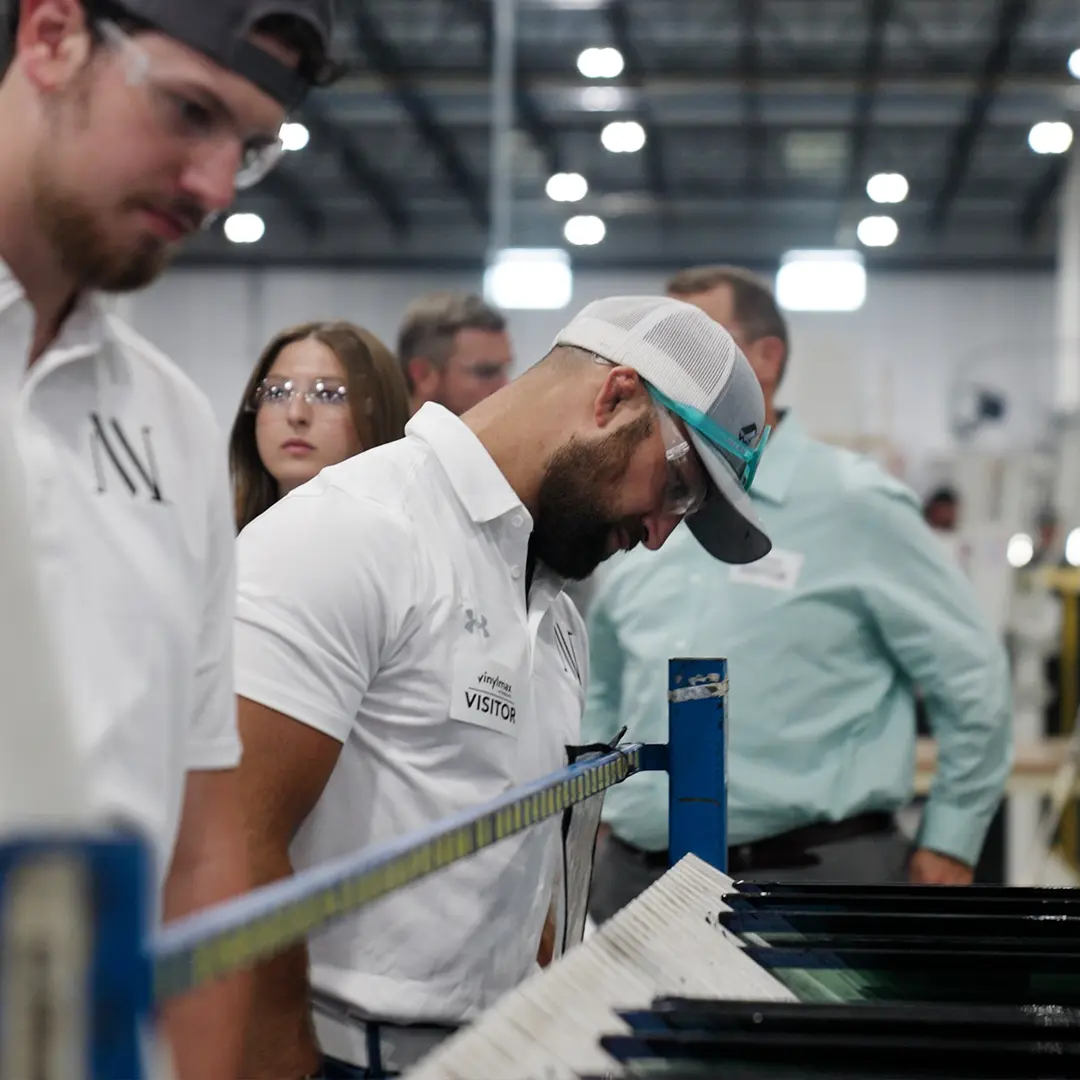
Step 2: Energy Trust and Incentive Documentation Setup
We identify every incentive your project qualifies for, confirm your Energy Trust rebate tier (0.24 or 0.27 U-value threshold), document your utility's rebate delivery process, and check EWEB eligibility for Eugene customers. We separate materials and labor costs in every estimate specifically to simplify IRS Form 5695 filing. As a certified Energy Trust Trade Ally, we handle the incentive application submission on your behalf.

Step 3: Custom Window Fabrication
Your windows are manufactured to the precise dimensions of your rough openings. Portland's craftsman bungalows, foursquares, and Victorian homes from the 1890s through 1930s routinely use non-standard opening sizes that require custom fabrication to eliminate the air and moisture gaps that off-the-shelf sizing creates.
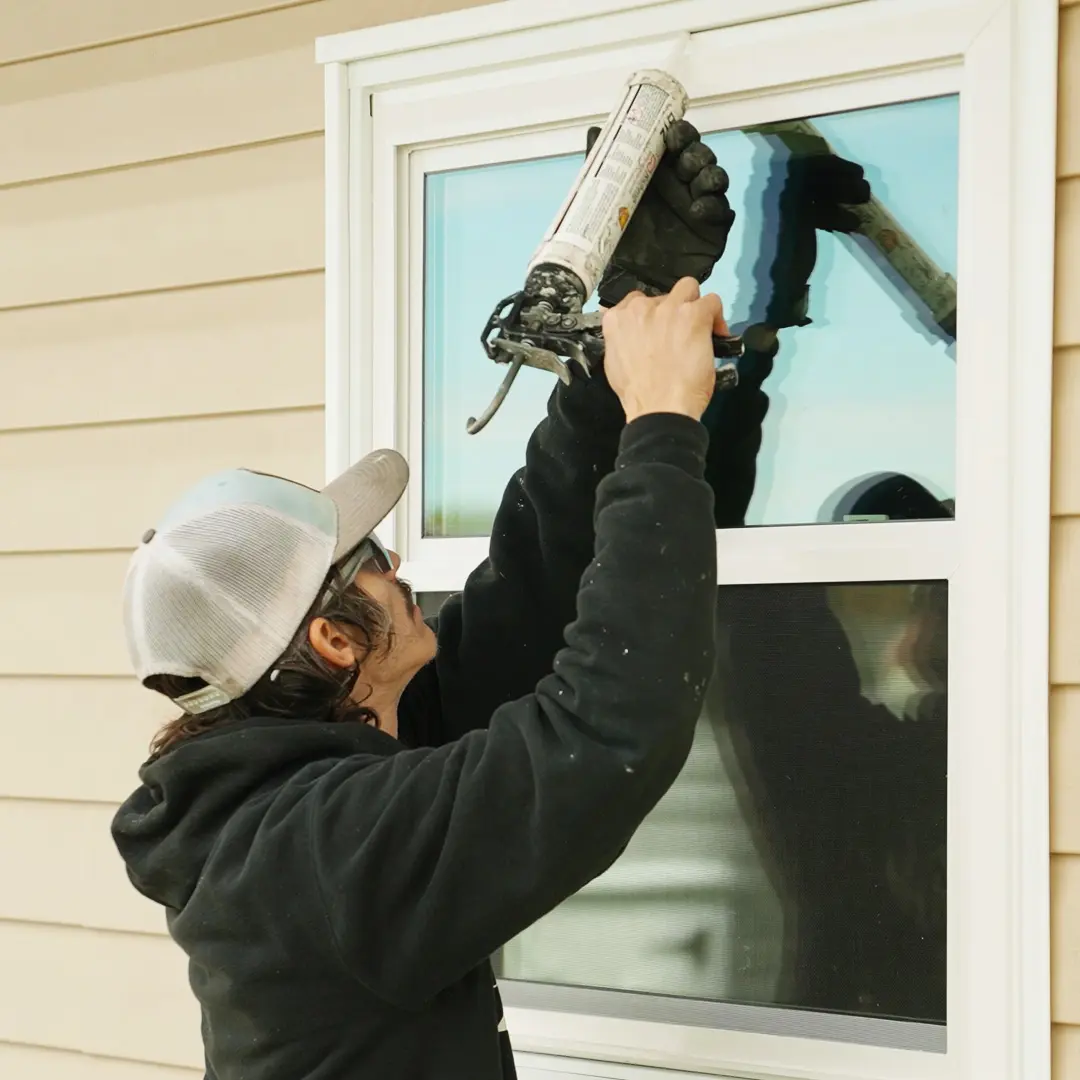
Step 4: Moisture-Control Licensed Oregon Installation
Our licensed Oregon installation crews follow the documented Pacific Northwest moisture-control protocol: storm flashing, head and sill pan waterproofing, weather-resistant barrier integration at each rough opening, and air sealing with materials rated for Oregon's humidity and temperature range. These are mandatory steps in every Virtual View Windows Oregon project. We work year-round, including during Oregon's rain season.

Step 5: Documentation, Cleanup, and Walkthrough
We remove all old materials, clean every area, and walk through each window with you to verify fit, operation, locking function, and complete satisfaction. We provide NFRC labels, QMID documentation, Energy Trust rebate submission records, warranty registration, and permit documentation before we leave.
Moisture First: Why Oregon Window Installation Is Different From Every Other State
Oregon homeowners in western valleys, along the coast, and in the Columbia River Gorge face a window installation challenge that simply does not exist in Arizona, Oklahoma, or Texas. It is not heat load. It is not hail frequency. It is moisture, specifically the sustained year-round humidity that surrounds Oregon homes for most of the calendar year.
Standard window installation guidance from national companies treats moisture as an occasional concern. In Oregon, it is the baseline condition. When a window frame absorbs moisture over repeated wet seasons, when a failing exterior seal allows Pacific Northwest rain to enter the rough opening, when condensation cycles through a wood frame through six months of winter, the consequences are not cosmetic. They migrate into the wall assembly, damage insulation, create conditions for mold growth inside the stud cavity, and compromise the structural lumber behind the frame. The cost to remediate moisture-damaged wall assemblies discovered during a window installation project in Portland regularly exceeds the cost of the windows themselves.
This is why moisture resistance must lead every Oregon window installation decision. Frame material selection, installation protocol, flashing and sill pan waterproofing, weather-resistant barrier integration at the rough opening: all of these are not optional refinements in Oregon. They are the foundation of a window installation that will still be performing in 30 years rather than failing in 10.
Virtual View Windows follows a documented Pacific Northwest moisture-control installation protocol on every Oregon project. Storm flashing, head and sill pan waterproofing, code-compliant weather-resistant barrier integration, and appropriate air sealing are mandatory steps in every project. When you are searching for window installation near me in Oregon, the most important credential a contractor can offer is documented experience with Pacific Northwest moisture management, not just a low per-window price. II
How to Choose and Verify the Right Window Installation Near Me in Missouri
Missouri’s contractor licensing framework is unlike most states because Missouri does not issue a statewide general contractor license for window installation or construction work. Contractor licensing is handled entirely at the municipal level, and the specific requirements vary significantly between St. Louis, Kansas City, Springfield, and other jurisdictions. Understanding this framework is essential to evaluating any window installation near me provider in Missouri.
Before committing to any window installation contractor in Missouri, verify the following:
- St. Louis City: Contractors performing window installation and construction work in the City of St. Louis must hold a Construction Industry Contractor Graduated Business License (GBL) issued by the St. Louis Building Division. The city also requires proof of workers compensation insurance coverage or an exemption affidavit as a condition of license issuance. Unlicensed contractors face fines of up to $1,000 per day and possible jail time for a first offense. Verify contractor license status through the St. Louis Building Division before signing any contract.
- Kansas City: Contractor licenses in Kansas City are issued through the City Planning and Development department. The qualifying individual or supervisor must pass an ICC-accredited exam. The application fee is $55 and the issuance fee is $167, with renewal every four years. Verify that any Kansas City window installation contractor holds a current city-issued license.
- Springfield and Other Municipalities: Springfield uses a contractor registration system administered through the Building Development Services Department. Other Missouri municipalities have their own independent registration or licensing requirements. Contractors operating across multiple Missouri cities must hold the appropriate credential for each jurisdiction where they perform work. Virtual View Windows maintains all required local registrations and licenses in every Missouri municipality where we operate.
- Workers Compensation Insurance: Missouri law requires any business issuing an occupational or construction license to verify that the contractor holds a certificate of workers compensation insurance or a signed exemption affidavit. Request this documentation before any work begins. An uninsured contractor shifts injury liability to the homeowner.
- NFRC Certification and QMID Documentation: Request NFRC label data for every window proposed, confirming U-factor and SHGC values appropriate for ENERGY STAR Zone 4A. In 2025, also request the QMID for every product if you plan to claim the federal 25C tax credit.
- Written Contract: Any legitimate window installation contractor in Missouri should provide a written contract before starting work, detailing the complete scope, materials specifications with NFRC ratings, price, payment schedule, start and completion dates, and warranty terms. Penalties under Missouri law for contractor fraud include referral to the Office of the Attorney General’s consumer protection division.
Virtual View Windows holds all required local licensing and registrations in every Missouri municipality we serve, carries full workers compensation and general liability insurance, provides NFRC documentation and QMID records for all installed products, and delivers a complete written contract before any project begins. All credentials are available to every client before any agreement is signed.
Window Styles Virtual View Windows Installs Across Oregon
Oregon’s housing stock spans Portland’s dense inventory of pre-war craftsman bungalows, Victorian foursquares, and American colonials from the 1890s through 1940s; Salem and Eugene’s post-war ranch homes; Bend’s contemporary energy-focused construction; and coastal Oregon’s weathered and architecturally distinctive homes built to face Pacific storms. The right window style for each setting depends on the home’s architecture, the room’s function, the opening’s orientation, and the moisture and thermal conditions of each Oregon climate zone.
The most widely installed window style in Portland’s historic neighborhoods and across Oregon’s older residential stock. Both sashes operate independently for ventilation control and tilt inward for interior cleaning without exterior ladder access, which is particularly practical in Portland and the Willamette Valley where rain season makes exterior ladder work impractical for half the year. Specified in fiberglass or moisture-rated vinyl for Oregon conditions, double hung windows suit the craftsman, foursquare, colonial, and ranch architectural styles that dominate Oregon’s residential inventory.
Hinged at the side with a crank-operated outward opening, casement windows compress firmly against the frame when closed. In western Oregon, where winter storms drive rain horizontally against west and north-facing openings, the airtight compression seal of a casement window outperforms sliding and double hung alternatives for weather resistance. They also capture Oregon’s prevailing southwest summer breezes most effectively for natural cooling through Willamette Valley homes during the short, dry Oregon summer.
Three glass layers with two gas-filled cavities provide the highest insulation and sound-attenuation performance. In Portland, where MAX light rail, interstate traffic, and urban density creates ambient sound exposure, triple pane windows provide acoustic reduction that double pane cannot match. In Bend and central Oregon, triple pane thermal performance at Zone 5B cold temperatures justifies the premium over double pane. The 2025 This Old House survey confirms energy efficiency was the primary decision factor for more than 40 percent of Oregon homeowners who recently replaced windows.
Hinged at the top and opened outward by a crank, awning windows allow ventilation even during Oregon’s persistent rain without allowing water to enter. This makes them one of the most practically suited designs for Oregon’s wet climate. They are a standard choice for Oregon kitchens, bathrooms, and utility rooms, and are commonly combined with fixed picture windows in living areas to create ventilated glass walls suited to Oregon’s indoor-outdoor living culture.
Projecting outward from the exterior wall to add interior volume and natural light, bay and bow windows are a popular upgrade in Portland’s Victorian, craftsman, and foursquare neighborhoods where maximizing winter light in pre-modern homes is a priority. Specified in fiberglass frames with Zone 4C glass packages and proper moisture-control installation, they deliver architectural enhancement alongside the thermal and moisture performance Oregon conditions require.
Fixed glass panels that frame Oregon’s views and maximize winter light. Homes positioned to capture Mount Hood, the Willamette River, the Pacific Coast, or the Cascades use picture windows to make those views a permanent architectural element. South-facing picture windows in Zone 4C with balanced SHGC also contribute meaningful passive solar heat gain during Oregon’s overcast winter, reducing heating load in the most passive and cost-free way available.
Seven Signs Your Oregon Home Needs Professional Window Installation
Oregon’s climate makes specific window failure modes visible and financially consequential faster than in most other states. These seven signals indicate that professional window installation near me has moved from optional to urgent in your Oregon home.
Drafts felt at the frame or glass edge with windows fully closed
In Oregon’s Zone 4C heating season, every cubic foot of heated air escaping through a failed window seal is air that your PGE or Pacific Power bill already paid for. With Oregon electricity costs up 30 percent since 2020, the monthly cost of that infiltration has grown substantially since the last time you may have assessed your windows.
Condensation forming on interior glass surfaces during Oregon's wet season
Persistent interior condensation means the glass surface temperature is consistently below the dew point of your interior air, indicating the window’s thermal resistance has declined significantly. In Oregon, repeated moisture contact with wood frames and trim from interior condensation is a primary driver of frame deterioration in older Portland homes.
Fog or haze visible between the panes of a double-pane window
Seal failure allows Oregon’s humid outdoor air into the sealed cavity, eliminating the thermal benefit of the gas fill and degrading the Low-E coating. A fogged double-pane window performs at single-pane levels. In Oregon, failed seals also accelerate moisture cycling into the surrounding frame material from the inside.
Visible rot, paint failure, or structural softening at the frame, sill, or trim
In Oregon’s sustained wet climate, wood frame deterioration accelerates once exterior paint seals break down. Softness felt at the frame or sill means moisture has already penetrated the surrounding wall assembly. At this stage, window installation becomes a structural intervention, not a cosmetic upgrade.
Windows that bind, warp, or no longer operate and latch reliably
Frame warping from moisture cycling is one of the most common operational failures in Oregon’s Zone 4C climate. A window that will not close and latch fully is both an infiltration point for Pacific Northwest wind-driven rain and an egress safety concern in sleeping rooms under Oregon Residential Specialty Code.
Rising PGE, Pacific Power, or NW Natural bills without a usage or rate explanation
When your utility statement climbs beyond documented rate increases, failing window seals are among the most common structural contributors. Oregon residents spend an average of $171 per month on electricity according to EnergySage. With rates up 30 percent since 2020, every unit of energy lost through underperforming windows is more expensive than ever.
Cold zones near large windows during Oregon's six-month heating season
The radiant cooling effect of cold glass during Oregon’s long overcast winters creates discomfort zones that no heating system fully compensates for. If family members consistently avoid sitting near north and west-facing windows in winter, window thermal performance is the most likely structural cause.
ENERGY STAR Specifications, U-Value, SHGC, and Oregon's Building Code Requirements
Oregon’s building code and Energy Trust incentive program both establish specific window performance requirements. Understanding them ensures your windows qualify for available rebates and deliver the performance your climate zone demands.
U-Value: Oregon's Primary Energy Code Metric
U-value measures heat transfer through the entire window assembly. Lower means better insulation. Portland’s building code requires a maximum U-value of 0.30 for all replacement windows. The Energy Trust standard rebate tier requires 0.27 or better, and the top rebate tier of $1.50 per square foot requires 0.24 or better. Virtual View Windows recommends U-value 0.27 or lower for standard Zone 4C Willamette Valley installations, 0.24 or lower for homes targeting the top Energy Trust tier, and 0.22 or lower for Zone 5B central Oregon homes in Bend and Cascades communities.
SHGC: Oregon's Balanced Solar Heat Equation
Oregon’s Zone 4C marine climate is unusual because both too low and too high an SHGC creates problems. A very low SHGC rejects modest summer solar heat effectively but also rejects passive solar heat gain through south-facing windows that reduces heating load during Oregon’s long, overcast winter. The EnergyGuard Oregon buying guide identifies a balanced SHGC of 0.30 to 0.40 as the target for most Zone 4C applications. This is a distinctly different recommendation from Oklahoma, where SHGC 0.25 or lower is the priority, or Minnesota, where maximizing solar gain matters more. Oregon’s marine climate requires a genuinely balanced specification that no national standard captures correctly.
Low-E Coating Specification for Oregon's Marine Climate
Low-E coatings for Zone 4C should provide the balanced solar management Oregon’s mixed heating and cooling demands require. Soft-coat magnetron sputtered Low-E, standard in factory-sealed insulated glass units, provides superior performance for Oregon conditions. A spectrally selective coating that maintains moderate visible light transmission while managing both winter heat loss and modest summer solar gain delivers the best year-round performance for most western Oregon homes.
Window Frame Materials for Oregon: Moisture Resistance Determines the Right Choice
In every other state in this series, frame material selection starts with energy performance. In Oregon, it starts with moisture resistance. The Pacific Northwest climate separates frame materials into two categories: those that hold up over decades of wet-season cycling, and those that deteriorate faster than their warranty suggests.
Frame Material | Moisture Resist. | Energy Perf. | Lifespan | Oregon Notes |
Fiberglass | Superior | Excellent | 30 to 50 yrs | Best PNW moisture resistance |
Vinyl (multi-chamber, moisture-rated) | Very Good | Very Good | 20 to 40 yrs | 32% of OR buyers; great value |
Composite | Excellent | Excellent | 30 to 50 yrs | Top all-round PNW performer |
Wood-clad (fiber or Al exterior) | Very Good | Good | 25 to 40 yrs | Portland historic districts |
Bare wood (paint exterior seal) | Good | Poor | 15 to 25 yrs | High maintenance in wet OR |
Aluminum (NOT recommended) | Poor | Poor | 20 yrs | Thermal bridge; avoid in OR |
The Angi Portland market guide is explicit on this point: do not cut costs on frame material in Portland’s rain-soaked climate. The 2025 This Old House survey found that 32 percent of Oregon homeowners who recently replaced windows chose vinyl, while 23 percent chose fiberglass. Among those who chose based primarily on energy efficiency, fiberglass had a slight advantage because it expands and contracts at nearly the same rate as glass, maintaining frame-to-glass seals more consistently through Oregon’s wet temperature cycling. The U.S. Department of Energy and industry analysis both confirm this dimensional compatibility advantage for fiberglass in high-moisture climates.
For western Oregon, the Oregon Coast, and the Willamette Valley, fiberglass or composite frames are the first recommendation for homes where moisture resistance is the priority. For homeowners with tighter budgets or plans to sell within five to ten years, high-quality moisture-rated multi-chamber vinyl provides excellent performance at lower cost. Wood-clad frames with fiberglass or aluminum exterior cladding provide the visual warmth of wood for Portland’s historic neighborhoods without exposing the wood surface to Pacific Northwest outdoor moisture.
Aluminum single-pane windows, still present in older Oregon homes, are not recommended for any Oregon residential installation. Aluminum conducts cold at rates that make it a thermal liability in Zone 4C, and the interior condensation it generates accelerates moisture damage to surrounding sills, trim, and wall assemblies. Any aluminum-framed window in your Oregon home is a priority replacement candidate regardless of apparent condition.
Frame | Energy Perf. | Maintenance | Cost Range | Lifespan | Best For |
Vinyl (standard) | Good | Very Low | $600 to $900 | 20 to 40 yrs | Most MA homes |
Vinyl (premium) | Very Good | Very Low | $700 to $1,200 | 25 to 40 yrs | Energy-focused installs |
Fiberglass | Excellent | Low | $900 to $1,800 | 30 to 50 yrs | Coastal & high-humidity |
Wood | Good | High | $800 to $1,800 | 20 to 30 yrs | Historic / heritage homes |
Wood-clad | Very Good | Medium | $900 to $2,000 | 25 to 40 yrs | Period architecture |
Aluminum | Moderate | Low | $400 to $800 | 20 to 30 yrs | Commercial or modern |
For the majority of Massachusetts homeowners, vinyl frames with double pane Low-E glass and argon fill represent the strongest combination of performance, longevity, and value, and they qualify for Mass Save rebates when meeting ENERGY STAR Most Efficient Northern Region certification. Coastal properties in Cape Cod, the South Shore, and the Islands should prioritize fiberglass for its superior moisture and salt air resistance. Historic district properties in communities governed by local preservation commissions may require wood or wood-clad options; confirm requirements with your local commission before selecting frame material.
On glass specification, Low-E coatings are a standard feature Virtual View Windows includes on all insulated glass units. The coating blocks infrared heat in winter (keeping warmth inside) and in summer (reducing heat gain from solar radiation), and it blocks UV rays that fade flooring, furniture, and artwork, often by up to 99 percent. For Massachusetts homes, Low-E coating is not an optional upgrade. It is the baseline for any window that is expected to perform.
Energy Trust of Oregon, Federal Credits, and the Full 2025 Incentive Stack
Oregon homeowners have access to a more distinctive and layered incentive stack for window installation than any other Pacific Northwest state. The Energy Trust of Oregon is the centerpiece, but the full picture includes utility delivery programs, federally funded HOME and HEAR rebate pathways, and the final opportunity to claim the federal 25C credit on qualifying 2025 installations.
Program | Incentive | Eligibility / Notes | How to Access |
Energy Trust (U-value 0.24 or better) | Up to $1.50 per sq ft cash back | PGE, Pacific Power, NW Natural, Cascade Gas, or Avista customer; replacing single-pane or metal double-pane windows | Rolling; energytrust.org |
Energy Trust (U-value 0.27 or better) | $1.00 per sq ft cash back | Same utility and home eligibility as above; lower tier for slightly less efficient products | Rolling; energytrust.org |
Energy Trust Savings Within Reach | Higher rebates for income-qualified | Income-qualifying OR households; administered through Energy Trust Trade Allies | energytrust.org |
EWEB (Eugene customers) | Among strongest local OR incentives | Electrically heated homes in EWEB service territory; verify current schedule | eweb.org |
Federal 25C (2025 tax year only) | 30% up to $600 for windows | Terminated for installs after Dec 31, 2025; claimable on 2025 tax return filed in 2026; QMID on Form 5695 | File with 2025 federal return |
OR HOME / HEAR Programs | Up to $10K or $14K (income-based) | IRA-funded; administered by Energy Trust and Earth Advantage; windows as part of whole-home energy retrofit | Verify at oregon.gov/energy |
Energy Trust of Oregon: Direct Cash Back Per Square Foot
The Energy Trust of Oregon is an independent nonprofit delivering energy efficiency programs on behalf of Portland General Electric, Pacific Power, NW Natural, Cascade Natural Gas, and Avista. For residential window installation, the Energy Trust offers up to $1.50 per square foot for windows with U-value 0.24 or better, and $1.00 per square foot for windows meeting U-value 0.27 or better. To qualify, the home must be a single-family residence, condo, townhome, or manufactured home in Oregon receiving electricity or natural gas from a participating utility, and the new windows must replace existing single-pane or metal-frame double-pane windows.
For a 15-window home with windows averaging 15 square feet per unit, the top-tier incentive at $1.50 per square foot generates $337.50 in direct cash back. On a larger Portland foursquare with 20 windows averaging 18 square feet, the rebate reaches $540. The incentive is applied after installation through the Energy Trust Trade Ally network. Virtual View Windows is a certified Energy Trust Trade Ally and handles all rebate documentation and submission on behalf of every qualifying Oregon client. The Energy Trust also operates a Savings Within Reach program for income-qualified households that provides higher rebate amounts than the standard program schedule.
Federal 25C Credit: Still Claimable for Qualifying 2025 Installations
The Energy Efficient Home Improvement Credit (25C) was terminated for new window installations after December 31, 2025, by the One Big Beautiful Bill Act signed in July 2025. The credit originally ran through 2032 under IRA provisions. However, Oregon homeowners who completed qualifying window installations during the 2025 calendar year can still claim the 30 percent credit, up to $600 for windows, when filing their 2025 federal tax return in 2026. To claim it, report the Qualified Manufacturer Identification Number (QMID) on IRS Form 5695. Virtual View Windows provides QMID documentation and manufacturer certifications for every qualifying 2025 installation.
EWEB Customers in Eugene: Oregon's Strongest Local Incentive
Eugene Water and Electric Board (EWEB) customers in Eugene and surrounding service territory may access one of Oregon’s strongest local window incentives for electrically heated homes. EWEB administers its own efficiency programs for some product categories separately from the Energy Trust network. Eugene-area homeowners should confirm current EWEB window incentive amounts at eweb.org before scheduling installation to capture every available program on top of applicable Energy Trust rebates.
What Window Installation Costs in Oregon: 2025 Data
Oregon window installation costs run approximately 10 percent above the national average according to Angi, driven by Portland metro labor rates, moisture-resistant material requirements, and Oregon’s strict building energy codes. Here is what current 2025 data shows.
Window Type / Scenario | Installed Cost (2025) | Notes |
Single vinyl double-hung (standard) | $450 to $700 per window | Most popular OR choice |
Portland metro average (all types) | $825 per window (Angi, 2025) | Full project avg $8,425 |
Oregon statewide range per window | $300 to $2,500 per window | Most pay $450 to $1,300 |
Fiberglass frame (PNW moisture spec) | $651 avg unit + labor | This Old House survey 2025 |
Triple pane (Bend / Zone 5B) | $900 to $1,600 per window | Best ROI for cold desert zones |
Full home (10 to 15 windows) | $4,500 to $22,500 total | EnergyGuard Oregon 2025 |
Volume discount (all at once) | 15% to 30% less per window | vs. sequential replacements |
The Angi Portland market analysis places the average installed cost per window at $825, with full projects averaging $8,425 and ranging from $4,500 to $22,500. The 2025 This Old House survey found vinyl windows averaging $558 per unit and fiberglass averaging $651 per unit before labor. The Oregon statewide range runs $300 to $2,500 per window, with most homeowners paying $450 to $1,300 including labor and materials according to EnergyGuard Windows’ Oregon cost guide.
Portland metro prices show a 20 to 30 percent spread between contractors for the same project scope. Getting multiple quotes from licensed Oregon contractors is the most reliable way to benchmark pricing for your specific home. Virtual View Windows provides free, itemized estimates that separate materials and labor costs to simplify Energy Trust documentation and federal 25C tax credit filing.
Volume savings are significant. Replacing all windows in a single project reduces per-window cost by 15 to 30 percent compared to individual replacements, because labor is amortized across a larger number of units and materials procurement is consolidated. For a 12-window Portland craftsman, the difference between a single full-home project and three sequential four-window projects can reach $2,000 to $4,000 in total savings over three years.
Off-season scheduling from October through February is both the most cost-effective time for Oregon window installation and the period with highest contractor availability. Professional window installation does not require dry weather when moisture-control installation materials and protocols are properly specified. Virtual View Windows works year-round in Oregon.
Why Oregon Homeowners Choose Virtual View Windows
Searching for window installation near me in Oregon connects you with a wide range of options. Here is what consistently distinguishes Virtual View Windows in the Oregon market.
We are a certified Energy Trust of Oregon Trade Ally. That credential means we install products meeting Energy Trust U-value specifications, we submit rebate applications on your behalf, and our documentation process ensures every qualifying Oregon homeowner receives their cash incentive without navigating the application independently. Non-Trade-Ally contractors cannot provide this service.
We specify for Oregon’s actual climate zones. Zone 4C balanced SHGC guidance that captures passive solar in winter. Moisture-resistant frame recommendations calibrated for western Oregon’s rainfall rate. Fiberglass-first guidance for Portland and coastal homes. Triple pane recommendations for Bend and Zone 5B homes. We do not apply a single national specification to every Oregon home.
Our moisture-control installation protocol is documented, mandatory, and specific to Pacific Northwest conditions. Storm flashing, sill pan waterproofing, weather-resistant barrier integration, and air sealing are not options. They are the foundation of every Virtual View Windows Oregon installation and meet or exceed Oregon Residential Specialty Code requirements.
Our workmanship warranty backs every Oregon installation. If any installation issue arises, we return and make it right. That commitment applies to every Oregon homeowner we serve.
Whether you are in Portland, Beaverton, Hillsboro, Lake Oswego, Tigard, West Linn, Salem, Keizer, Eugene, Springfield, Corvallis, Albany, Bend, Redmond, Medford, Ashland, Lincoln City, Newport, Florence, Astoria, or anywhere across Oregon, Virtual View Windows brings window services near you with Pacific Northwest expertise, Energy Trust credentials, and professional accountability.
Frequently Asked Questions About Window Installation in Oregon
How much does window installation cost in Oregon?
Window installation in Oregon averages $825 per window in the Portland metro, about 10 percent above the national average, according to Angi’s July 2025 analysis. Full projects average $8,425 and range from $4,500 to $22,500. Statewide, most homeowners pay $450 to $1,300 per window including labor and materials, with a range of $300 to $2,500. Volume discounts of 15 to 30 percent are available when replacing all home windows at once. Portland metro prices vary 20 to 30 percent between contractors for the same scope, so getting multiple quotes is essential. Virtual View Windows provides free, itemized estimates for every Oregon homeowner.
What is the Energy Trust of Oregon rebate for window installation?
The Energy Trust of Oregon offers up to $1.50 per square foot for windows with U-value 0.24 or better, and $1.00 per square foot for U-value 0.27 or better. To qualify, you must own a single-family home, condo, townhome, or manufactured home in Oregon that receives electricity or natural gas from Portland General Electric, Pacific Power, NW Natural, Cascade Natural Gas, or Avista. New windows must replace existing single-pane or metal-frame double-pane windows. Installation must be by an Energy Trust Trade Ally contractor. Virtual View Windows is a certified Trade Ally and handles all rebate documentation and submission for every qualifying project.
What type of windows work best in Oregon's Pacific Northwest climate?
Fiberglass frames are the top recommendation for Oregon homes because of superior moisture resistance and a 30 to 50 year service life in Pacific Northwest wet-season conditions. For budget-focused projects, moisture-rated multi-chamber vinyl performs well and was chosen by 32 percent of Oregon homeowners who recently replaced windows according to the 2025 This Old House survey. Avoid aluminum frames in any Oregon residential application. For glass, Zone 4C Portland and Willamette Valley homes should target U-value 0.24 or lower and SHGC 0.30 to 0.40. Bend and central Oregon Zone 5B homes benefit from U-value 0.22 or lower and triple pane glass. Medford and Rogue Valley homes should prioritize SHGC 0.25 or lower for south and west-facing windows.
Can I still claim the federal tax credit for Oregon window installation?
Yes, but only for installations completed by December 31, 2025. The One Big Beautiful Bill Act signed in July 2025 terminated the federal Energy Efficient Home Improvement Credit (25C) for new window installations after that date. Oregon homeowners who installed qualifying ENERGY STAR certified windows in the 2025 calendar year can still claim a 30 percent credit up to $600 when filing their 2025 federal tax return in 2026. You must report the Qualified Manufacturer Identification Number (QMID) on IRS Form 5695. Virtual View Windows provides QMID documentation for every qualifying 2025 Oregon installation.
Do I need a permit for window installation in Oregon?
Yes in most Oregon jurisdictions. Portland requires a building permit for window replacement and enforces the U-value 0.30 maximum energy code requirement at the permit stage. Most Oregon cities and counties have similar requirements. Like-for-like replacements in the same opening size typically qualify for a standard residential permit. Projects that enlarge openings, create new locations, or install egress windows require full plan review. Portland Bureau of Development Services inspects egress window installations for compliance with opening dimension and operability requirements. Virtual View Windows researches permit requirements for every Oregon jurisdiction where we work and files all required permits as part of every project.
Make Your Move: Next Steps for Oregon Window Installation
Oregon homeowners carry a specific and well-documented set of reasons to act on window installation in 2025. Electricity rates that have risen 30 percent since 2020 and climbed another 5.5 percent at PGE in 2025 alone. A Pacific Northwest climate that degrades inadequately specified window frames faster and more expensively than in any dry-climate state. An Energy Trust of Oregon cash rebate program that pays back up to $1.50 per square foot of installed window area. And the final opportunity to claim the federal 25C credit of up to $600 on 2025 installations before the credit was ended by the One Big Beautiful Bill Act.
The average Oregon homeowner saves $510 per year after professional window installation. The Portland resale ROI runs 70 to 85 percent on professionally installed, code-compliant windows. ENERGY STAR certified windows reduce household energy use by 12 percent on average, with Oregon’s rising electricity costs making each percentage point of savings more valuable than it was the year before.
Virtual View Windows is built for Oregon. Energy Trust Trade Ally credentials. Products specified for Zone 4C, 5B, 5A, and 3B. A moisture-control installation protocol documented for Pacific Northwest conditions. Licensed, permit-filing crews. And a workmanship warranty that means we stand behind every project we complete in this state.

Get Your Free Estimate Today | Call or Request Online | Serving All of Oregon
Find Window Services Near You Across Oregon
Virtual View Windows provides certified window installation services throughout Oregon, from the Portland metro to the Oregon Coast, Willamette Valley, central Oregon high desert, and the Rogue Valley.
- Greater Portland Metro: Portland, Beaverton, Hillsboro, Tigard, Tualatin, Lake Oswego, West Linn, Wilsonville, Oregon City, Milwaukie, Gresham, and Troutdale
- North Willamette Valley: Newberg, McMinnville, Sherwood, Canby, and Woodburn
- Mid Willamette Valley: Salem, Keizer, Silverton, and Stayton
- South Willamette Valley: Eugene, Springfield, Corvallis, Albany, Lebanon, and Junction City
- Central Oregon: Bend, Redmond, Prineville, Sisters, Sunriver, and La Pine
- Southern Oregon (Rogue Valley): Medford, Ashland, Grants Pass, Klamath Falls, and Central Point
- Oregon Coast: Astoria, Seaside, Lincoln City, Newport, Florence, Coos Bay, and Brookings
If your community is not listed, reach out directly. We work with properties throughout Oregon, including historic district homes, coastal properties, high-elevation Cascades communities, and rural Oregon homes with specialized installation requirements.
Wherever you are in Oregon, searching for window installation near me should connect you with a team that understands Pacific Northwest moisture, Oregon’s four climate zones, Energy Trust rebate documentation, and the diverse architectural character of Oregon’s housing stock. That is what Virtual View Windows delivers.
Other Service Areas
- Boston MA
- Detroit MI
- Minneapolis MN
- Kansas City MI
- Springfield MI
- St Louis MI
Manchester NH
- Charlotte NC
- Greensboro NC
- Raleigh NC
- Cleveland OH
- Akron OH
- Dayton OH
- Columbus OH
- Cincinnati OH
- Oklahoma City OK
- Portland OR
- Philadelphia PA
- Pittsburgh PA
- Arlington TX
- Austin TX
- Houston TX
- Nashville TN
- Knoxville TN
- Salt Lake City UT
- St George UT
- Richmond VA
- Virginia Beach VA
- Madison WI
- Milwaukee WI