
Virtual View Windows
Window Replacement Virginia
Window Replacement Virginia: From the Blue Ridge Foothills Through Richmond's Colonial Neighborhoods to Hampton Roads' Salt-Air Coast
Window replacement in Virginia serves one of the most climatically diverse states on the East Coast. The Commonwealth stretches from the higher-elevation foothills of Northern Virginia, where Zone 5 heating conditions bring cold winters that demand genuine thermal performance from every installed window, south through the mixed-humid climate of Richmond, Charlottesville, and the Piedmont, where hot humid summers and cold winters create a balanced year-round performance challenge, out to the Shenandoah Valley and Roanoke’s transitional Zone 4 and 5 corridor, and finally down to the Hampton Roads coast, where Virginia Beach, Norfolk, Chesapeake, and Portsmouth face Zone 3A conditions with salt-air humidity, coastal storm exposure, and summer heat loads that reverse the inland performance priority entirely. Virtual View Windows is a dedicated window replacement Virginia homeowners and commercial property owners trust across every region, serving Northern Virginia, Richmond, Alexandria, Roanoke, Charlottesville, Virginia Beach, Norfolk, Chesapeake, Newport News, Hampton, Fredericksburg, Lynchburg, and communities statewide with ENERGY STAR North-Central Zone certified, NFRC-verified window replacement solutions.
Whether you have been searching for window replacement near me in Northern Virginia’s densely populated suburbs, looking for window services near you in the Hampton Roads metro, or trying to understand which utility rebate programs are active in 2026 for your Virginia home, this guide provides the current, precise information that Old Dominion homeowners need to make a sound, well-supported window investment.
Choosing the Right Window Material for Virginia's Climate
Not all window frames perform equally under Virginia conditions. Here is how the most common materials compare:
Free On-Site Estimate
A certified project advisor visits your home, measures every opening, evaluates frame and sill conditions, and provides a written, itemized quote with no pressure and no surprises.
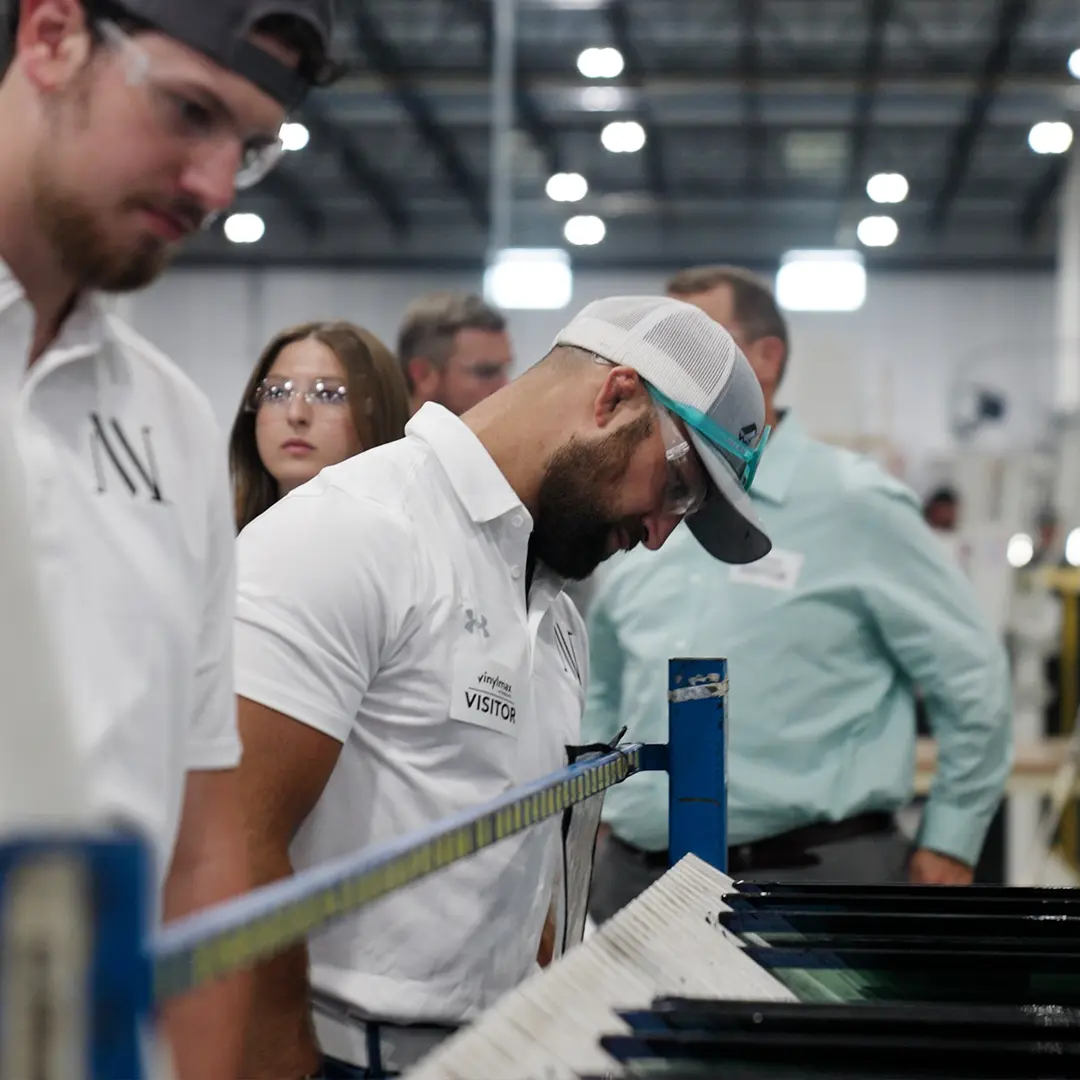
Product Selection
We guide you through window styles, frame materials, glass packages, and color options suited to your home's architecture and your energy goals.

Custom Order and Delivery Confirmation
Your windows are ordered to your exact specifications. Before scheduling installation, we inspect every unit at delivery to verify accuracy and confirm there are no defects.
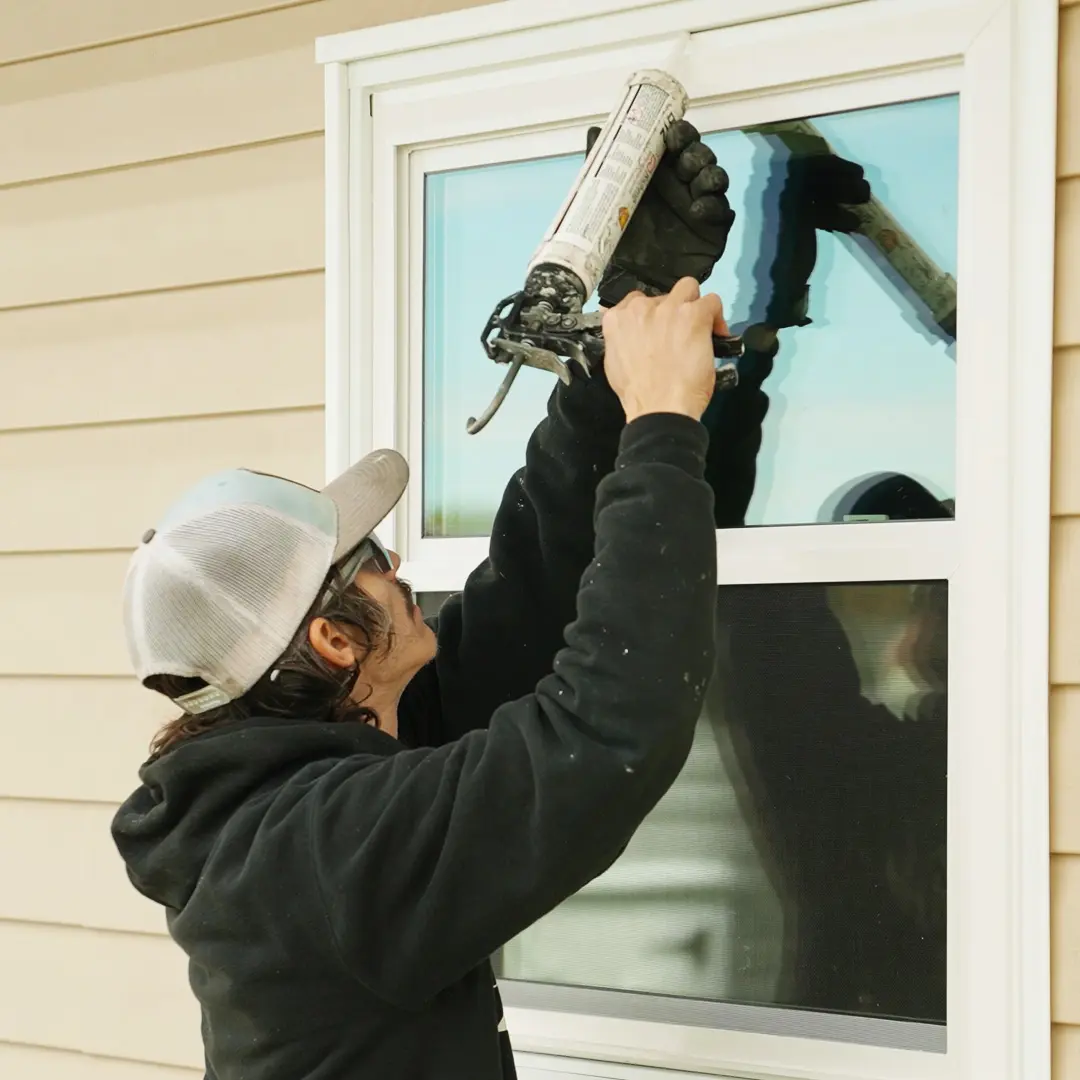
Professional Installation
Our licensed window installation crews work cleanly and efficiently. All interior surfaces are protected, old windows are removed and disposed of responsibly, and new units are installed with commercial-grade flashing, foam insulation, and weathertight caulk.

Final Inspection and Walkthrough
We review every installed window with you before we leave, demonstrate proper operation, and provide documentation of your product warranties.
Virginia's Four Climate Regions and Why Window Replacement Performance Requirements Differ Meaningfully Across the Commonwealth
The Commonwealth of Virginia’s geographic breadth from the Appalachian Highlands to the Atlantic coast creates a window performance landscape that no single specification can adequately address. The U.S. Department of Energy estimates that windows account for 25 to 30 percent of a home’s total heating and cooling energy consumption, and in Virginia that percentage translates into meaningfully different performance priorities depending on which region of the state a home occupies.
Northern Virginia, including Fairfax County, Arlington, Loudoun, Prince William, and the suburban communities adjacent to Washington D.C., sits at the cooler edge of ENERGY STAR’s North-Central Climate Zone, with some higher-elevation communities in the foothills approaching Zone 5 conditions. Winters in Northern Virginia demand genuine U-factor performance from replacement windows, with cold overnight temperatures and high heating fuel costs in a region where energy prices track the Mid-Atlantic market. A November 2025 survey of 1,000 homeowners conducted by This Old House found that 67 percent of respondents saved between $25 and $100 per month on energy bills after installing new windows, a savings rate that carries particular impact in Northern Virginia’s premium energy cost environment.
The Richmond metro, Charlottesville, and Virginia’s Piedmont region occupy the core of ENERGY STAR’s North-Central Zone, Zone 4A mixed-humid. In this zone, window replacement must balance two competing demands: enough U-factor resistance to manage winter heating loads, and enough Solar Heat Gain Coefficient (SHGC) control to limit summer cooling load in a climate where July mean temperatures and humidity levels are both high. The North-Central Zone ENERGY STAR specification targets a U-factor of 0.30 or lower with an SHGC of 0.40 or lower, a combination that Virginia DEQ’s programs and incentives are built around. Industry data from NerdWallet confirms that window replacement ROI in Virginia markets typically falls between 70 and 85 percent of project cost recovered at resale, making it one of the stronger returns available in residential home improvement.
Roanoke, Lynchburg, and the Shenandoah Valley communities occupy a transitional Zone 4 and Zone 5 band where the Blue Ridge Mountains influence winter temperatures, and heating season length increases meaningfully compared to the coastal plain. For these communities, the performance emphasis tilts further toward U-factor than it does in the Richmond basin, and frame materials need to handle the freeze-thaw cycling that Blue Ridge weather amplifies. Hampton Roads, including Virginia Beach, Norfolk, Chesapeake, Portsmouth, Newport News, and Hampton, sits in Zone 3A warm-humid coastal conditions. In this region, summer heat management and resistance to salt-air corrosion and coastal storm conditions become the dominant window performance variables, and the balance of performance priorities shifts from the cold-focused specification that governs interior Virginia.
Virginia's Energy Code and ENERGY STAR North-Central Zone: The Standard Every Replacement Window Must Meet
Virginia’s residential building code standard is the 2021 Virginia Uniform Statewide Building Code (VUSBC), which incorporates the 2021 International Residential Code with Virginia-specific amendments administered by the Virginia Department of Housing and Community Development. The energy provisions of the 2021 VUSBC establish baseline fenestration requirements that vary by climate zone across Virginia’s geographic span.
The ENERGY STAR North-Central Climate Zone, which Virginia DEQ has explicitly adopted as the standard for its window rebate and efficiency incentive programs, requires replacement windows to achieve a maximum U-factor of 0.30 or lower and a maximum Solar Heat Gain Coefficient of 0.40 or lower. These two performance thresholds work together to address Virginia’s year-round climate challenge: the U-factor limits winter heat loss through the glass and frame assembly, while the SHGC limit controls summer solar heat gain in the Commonwealth’s humid mixed climate. Virginia Natural Gas, one of Virginia’s major utility providers, specifically references ENERGY STAR North-Central Zone compliance as the eligibility standard for its window rebate program, confirming that this certification standard is the gateway to available incentive programs in the state.
For Northern Virginia Zone 5 communities and for Blue Ridge and Appalachian foothill communities where heating loads exceed the Zone 4A average, industry specialists recommend targeting a U-factor of 0.25 or lower to deliver meaningful energy savings beyond the baseline code threshold. For Hampton Roads coastal applications, the SHGC target of 0.25 or lower aligns the specification with the summer heat rejection priority that dominates in Virginia’s warm-humid coast. ENERGY STAR Most Efficient certification, requiring a U-factor of 0.20 or lower, delivers the highest available thermal resistance and was the standard required for the 25C federal tax credit before it expired on December 31, 2025.
Building permits are required for window replacement in Virginia under the 2021 VUSBC. The permit process documents code compliance and ensures that installations meet the applicable energy performance and structural requirements for the home’s climate zone. Virtual View Windows handles permit research and application as standard project scope in every Virginia municipality and county we serve. All installed products carry current NFRC labels documenting U-factor, SHGC, Visible Transmittance, and Air Leakage ratings, and we confirm the climate zone and applicable code requirements specific to your location at the time of every estimate.
Window Services Near You: The Complete Virtual View Windows Portfolio for Virginia Homeowners
From the dense townhouse communities of Northern Virginia’s suburban corridor through Richmond’s historic Fan and Church Hill neighborhoods, from Charlottesville’s Albemarle County residential estates to the oceanfront neighborhoods of Virginia Beach, Virtual View Windows delivers professional window services near you with the regional expertise each Virginia market demands. Our statewide service model recognizes that the same product specification that performs superbly in a Fairfax County colonial may be over-built for a Virginia Beach ranch, and that the window replacement near me a homeowner needs in Roanoke’s mountain climate differs from what their counterpart needs in Newport News. Every project starts with the right regional specification.
Full-Home Window Replacement
A full-home window replacement project with Virtual View Windows begins with a systematic, opening-by-opening assessment of every existing window in your Virginia home. Our project advisors evaluate frames for moisture infiltration, wood rot, failed insulated glass unit seals, and dimensional distortion from Virginia’s seasonal temperature swings and freeze-thaw cycling in the mountain-adjacent regions. We document existing U-factor and SHGC performance against the North-Central Zone ENERGY STAR standard and develop a full project specification covering every window type in your home: double-hung, casement, awning, sliding, picture, bay, bow, specialty architectural, and any custom configurations in older Virginia homes. For homes in Virginia Natural Gas service territory where window rebates require ENERGY STAR North-Central Zone documentation, we flag eligibility at the estimate stage and prepare the complete rebate package at project closeout.
Northern Virginia Suburban and Historic Window Replacement
Northern Virginia’s window replacement market combines the Commonwealth’s highest residential density, a diverse housing stock ranging from post-war Cape Cods and split-levels in Fairfax to luxury colonial and contemporary homes in Loudoun and Prince William, and some of Virginia’s most active historic preservation commissions in Alexandria and Arlington. In established NoVA neighborhoods where homes were built between the 1950s and 1980s, single-pane aluminum windows and early-generation vinyl units are still present in quantity, representing significant energy loss in a region where energy costs track the Mid-Atlantic market. In historic Alexandria, Old Town historic district guidelines require window replacements that match existing sight lines, muntin profiles, and exterior proportions while meeting the 2021 VUSBC energy requirements. Virtual View Windows navigates NoVA’s diverse permitting environments and historic district review processes for every qualifying project.
Hampton Roads Coastal and Salt-Air Window Replacement
Hampton Roads window replacement presents Virginia’s most distinctive coastal performance challenge. The salt-air environment that permeates Virginia Beach, Norfolk, Chesapeake, Portsmouth, Hampton, and the Eastern Shore accelerates corrosion in standard aluminum hardware, degradates standard vinyl exterior finishes, and creates UV exposure conditions that differ from inland Virginia. For homes within several miles of the Chesapeake Bay or the Atlantic Ocean, Virtual View Windows specifies marine-grade corrosion-resistant hardware, UV-stabilized frame materials, and low-SHGC Low-E coatings that address the coastal Zone 3A climate’s summer heat management priority. We assess storm resilience requirements for each Hampton Roads property and can provide impact-rated glazing specifications for homeowners seeking premium storm protection, which many regional insurance providers recognize in their premium calculations.
Richmond and Piedmont Historic Home Window Replacement
Richmond’s Fan District, Monument Avenue, Church Hill, and Tobacco Row, along with historic neighborhoods in Fredericksburg, Petersburg, and Williamsburg, represent some of Virginia’s most architecturally significant residential stock. These homes frequently require window replacement that satisfies both the local historic district commission’s preservation guidelines and the 2021 VUSBC energy performance requirements. Virtual View Windows has experience working with Virginia’s historic district review processes, including the Virginia Department of Historic Resources, and can specify products that maintain historic exterior profiles and interior sight lines while delivering North-Central Zone certified energy performance. For pre-1978 Virginia homes, our crews hold EPA RRP Lead-Safe Firm certification and comply with federal RRP protocols for work disturbing painted surfaces.
Choosing the Right Window Frame for Virginia's Four Climate Regions
Virginia’s four-region climate profile creates a window frame material selection question that has meaningfully different right answers depending on where in the Commonwealth your home is located. Here is how the primary options compare, using Virginia’s actual regional conditions as the governing lens.
Multi-Chamber Vinyl: The Standard for Virginia's Piedmont and Shenandoah Valley
Fully welded multi-chamber vinyl is the most widely installed window frame material in Virginia’s interior communities and performs reliably throughout the Piedmont, Richmond metro, Charlottesville, and the Shenandoah Valley when specified with the right construction standard for Virginia’s humidity and temperature cycling. The critical specifications for Virginia are fully welded corners rather than mechanically fastened frames, four-chamber or greater insulating profiles, and Low-E argon glass achieving a U-factor of 0.30 or lower and an SHGC of 0.40 or lower to meet ENERGY STAR North-Central Zone standards. For Richmond and Charlottesville installations, premium vinyl also satisfies most historic district aesthetic requirements where white or earth-tone exterior profiles are specified. The installed cost range for standard vinyl replacement windows runs from approximately $450 to $800 per window, making it the accessible baseline specification for most Virginia residential projects.
Fiberglass: The Premium Specification for Northern Virginia and Hampton Roads
Pultruded fiberglass window frames are the most technically capable option for Virginia’s two most demanding regional environments: the colder winters of Northern Virginia and the salt-air coastal conditions of Hampton Roads. In Northern Virginia, fiberglass frames’ thermal expansion coefficient closely matches that of glass, protecting insulated glass unit seals through the temperature swings between the region’s cold winter nights and hot humid summer days. In the Hampton Roads coastal environment, fiberglass outperforms standard vinyl in salt-air corrosion resistance, maintaining exterior finish integrity and hardware function through the persistent marine humidity that Virginia Beach and Norfolk homes experience year-round. Pella’s Virginia Beach competitor Better View Windows specifically highlights Pella fiberglass for its Virginia coastal performance properties. For Northern Virginia projects targeting U-factor 0.25 or lower with the highest available thermal performance, fiberglass frames paired with triple-pane krypton glass deliver the strongest long-term specification available. Installed costs for fiberglass typically run from $700 to $1,200 or more per window.
Wood and Wood-Clad Composite: Historic Virginia Neighborhoods
Wood-clad composite frames are the appropriate specification for Virginia’s historic residential neighborhoods, including Alexandria Old Town, Arlington’s historical districts, Richmond’s Fan and Church Hill, Williamsburg’s Colonial Historic District, and the numerous National Register Historic Districts in Fredericksburg, Petersburg, and Staunton. Preservation commissions in these districts require window replacements that match original exterior profiles, sight lines, and material appearance. Properly specified wood-clad frames with aluminum or fiberglass exterior cladding deliver North-Central Zone energy performance while satisfying the exterior appearance requirements of Virginia historic preservation review. In Virginia’s humid mixed climate, the exterior cladding selection must be fully sealed and properly flashed to manage moisture from the combination of hot humid summers and winter freeze-thaw events that characterize Virginia’s interior and mountain-adjacent communities. For pre-1978 Virginia homes in historic districts, EPA RRP Lead-Safe certified installation is required. Virtual View Windows holds current EPA RRP Lead-Safe Firm certification and follows all RRP protocols for pre-1978 Virginia properties.
Aluminum with Thermal Break: Commercial Applications
Standard aluminum frames without a thermal break are not appropriate for conditioned residential spaces in any Virginia climate zone. Aluminum conducts heat readily, generates significant interior surface condensation during Virginia winters, and does not meet the U-factor requirements of the 2021 VUSBC energy provisions for Zone 4A or Zone 5 conditions. In Hampton Roads coastal commercial applications and for contemporary architectural residential projects where slim sight lines and high corrosion resistance are both required, marine-grade anodized aluminum with a thermal break is a viable specification. Virtual View Windows recommends aluminum exclusively for commercial and architectural specialty applications and does not install standard aluminum frames in any Virginia residential conditioned space application.
Virginia Window Replacement Incentives and Rebate Programs: What Is Available in 2026
Virginia homeowners investing in window replacement in 2026 have access to a focused set of active utility incentive programs alongside two IRA-funded state programs that have been approved but not yet launched. Understanding which programs are active right now, and which to monitor for upcoming launch, enables accurate project budget planning.
Virginia Natural Gas Window Rebate Program
Virginia Natural Gas, serving residential customers in the Hampton Roads and eastern Virginia region, offers cash rebates for qualifying energy-efficiency improvements through its Energy Efficiency Program, which is valid through at least May 31, 2026 unless suspended by order of the Virginia State Corporation Commission. High-efficiency windows consistent with ENERGY STAR specifications for the North-Central Climate Zone are listed as an eligible improvement category. Eligible customers must be residential Virginia Natural Gas account holders purchasing and installing qualifying windows within the program period and submitting applications through virginianaturalgas.com/rebates within 60 days of installation. Virtual View Windows provides complete NFRC documentation confirming North-Central Zone compliance for every Virginia Natural Gas customer project. Verify current window rebate availability and rebate amounts at virginianaturalgas.com/rebates before project work begins, as program details are subject to Virginia SCC review.
Dominion Energy Virginia Efficiency Programs
Dominion Energy Virginia operates Demand Side Management programs under the Virginia Clean Economy Act mandate for a 5 percent energy savings target by 2025. Dominion’s residential programs include weatherization and home energy efficiency measures with a focus on HVAC, insulation, and air sealing. While Dominion does not currently offer a standalone residential window cash rebate program as of early 2026, homeowners undertaking a whole-home project that includes windows alongside insulation and air sealing may qualify for Dominion’s Home Energy Assessment program, which can identify the most cost-effective improvement pathway and available incentives for your specific home. Check dominioenenergy.com/va for current program availability. Dominion’s multifamily program provides on-site energy assessments for property owners and managers with identified incentive pathways.
Appalachian Power Company Efficiency Programs
Appalachian Power customers in western Virginia, including Roanoke, Lynchburg, Blacksburg, and the New River Valley, have access to Appalachian Power’s energy efficiency programs under its VCEA obligations. Contact Appalachian Power at appalachianpower.com to confirm current residential window efficiency incentive availability for your service area and account type.
Virginia HOMES and HEAR Programs
Virginia Energy has been allocated approximately $188 million in IRA funding for the Home Efficiency Rebates (HOMES) and High Efficiency and Appliance Rebates (HEAR) programs. The HOMES program is designed to provide up to $8,000 per household for energy retrofit projects achieving at least 15 percent energy savings, with windows qualifying as part of a bundled whole-home project. The HEAR program would offer up to $14,000 per household for qualifying electrification improvements. As of early 2026, Virginia Energy’s official website confirms that these programs are not yet available in Virginia. Virginia Energy has stated that it cannot provide an estimated launch date and is actively assessing the impact of recent federal funding freezes and executive orders on program availability. Homeowners should monitor energy.virginia.gov for official launch announcements. Do not initiate projects expecting Virginia HOMES or HEAR rebates until an official launch is confirmed.
Virginia Weatherization Assistance Program (WAP)
Income-eligible Virginia homeowners may receive free weatherization services through the Virginia WAP, administered by the Department of Housing and Community Development through local Community Action Agencies and nonprofit partners. The program provides noncash grants for energy-efficiency improvements including window air sealing and weatherization measures for qualifying households. Virginia WAP serves households at or below 200 percent of the federal poverty level. Contact your regional Community Action Agency or visit dhcd.virginia.gov to determine eligibility.
Local Jurisdiction Programs
ome Virginia localities offer additional energy efficiency incentives through property tax exemptions for qualifying energy-efficient improvements under Code of Virginia authority allowing counties, cities, and towns to partially or fully exempt qualifying improvements from local property taxes. Check with your local Commissioner of Revenue for any active exemption programs covering energy-efficient window replacement in your jurisdiction.
How to Verify a Window Replacement Near Me Contractor in Virginia
Virginia’s contractor licensing framework is administered at the state level by the Virginia Department of Professional and Occupational Regulation (DPOR) through the Board for Contractors, making license verification clear and accessible for any Virginia homeowner evaluating a window replacement near me provider. The Code of Virginia Title 54.1, Chapter 11 requires contractor licensing for any construction, removal, remodeling, or improvement work with a total value over $1,000, which covers every window replacement project in the Commonwealth.
Before committing to any window replacement near me contractor in Virginia, verify the following:
- Virginia DPOR Contractor License: Any individual or business performing window replacement work valued over $1,000 in Virginia must hold a current contractor’s license issued by DPOR. Contractor licenses are issued in three classes: Class A (as of September 1, 2025, no upper monetary limit per project), Class B (projects up to $150,000 per contract and $1,000,000 within 12 months), and Class C (projects up to $30,000 per contract and $250,000 within 12 months). For residential window replacement, the contractor must hold the Residential Building Contractor (RBC) classification. Verify license status, classification, and current standing at no cost through the DPOR license search at dpor.virginia.gov. Unlicensed contracting over $1,000 is a Class 1 misdemeanor in Virginia with penalties including fines up to $2,500 and potential jail time. Any professional Virginia window replacement company should provide their DPOR license number and class before any work begins, and you should verify it independently.
- General Liability Insurance: Virginia requires licensed contractors to maintain general liability insurance. Request a current certificate of insurance naming your property before any work begins. General liability insurance protects your home from damage caused during installation. Virginia’s Contractor Transaction Recovery Act provides additional consumer protection: eligible homeowners who suffer losses from improper or dishonest conduct by a licensed Virginia contractor may file a claim with DPOR for compensation, providing an additional layer of consumer protection beyond standard insurance.
- Workers Compensation Insurance: Virginia requires contractors with three or more employees to maintain workers compensation insurance. Request the current certificate before any work begins. Workers compensation coverage protects you from liability if a worker is injured on your property during the installation.
- EPA RRP Lead-Safe Firm Certification: For any Virginia home built before 1978, work that disturbs existing painted surfaces during window removal and installation must be performed by an EPA RRP Lead-Safe Certified firm with certified renovators on the crew. This is a federal requirement under the RRP Rule and is enforced in Virginia. Request the firm’s current EPA certification number and confirm certified renovator credentials for any pre-1978 Virginia property project. Virtual View Windows holds current EPA RRP Lead-Safe Firm certification statewide.
- Historic District Coordination: For projects in Virginia historic districts, confirm that the contractor has experience with Virginia’s historic preservation commission review process, including experience with the Virginia Department of Historic Resources, local preservation commission guidelines, and product specifications acceptable within historic district parameters.
- Building Permit Coordination: Confirm that the contractor researches and applies for the building permit in your Virginia municipality or county. Unpermitted window replacement creates code violation exposure and can complicate future property sales. Virtual View Windows handles permit research and application as standard project scope in every Virginia jurisdiction.
- NFRC Certification Documentation: Request NFRC label data or product data sheets for every window proposed. Confirm U-factor is 0.30 or lower and SHGC is 0.40 or lower for ENERGY STAR North-Central Zone compliance. For Virginia Natural Gas rebate projects, confirm documentation is available for the rebate application. Virtual View Windows provides complete NFRC documentation for every installed product.
Virtual View Windows holds a current Virginia DPOR contractor license with the Residential Building Contractor classification, carries full general liability and workers compensation insurance, holds current EPA RRP Lead-Safe Firm certification for pre-1978 Virginia properties, handles all permit research and application, provides complete NFRC documentation for every project, and delivers a written contract detailing the full scope, specifications, price, and warranty terms before any work begins. All credentials are available to clients before any agreement is signed.
Frequently Asked Questions About Window Replacement in Virginia
How much does window replacement cost in Virginia?
Window replacement in Virginia typically costs between $450 and $1,200 or more per window installed, depending on size, style, frame material, and glass specification. A full-home project on a three-bedroom Virginia home generally ranges from $6,000 to $18,000. Northern Virginia tends toward the higher end of the national range due to labor costs. Hampton Roads and Roanoke are often more competitive. Virtual View Windows provides free, itemized, no-obligation on-site estimates specifying every opening by product model, NFRC rating, and installed price.
What ENERGY STAR climate zone applies to window replacement in Virginia?
Most of Virginia falls within the ENERGY STAR North-Central Climate Zone. This zone requires replacement windows with a maximum U-factor of 0.30 or lower and an SHGC of 0.40 or lower. Northern Virginia and Blue Ridge communities may approach Zone 5 conditions, where a U-factor of 0.25 or lower is recommended. Hampton Roads coastal communities benefit from a lower SHGC specification around 0.25 to manage summer heat. Virginia DEQ and Virginia Natural Gas both reference North-Central Zone compliance for window incentive eligibility.
Are there rebates for window replacement in Virginia in 2026?
Virginia Natural Gas offers cash rebates for ENERGY STAR North-Central Zone certified windows through its Energy Efficiency Program, valid through at least May 31, 2026 for eligible residential customers. The Virginia HOMES program (up to $8,000) and HEAR program (up to $14,000) are IRA-funded programs allocated to Virginia, but are not yet available as of early 2026. Virginia Energy cannot provide a launch date due to ongoing federal funding uncertainty. The federal 25C tax credit expired December 31, 2025 and is not available for new projects.
Does Virginia require a contractor license for window replacement?
Yes. Virginia requires contractor licensing for any construction or improvement work valued over $1,000 under Code of Virginia Title 54.1, Chapter 11, administered by Virginia DPOR. For residential window replacement, the contractor must hold the Residential Building Contractor (RBC) classification at Class A, B, or C level based on project value. Verify any Virginia window replacement contractor’s license and class at dpor.virginia.gov. Unlicensed contracting over $1,000 is a Class 1 misdemeanor in Virginia. Virtual View Windows holds a current DPOR contractor license.
How do I find reliable window replacement services near me in Virginia?
Verify the contractor’s current DPOR license and RBC classification at dpor.virginia.gov. Request general liability and workers compensation insurance certificates. For pre-1978 homes, confirm EPA RRP Lead-Safe Firm certification. Ask for NFRC documentation confirming North-Central Zone U-factor and SHGC values. For Virginia Natural Gas customers, confirm rebate documentation capability. Require a written contract before work begins. Virtual View Windows provides window services near you across Virginia with full DPOR licensing, insurance, lead-safe certification, NFRC documentation, and rebate support.
Virginia Rewards Window Investments That Match Its Climate. Connect with Virtual View Windows Today.

Virginia homeowners sit in a compelling position for window replacement in 2026. The Commonwealth’s four-region climate creates a genuine, verifiable case for the investment: the cold winters of Northern Virginia and the Blue Ridge foothills that push heat out through every inadequate frame, the mixed-humid seasons of the Piedmont and Richmond metro that demand both heating and cooling performance from every installed window, the mountain-adjacent communities of Roanoke and the Valley where the heating season is longer and the performance stakes are higher, and the Hampton Roads coast where salt-air hardware degradation and summer solar heat management are the defining performance variables. No single generic window specification addresses all four regions correctly, and the energy loss from a window that is right for Hampton Roads but wrong for Fairfax County is real, monthly, and directly reflected in the energy bill.
Virtual View Windows approaches every Virginia project with the regional precision that the Commonwealth’s climate diversity demands. We specify North-Central Zone certified products matched to your region’s exact U-factor and SHGC priorities. We carry a current Virginia DPOR contractor license with the Residential Building Contractor classification, hold full general liability and workers compensation insurance, are EPA RRP Lead-Safe Firm certified for pre-1978 Virginia properties, navigate historic district review processes in Alexandria, Richmond, and Williamsburg, and handle all permit research and application as standard project scope.
With Virginia Natural Gas’s window rebate program active through at least May 31, 2026 for eligible customers, the Virginia HOMES and HEAR programs on the horizon as additional support when federal funding uncertainty resolves, and 2021 VUSBC energy code compliance now required for all permitted window replacement work across the Commonwealth, the combination of regulatory, financial, and comfort drivers for quality window replacement in Virginia is as well-aligned as it has been in years. Reach out today for your free, in-home estimate and find out exactly what window replacement near me looks like when it is built right for your specific region of Virginia.