
Virtual View Windows
Window Replacement Raleigh, NC
Window Company Phoenix, AZ: Desert-Rated Performance When Temperatures Reach 115 Degrees
Phoenix is the hottest large city in the United States. Temperatures in the Valley of the Sun regularly exceed 110 degrees through June, July, and August, and the Sonoran Desert’s intense solar radiation subjects every window on your home to a thermal and UV assault unlike anything experienced in Chicago, Charlotte, or Portland. A significant portion of Phoenix’s housing stock, especially homes built before the early 2000s, still uses single-pane or standard aluminum-frame windows that are poor insulators and highly conductive in a desert climate, according to The Environmental Blog’s 2025 desert-ready window analysis.
Virtual View Windows is a Phoenix window company built around the performance requirements of the Sonoran Desert. We specify desert-rated Low-E glass packages with the Solar Heat Gain Coefficient values that reduce unwanted summer solar heat gain, the frame materials that resist Arizona’s temperature extremes without warping or fading, and the installation standards that prevent the air leakage that accounts for 25 to 30 percent of residential cooling energy waste according to the U.S. Department of Energy.
From Arcadia and Biltmore to Scottsdale, Chandler, Gilbert, and the West Valley, we are the window company near you that Phoenix homeowners trust for precision desert installation backed by a lifetime warranty and no payment until every window passes your approval.
How Virtual View Windows Handles Every Phoenix Project
Our Phoenix process is built around the desert-specific requirements that Valley homeowners face: correct glass specification for SRP rebate qualification, Arizona ROC licensing verification, monsoon season scheduling awareness, and complete rebate documentation at project completion.

Step 1: Free Estimate and ROC License Disclosure
Contact Virtual View Windows online or by phone. We gather your window count, style preferences, and address. We provide our Arizona ROC license number upfront. You receive a detailed written estimate typically within one business day, without a high-pressure in-home sales appointment.

Step 2: Desert Glass Package Specification
We select glass packages specifically for Phoenix's desert cooling-dominated climate. Every recommendation leads with SHGC (0.23 or below to meet SRP rebate requirements) before U-factor discussion. We match glass specifications to window orientation across your home, providing enhanced solar control recommendations for south-, west-, and east-facing windows that face the heaviest Arizona afternoon sun load.

Step 3: Custom Window Manufacturing
Your windows are ordered to your exact rough opening measurements. Standard vinyl lead times are two to four weeks. Fiberglass, custom shapes, and specialty products may require additional time. We confirm your installation date when the order ships and work around your schedule.
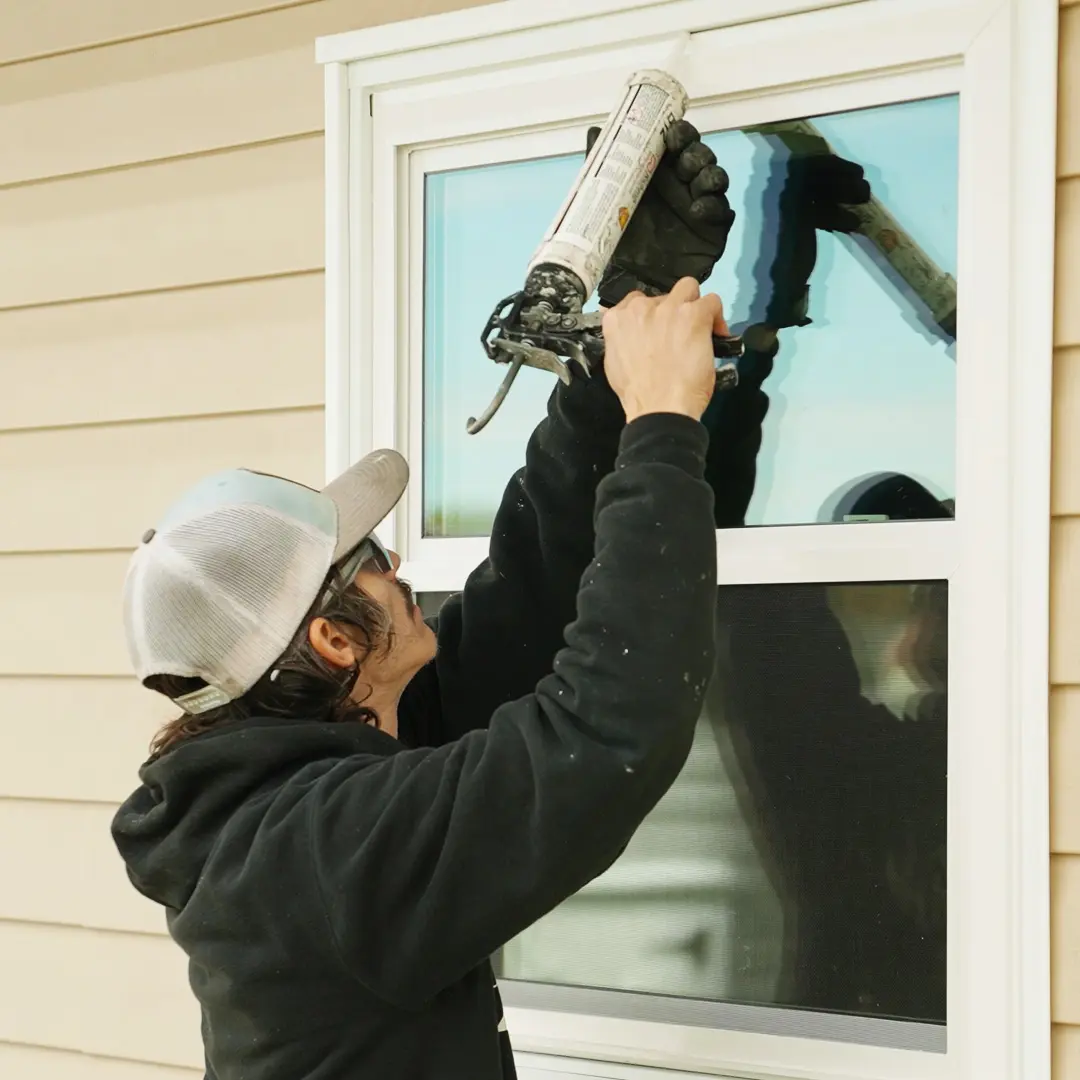
Step 4: Desert-Rated Installation Day
Our Arizona-licensed installation crew arrives with all tools, desert-rated flashing materials, UV-resistant exterior sealants, and trim supplies. We remove existing windows, inspect each rough opening for dust infiltration damage, dried sealant deterioration, or structural concerns common in older Phoenix homes, and install your new windows to manufacturer specifications and Arizona energy code requirements. Most Phoenix projects of 10 to 15 windows in a single-story ranch or colonial are completed in one day.
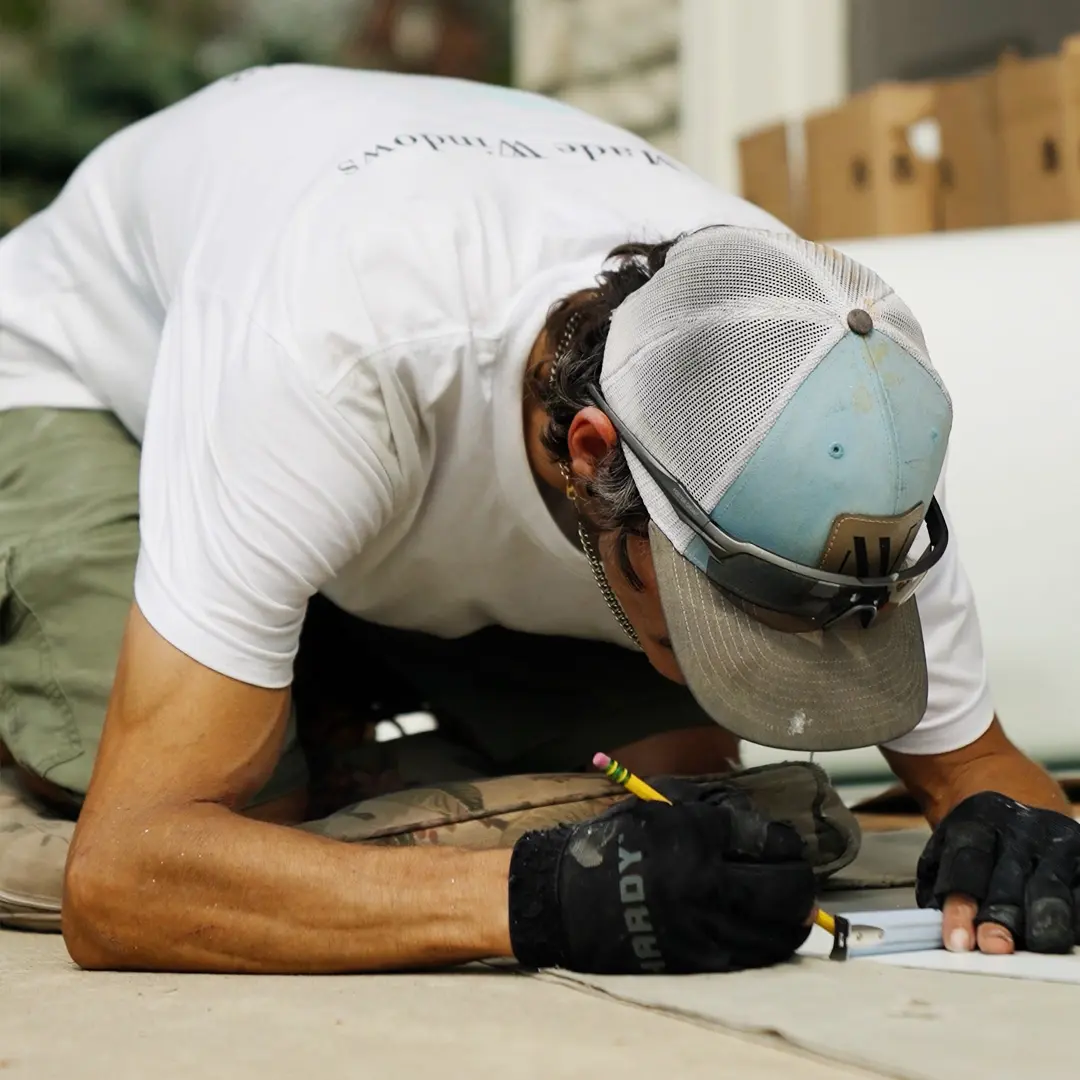
Step 5: SRP Documentation and Final Approval
We remove all debris, conduct a room-by-room walkthrough, and deliver your NFRC window labels, Certified Product Directory numbers, signed contractor form, paid invoice, ENERGY STAR product labels, and manufacturer certification documentation. All SRP rebate paperwork is completed and ready for your submission. No payment until every window meets your approval.
Phoenix Window Company Market Data and Statistics for 2025
Here is what current market research from Phoenix, Maricopa County, and Arizona-specific sources shows for homeowners considering a window company in 2025.
$357-$480 | Average cost Maricopa County homeowners paid for window installation in 2025. Source: Manta Maricopa County, 2025 |
$400-$500 | Vinyl double hung window replacement installed, Maricopa County. Source: HomeBlue Maricopa County, 2025 |
$400-$500 | Vinyl double hung window replacement installed, Phoenix AZ. Source: HomeBlue Phoenix, 2025 |
$600-$900 | Wood double hung window replacement installed, Maricopa County. Source: HomeBlue Maricopa County, 2025 |
$750-$1,250 | Per-window cost for premium installation (e.g., Andersen-class products). Source: EcoWatch Phoenix, 2025 |
$3,900-$4,800 | Vinyl replacement: 10 windows, 1,000 sq ft home. Source: HomeBlue Phoenix, 2025 |
$5,800-$7,200 | Vinyl replacement: 15 windows, 1,500 sq ft home. Source: HomeBlue Maricopa County, 2025 |
$7,700-$9,700 | Vinyl replacement: 20 windows, 2,000 sq ft home. Source: HomeBlue Maricopa County, 2025 |
Below nat. avg | Phoenix window replacement costs are lower than the national average per Angi’s July 2025 Phoenix market analysis. |
$3/sq ft | SRP ENERGY STAR window rebate per square foot of replacement window area. Through April 30, 2026. Source: SRP, 2025 |
$1/sq ft | SRP shade screen rebate per square foot for professionally installed screens blocking 80%+ solar heat gain. Source: SRP, 2025 |
$600 | Federal Energy Efficient Home Improvement Credit for qualifying ENERGY STAR Most Efficient window installation. Source: AZ Energy Efficient Home, 2025 |
Up to $14,000 | Efficiency Arizona (HEAR) program rebates for qualifying low-to-moderate income Phoenix homeowners. Source: AZ Energy Efficient Home / Efficiency Arizona, 2025 |
12% avg. | Average household energy bill reduction with ENERGY STAR-certified window installation, per energystar.gov. Source: SRP / ENERGY STAR |
25-30% | Share of home heating and cooling energy lost through poorly performing windows. Source: U.S. Department of Energy |
Window Styles Virtual View Windows Installs Across Phoenix
Phoenix’s architecture ranges from historic Spanish Revival and Territorial homes in central Phoenix and the Heritage neighborhoods to mid-century ranch homes across Mesa and Glendale to contemporary desert modern designs in Scottsdale and Paradise Valley. Virtual View Windows installs every major window style, custom-fitted to your exact rough opening dimensions.
Phoenix’s most commonly installed window style, compatible with every architectural period from early bungalows in Willo and Encanto to contemporary colonials across the East Valley. Both sashes operate independently and tilt inward for interior cleaning, which is practical in Phoenix’s dusty desert environment where exterior window cleaning requires working in heat. Vinyl double hung windows in Phoenix run $400 to $500 installed per HomeBlue’s 2025 Maricopa County data.
Side-hinged and crank-operated, casement windows create a compression seal when closed that resists the fine particulate intrusion common during Phoenix’s dust storms. When open, they capture the evaporative cooling breezes that characterize Phoenix’s spring and fall evenings. A strong choice for contemporary desert modern homes in Scottsdale, Paradise Valley, and the growing North Scottsdale corridor.
Affordable Windows of Arizona specifically mentions garden windows among the custom window options popular in Phoenix’s market. A garden window projects outward from the kitchen or dining wall, creating a small greenhouse-effect interior shelf. In Phoenix, proper Low-E glass selection for garden windows is critical to prevent solar heat gain from converting the space into an oven during summer months.
Fixed-frame non-operable picture windows maximize views of Phoenix’s dramatic landscape, including Camelback Mountain, South Mountain, and the McDowell Mountains that define the Valley’s visual character. With no operable mechanism and no air gap, picture windows deliver the lowest air infiltration of any window style, an important advantage in Phoenix where the temperature differential between outdoor and indoor air frequently exceeds 40 degrees during summer afternoons.
Bay windows project outward from the wall, capturing desert views and creating interior gathering spaces. In Phoenix’s Spanish Revival and ranch homes, bay windows add architectural character and expand interior spatial perception. Proper installation in Phoenix requires careful attention to flashing at the projecting roof plane to prevent the water infiltration that arrives with monsoon storms.
Awning windows hinge at the top and open outward, making them ideal for ventilation during the light rain events that are common in Raleigh’s spring and fall. Hopper windows hinge at the bottom and are frequently used in basements and utility spaces. Both styles are available in standard and specialty sizes.
Phoenix’s Spanish Revival, Territorial, and desert modern homes contain arched openings, circular accent windows, and custom geometric shapes common to these architectural styles. Virtual View Windows sources and installs specialty shape windows for these openings in desert-rated glass packages.
What Phoenix's Desert Climate Does to Your Windows and Your Energy Bill
Phoenix’s climate demands are unlike any other city in this series. The combination of extreme heat, relentless sunshine, and the Sonoran Desert’s intense solar radiation creates window performance challenges that require desert-specific product knowledge and installation expertise.
Extreme Heat and Solar Heat Gain: Phoenix's Dominant Challenge
The U.S. Department of Energy estimates that 25 to 30 percent of a home’s heat enters through windows. In Phoenix, where summer temperatures routinely exceed 110 degrees and peak at 115 or higher, that heat gain is not just an energy efficiency concern. It is the primary driver of the energy bills that Phoenix homeowners pay to APS and SRP every month from May through September. Blistering summers in Phoenix demand more than just regular windows; they require windows that can efficiently counter the city’s intense heat, as documented by Affordable Windows of Arizona’s market analysis.
The critical metric for Phoenix window companies is the Solar Heat Gain Coefficient, or SHGC. In desert climates like Arizona, a lower SHGC rating is better because it reduces the amount of unwanted heat entering through the glass, according to The Environmental Blog’s 2025 desert-ready window analysis. This is the opposite of cold-climate markets like Billings, Montana, where a higher SHGC is preferred to capture passive solar heat in winter. Phoenix’s cooling-dominated climate makes SHGC management the most important glass performance specification for any local window company to get right.
Desert UV and Frame Degradation
Phoenix’s elevation of 1,100 feet above sea level and its desert location expose homes to ultraviolet radiation intensity that accelerates the degradation of window frame materials, weatherstripping compounds, and exterior caulking at rates faster than in any coastal or Midwest city in this series. Arizona’s intense sunshine can wear down caulk over time, requiring more frequent inspection and resealing than in moderate-climate markets, as documented by The Environmental Blog. Low-E coatings that protect against UV radiation are therefore not just an energy efficiency measure in Phoenix. They are a material protection requirement that directly extends the service life of the window installation.
Monsoon Season Thermal Events
Phoenix’s summer monsoon season, which runs from June 15 through September 30, brings dramatic overnight temperature drops, high humidity events, and occasional extreme wind and debris storms. The thermal shock of a monsoon storm dropping temperatures by 20 degrees in minutes, combined with the blowing dust and precipitation that arrives with each monsoon cell, stresses window seals and weatherstripping compounds differently than any other climate type in this series. A Phoenix window company that understands monsoon conditions specifies weatherstripping and sealants rated for extreme thermal cycling and dust infiltration resistance.
Phoenix Housing Stock and Older Windows
A significant portion of Phoenix’s housing stock, particularly homes built before the early 2000s, lacks the insulation and window performance needed for today’s climate demands per The Environmental Blog’s 2025 analysis. Many Valley homes still use single-pane or aluminum-frame windows, which are poor insulators and highly conductive. In a desert climate, that is a recipe for high bills and uncomfortable interiors. For Phoenix homeowners with older windows, the energy savings case for replacement is particularly compelling.
What to Look for in a Window Company in Phoenix, AZ
Phoenix’s window company market is competitive, and not every company that advertises in the Valley understands the desert-specific product requirements and SRP rebate qualification criteria that separate an excellent Phoenix window installation from a generic one. Here is what to evaluate before signing any contract.
Desert-Specific Glass Package Knowledge
A Phoenix window company that does not lead with SHGC when recommending glass packages does not understand the priority your climate demands. The SHGC specification for Phoenix should target 0.23 or below to meet SRP’s window rebate requirements and to effectively reduce solar heat gain during the five-month cooling season. A company that recommends a product based on U-factor alone without SHGC discussion is optimizing for a cold-climate metric in a cooling-dominated desert city.
SRP Rebate Qualification Experience
SRP’s $3 per square foot window rebate is one of the most generous residential window incentives in Arizona, but it requires specific documentation: the qualifying window must have a U-factor of 0.32 or below and an SHGC of 0.23 or below, and the contractor must be Arizona-licensed to install windows. The rebate application requires your SRP account information, paid invoice, NFRC window labels, and a signed contractor form. A Phoenix window company with SRP rebate experience knows exactly what documentation you need and provides it at project completion.
Arizona Contractor Licensing
Arizona requires window installation contractors to hold a valid license from the Arizona Registrar of Contractors. SRP’s rebate program specifically requires that replacement windows be installed by a contractor licensed in Arizona to install windows. Hiring an unlicensed contractor disqualifies you from the SRP rebate regardless of the quality of the windows themselves. Virtual View Windows holds a valid Arizona Registrar of Contractors license. Ask any Phoenix window company you are comparing for their ROC license number and verify it at roc.az.gov before signing any agreement.
Low-E Glass Specification and UV Protection
Low-E coatings are microscopic layers applied to the glass surface that reflect infrared and ultraviolet rays. They reduce heat transfer without sacrificing visible light, as documented by The Environmental Blog. In Phoenix’s context, Low-E coatings serve three functions simultaneously: reducing solar heat gain (supporting SHGC performance), protecting interior finishes from UV degradation, and reducing radiant heat loss in winter (a shorter but real season in the Valley). A window company that cannot explain the difference between Low-E coating positions (hard coat vs. soft coat) or how dual-reflective Low-E functions in Arizona’s cooling-dominated climate is not bringing the technical depth that Phoenix homeowners deserve.
Transparent Written Estimates Without High-Pressure Sales
Several Phoenix window companies have been flagged in consumer reviews for high-pressure same-day sales tactics. A legitimate window company in Phoenix provides a written, itemized estimate that you can review without being pressured to sign the same evening. Virtual View Windows delivers written estimates quickly, without requiring an in-home sales presentation, and collects no payment until every window is installed and approved by you.
Lifetime Warranty in Arizona's Extreme Climate
Phoenix’s extreme heat, UV intensity, and monsoon thermal cycling test window warranties differently than any other market in this series. Read warranty terms carefully. Some warranties exclude UV-related degradation or limit coverage on specific frame materials in extreme climates. Virtual View Windows provides a lifetime warranty on both the installed product and our workmanship with no Arizona climate exclusion.
Desert Performance Specifications for Phoenix Window Installation
Phoenix falls within ENERGY STAR’s Hot-Dry and Mixed-Dry climate zone (Climate Zone 2 and 3), which has specific window performance priorities that are different from every other market in this series. Here is how key performance specifications translate to the Phoenix context, anchored by SRP’s rebate program requirements.
Specification | Why It Matters in Phoenix | Phoenix Target Value |
Solar Heat Gain Coefficient (SHGC) | The most critical metric for Phoenix. Measures how much solar heat enters through the glass. Lower = better in a cooling-dominated climate. | 0.23 or below required for SRP rebate. 0.25 or below for ENERGY STAR Hot-Dry zone. Dual-reflective Low-E achieves 0.17 to 0.22. |
U-Factor | Measures thermal resistance. Less critical than SHGC in Phoenix’s cooling-dominated climate, but still affects heating costs in Dec-Feb. | 0.32 or below required for SRP rebate. 0.30 or below for ENERGY STAR. Triple-pane achieves 0.15 to 0.20. |
Low-E Coating Type | Dual-reflective Low-E reflects both outdoor solar radiation in summer and indoor heat in winter. Soft-coat provides best performance. | Dual-reflective soft-coat Low-E recommended for Phoenix. Single-coat or hard-coat is acceptable minimum but dual performs better in desert cooling season. |
Argon Gas Fill | Inert gas between panes reduces conductive heat transfer. Standard between panes on certified products. | Standard. Argon between all double-pane units. Krypton available in triple-pane for maximum performance. |
Air Leakage | Poorly sealed frames allow hot desert air to infiltrate the conditioned interior, increasing cooling load directly. | 0.30 cfm per sq ft or below for ENERGY STAR certification. Critical in Phoenix given the temperature differential between outdoor and indoor air. |
Frame Material UV Resistance | Phoenix’s intense UV degrades inferior frame materials faster than any other market in this series. | Vinyl (fade-resistant formulation), fiberglass, or composite. Standard aluminum conducts heat and corrodes over time in Arizona’s conditions. Wood requires UV-protective finishes. |
- Frame material: Vinyl is the most budget-friendly. Fiberglass and wood-clad carry higher upfront costs with longer lifespans.
- Glass package: Low-E double-pane is standard. Triple-pane adds $150 to $350 per window.
- Window style and size: Bay, bow, and specialty shapes cost significantly more than standard rectangles.
- Floor level access: Upper-story windows require additional labor time and may require staging.
- Structural condition: Rotted or damaged rough openings require repair prior to installation.
- Permit fees: Raleigh requires a permit for window replacement. Virtual View Windows handles the application on your behalf.
- Project size: Larger whole-home replacement projects generally reduce per-window cost.
Window Company Cost Breakdown for Phoenix, AZ
Window company pricing in Phoenix, Arizona is lower than the national average per Angi’s July 2025 Phoenix market analysis, making the Valley one of the more affordable large metro markets for window installation. Here are current benchmarks from multiple Phoenix and Maricopa County sources.
Window Type and Material | Low (Installed) | High (Installed) |
Vinyl double hung (Maricopa County avg.) | $357 | $480 |
Vinyl double hung (standard) | $400 | $500 |
Wood double hung (standard) | $600 | $900 |
Fiberglass double hung | $650 | $1,200 |
Premium installation (Andersen-class) | $750 | $1,250 |
Garden window (vinyl) | $400 | $800 |
Casement window (vinyl) | $450 | $900 |
Picture window (vinyl) | $300 | $800 |
Bay or Bow window | $1,200 | $4,000+ |
Specialty / custom / arched shape | $600 | $2,000+ |
Project Scope | Low Estimate | High Estimate |
10 windows, 1,000 sq ft Phoenix home (vinyl) | $3,900 | $4,800 |
15 windows, 1,500 sq ft Phoenix home (vinyl) | $5,800 | $7,200 |
20 windows, 2,000 sq ft Phoenix home (vinyl) | $7,700 | $9,700 |
25 windows, 2,500 sq ft Phoenix home (vinyl) | $9,700 | $12,100 |
How SRP Rebates Reduce Your Phoenix Window Company Investment
For SRP customers, the $3 per square foot rebate on qualifying ENERGY STAR windows can meaningfully reduce your net project cost. Here is how the math works for a typical Phoenix project:
- 10 windows at 15 sq ft each = 150 sq ft of window area. SRP rebate: 150 x $3 = $450 in cash rebate.
- 15 windows at 15 sq ft each = 225 sq ft. SRP rebate: 225 x $3 = $675 in cash rebate.
- 20 windows at 15 sq ft each = 300 sq ft. SRP rebate: 300 x $3 = $900 in cash rebate.
- Federal 25C credit: additional 30% of installed cost up to $600. Combined with SRP rebate: up to $1,050 in combined savings on a qualifying project.
SRP Rebates, APS Programs, and Arizona Energy Incentives
Phoenix homeowners have access to a set of energy incentive programs that make qualifying window installation significantly more affordable. Here is the complete 2025 picture.
SRP Window Replacement Rebate ($3 Per Square Foot)
Salt River Project offers its residential window replacement rebate of $3 per square foot for ENERGY STAR-certified replacement windows installed by an Arizona-licensed contractor. To qualify, replacement windows must have a U-factor of 0.32 or below and an SHGC of 0.23 or below. The rebate application requires your SRP account information, paid invoice, NFRC window labels, Certified Product Directory number from the NFRC directory, and a signed contractor form submitted within 6 months of installation. The SRP rebate requires that installations be completed before April 30, 2026. New construction homes do not qualify. Virtual View Windows provides all required SRP rebate documentation at project completion.
SRP Shade Screen Rebate ($1 Per Square Foot)
For Phoenix homeowners who are not yet ready for full window replacement, SRP offers a separate rebate of $1 per square foot for professionally installed shade screens blocking at least 80 percent of solar heat gain on sun-struck west-, south-, and east-facing windows. SRP also offers a $1 per square foot rebate for qualifying solar-control window film on single-pane sun-struck windows with SHGC of 0.40 or below. Both rebates must be submitted within 6 months of installation through April 30, 2026.
APS Energy Rebate Programs
Arizona Public Service customers in the Phoenix metro may qualify for APS Home Performance rebate programs covering a variety of efficiency upgrades. APS offers rebates for window treatments and replacements through its residential efficiency programs. Check current APS window incentive availability at aps.com or call APS customer service, as specific rebate amounts and qualifying products change periodically.
Efficiency Arizona (HEAR Program)
Efficiency Arizona makes it easier and more affordable to improve home comfort and efficiency. Qualifying homeowners can access up to $14,000 in rebates for eligible efficiency upgrades, per AZ Energy Efficient Home’s 2025 program documentation. The HEAR program specifically serves low-to-moderate income households. AZ Energy Efficient Home, an ENERGY STAR Contractor of the Year recipient since 2016, serves as a qualified contractor for the program in Phoenix. Contact them at (623) 581-5298 for eligibility screening.
Arizona Weatherization Assistance Program
The State of Arizona offers a Weatherization Assistance Program for households with lower incomes qualifying for programs such as Supplemental Security Income and Aid to Families with Dependent Children. The WAP includes a home energy assessment and common home improvements including window and sealing improvements. Apply through your local community action agency with income verification documentation.
Federal Energy Efficient Home Improvement Credit
The federal 25C Energy Efficient Home Improvement Credit provides 30 percent of installed cost, maximum $600 per year, for qualifying windows meeting ENERGY STAR Most Efficient certification. AZ Energy Efficient Home’s guidance for Phoenix homeowners confirms the $600 credit applies to qualifying exterior windows and skylights meeting ENERGY STAR’s Most Efficient certification. File on IRS Form 5695. Virtual View Windows provides all required NFRC documentation and product identification numbers for your tax credit filing at project completion.
Why Phoenix Homeowners Choose Virtual View Windows
Phoenix homeowners deserve a window company that genuinely understands what the Sonoran Desert demands from a window installation. Here is what Virtual View Windows brings to every Valley project.
Desert-Optimized Product Specification
Every glass package Virtual View Windows recommends for a Phoenix installation leads with SHGC, not just U-factor. We specify dual-reflective soft-coat Low-E glass with SHGC values of 0.23 or below, meeting SRP’s rebate threshold and the ENERGY STAR Hot-Dry zone specification. We match glass orientation to your home’s elevation, providing enhanced solar control specifications for south-, west-, and east-facing windows that bear the heaviest Phoenix afternoon sun load.
Arizona ROC Licensed Contractor
Virtual View Windows holds a valid Arizona Registrar of Contractors license. This is the legal requirement for window installation in Arizona and the prerequisite for your SRP rebate application. Our ROC license number is available on request and verifiable at roc.az.gov. We carry required bonding and insurance and cover all crew members under workers’ compensation on every Phoenix project.
SRP and APS Rebate Documentation
We provide all required SRP rebate documentation at project completion: paid invoice, NFRC window labels, Certified Product Directory number, and a signed contractor form. The SRP rebate of $3 per square foot on qualifying ENERGY STAR windows adds up to meaningful savings on a whole-home project. For a typical 10-window Phoenix home with 150 square feet of window area, the SRP rebate alone totals $450. Virtual View Windows also identifies qualifying products for APS customers in the Valley’s service territory and for the federal Energy Efficient Home Improvement Credit.
Monsoon Season Scheduling Expertise
Phoenix’s June 15 through September 30 monsoon season affects installation scheduling. We monitor monsoon weather events and schedule installations around them, protecting your home from the debris intrusion that can occur during an open rough opening if a monsoon cell arrives unexpectedly. We use monsoon-appropriate weatherproofing sequences and sealants formulated for Arizona’s extreme thermal cycling on every summer installation.
Written Estimates Without High-Pressure Sales
Phoenix has a documented history of high-pressure window sales tactics in the valley market. Virtual View Windows provides accurate written estimates without requiring you to decide the same evening, without inflated prices that drop mysteriously if you agree tonight, and without a salesperson who stays for four hours. Written estimates, delivered quickly. No payment until every window is in and approved.
Lifetime Warranty for Arizona's Desert Extremes
Every Virtual View Windows project in Phoenix carries a lifetime warranty on both the installed product and our workmanship. Phoenix’s 115-degree summers, UV intensity, and monsoon thermal cycling are the test our warranty is built to pass.
Window Frame Materials for Phoenix's Desert Climate
Phoenix’s combination of extreme UV radiation, 115-degree summer temperatures, and monsoon thermal cycling creates specific frame material performance requirements that differ from both the cold-climate markets (Akron, Billings) and the humid markets (Baltimore, Portland) in this series.
Vinyl: Phoenix's Standard Frame
Vinyl accounts for the large majority of window installations in the Phoenix market according to HomeBlue’s Maricopa County data. Vinyl frames do not conduct heat the way aluminum does, resist UV-related fading in desert conditions when manufactured with fade-resistant UV inhibitors, and require no painting. Cost runs $400 to $500 installed for standard double hung per HomeBlue Phoenix 2025. Lifespan in Arizona’s desert conditions is typically 20 to 40 years with regular cleaning and annual caulk inspection. When comparing vinyl options, ask specifically about UV inhibitor content in the vinyl formulation. Standard-grade vinyl without desert-rated UV inhibitors will fade visibly within 10 years in Phoenix’s sun exposure.
Fiberglass: Desert Heat Stability
Fiberglass frames maintain their dimensional stability across Phoenix’s extreme temperature range, from 20-degree winter nights to 115-degree summer days. This stability is important in desert climates because the thermal expansion and contraction that vinyl undergoes across this temperature range stresses window seals and hardware alignment over time. Fiberglass accepts exterior paint and resists UV degradation without special formulations. Cost runs approximately $650 to $1,200 per window installed in the Phoenix market. A strong choice for any Phoenix homeowner prioritizing longevity over initial cost.
Wood: Not Recommended for Phoenix Exterior Exposure
Untreated or inadequately protected wood frames deteriorate in Phoenix’s combination of intense UV radiation, extreme summer heat, and monsoon moisture events. If a Phoenix window company recommends solid wood exterior frames for a desert-exposed installation without discussing the mandatory maintenance requirements and protective coating schedule, proceed with caution. Wood-clad windows with aluminum or fiberglass exterior shells are acceptable for sheltered or north-facing orientations where UV exposure is limited.
Standard Aluminum: Heat Conduction Concern
Standard aluminum frames conduct heat and cold efficiently, which is exactly the wrong property in a climate where the outdoor-to-indoor temperature differential regularly exceeds 40 degrees in summer. Older Phoenix homes with aluminum-frame single-pane windows are among the highest energy consumers in the Valley precisely because of this conductivity. Modern thermally-broken aluminum frames address this issue through an insulating break in the frame assembly, but they carry premium pricing over vinyl alternatives.
Frequently Asked Questions About Window Companies in Phoenix, AZ
How much does a window company charge in Phoenix, AZ?
Window company pricing in Phoenix, Arizona runs below the national average per Angi’s July 2025 Phoenix market analysis. Manta’s 2025 Maricopa County data shows most homeowners paid $357 to $480 per window for replacement installation. HomeBlue places the standard vinyl double hung range at $400 to $500 installed. Premium installations from Andersen-class companies run $750 to $1,250 per window per EcoWatch Phoenix. Whole-home projects for a 1,000 square foot home run $3,900 to $4,800 for 10 windows. A 2,000 square foot home with 20 vinyl windows runs $7,700 to $9,700. SRP customers can reduce net cost by $3 per square foot on qualifying ENERGY STAR windows, totaling $450 in rebates for a typical 10-window project. Virtual View Windows provides free written estimates with no payment until every window is installed and approved.
What glass specifications should I look for in a Phoenix window company?
For Phoenix’s desert cooling-dominated climate, the most important glass specification is the Solar Heat Gain Coefficient (SHGC). A lower SHGC reduces unwanted solar heat entering through the glass during Phoenix’s five-month cooling season. Target SHGC of 0.23 or below to meet SRP’s window rebate requirements and ENERGY STAR Hot-Dry zone specifications. U-factor of 0.32 or below is also required for SRP rebate qualification. Dual-reflective soft-coat Low-E glass with argon gas fill achieves SHGC values of 0.17 to 0.22 in qualifying products. A window company that recommends products based on U-factor alone without SHGC discussion is applying cold-climate metrics to a cooling-dominated desert market.
Do Phoenix window companies need an Arizona ROC license?
Yes. Arizona requires window installation contractors to hold a valid license from the Arizona Registrar of Contractors. SRP’s window rebate program specifically requires that replacement windows be installed by a contractor licensed in Arizona to install windows. Hiring an unlicensed contractor disqualifies your project from the SRP rebate regardless of window quality. You can verify any contractor’s ROC license status at roc.az.gov before signing any agreement. Virtual View Windows holds a valid Arizona ROC license, carries required bonding and insurance, and covers all crew members under workers’ compensation on every Phoenix project.
How does the SRP window rebate work in Phoenix?
SRP offers a rebate of $3 per square foot for professionally installed ENERGY STAR-certified replacement windows in existing SRP-served homes. Qualifying windows must have a U-factor of 0.32 or below and an SHGC of 0.23 or below. Installation must be completed by a contractor licensed in Arizona and the rebate application submitted within 6 months of installation, through April 30, 2026. Required documentation includes your SRP account information, paid invoice, NFRC window labels, the window’s Certified Product Directory number from the NFRC directory, and a signed contractor form. For a 10-window project with 150 square feet of window area, the SRP rebate totals $450. Combined with the federal 25C credit (up to $600), qualifying projects can capture up to $1,050 in combined savings.
What window company is best for Phoenix homes with high energy bills?
For Phoenix homeowners with high energy bills, the most effective window company is one that specifies desert-optimized glass packages with SHGC values of 0.23 or below and U-factor of 0.32 or below, qualifies your windows for the SRP $3 per square foot rebate, holds an Arizona ROC license (required for SRP rebate), and provides all required rebate and tax credit documentation at project completion. The U.S. Department of Energy documents that 25 to 30 percent of home cooling energy is lost through windows. Replacing old single-pane or aluminum-frame windows with qualifying ENERGY STAR-certified windows reduces household energy bills by an average of 12 percent per energystar.gov data. Virtual View Windows meets all of these criteria on every Phoenix project.
Phoenix and Maricopa County Communities We Serve
- Phoenix neighborhoods: Arcadia, Biltmore, Willo, Encanto, Central Phoenix, Camelback East, Ahwatukee, South Mountain, North Phoenix, Deer Valley
- East Valley cities: Scottsdale, Tempe, Mesa, Chandler, Gilbert, Queen Creek, San Tan Valley, Gold Canyon
- West Valley cities: Glendale, Peoria, Surprise, Goodyear, Avondale, Litchfield Park, Buckeye, Laveen
- North Valley: Cave Creek, Carefree, Anthem, New River, Maricopa

Get Your Free Estimate Today | Call or Request Online | Serving All of Phoenix
Window Services Near You Across Phoenix and the Valley
Phoenix’s housing market spans more than a dozen distinct cities and hundreds of neighborhoods across the Valley, and the window company experience in Arcadia should feel as locally grounded as the experience in Gilbert or Glendale. Finding window services near you in the Phoenix metro that understands desert glass specification, SRP rebate documentation, Arizona ROC licensing, and the architectural variety of Maricopa County homes is the real challenge.
Virtual View Windows is not a national franchise routing Phoenix calls to regional subcontractors. We operate locally with Arizona ROC licensing, direct knowledge of Maricopa County’s permit jurisdictions, and direct experience with SRP’s rebate program documentation requirements. When you call us, you reach the people who will actually install your windows.
Finding a window company near you in Phoenix that combines desert-optimized glass specification, SRP rebate qualification, Arizona contractor licensing, and a warranty that does not exclude Arizona’s climate extremes is exactly what Virtual View Windows provides. The process starts with a free estimate, includes complete SRP and federal tax credit qualification review at no additional charge, and ends with all documentation you need for every rebate and credit your project earns.
Phoenix’s housing market continues to grow as one of the most dynamic in the country. Home values across Maricopa County have appreciated significantly, and window replacement from a qualified local window company is consistently documented among the top five home improvement investments by return on investment. Phoenix’s below-national-average construction costs, combined with SRP’s generous $3 per square foot rebate and the federal 25C credit, make 2025 and early 2026 a particularly favorable time for Valley homeowners to act.
Request your free, no-obligation window company estimate from Virtual View Windows today. Our Phoenix team responds quickly, provides an accurate written quote that reflects real Maricopa County pricing, includes desert glass package specification from the first conversation, handles SRP documentation, and installs every window with the precision that 115-degree summers demand. No payment until every window is in, inspected, and approved by you.