
Virtual View Windows
Window Company Ohio
Window Company Ohio: The Complete 2025 Guide to Saving Energy, Accessing Rebates, and Protecting Your Buckeye State Home
Ohio’s four seasons deliver some of the most demanding and varied weather conditions of any state in the Midwest. Frigid Lake Erie winds that drive Cleveland winters to minus 10 degrees Fahrenheit. Humid summers that push Columbus and Cincinnati into the upper 90s. Ice storms that coat the whole state. And a shoulder season of wet, gray weather that cycles continuously between rain, snow, and freeze-thaw across the full heating and cooling calendar.
For Ohio homeowners, the condition of their windows has direct, measurable consequences for their energy bill, their daily comfort, and the long-term structural health of their home’s exterior. Old, leaking windows in Ohio do not just let in drafts. They bleed out heated air through the entire heating season, allow moisture into wall cavities during spring thaws, and drive up both AEP Ohio and Columbia Gas monthly bills through every cold month from October to April.
At Virtual View Windows, we specialize in professional window installation services across Ohio. We serve homeowners throughout the state, from Cleveland, Columbus, and Cincinnati to Akron, Toledo, Dayton, Youngstown, and communities across the Buckeye State’s diverse geography. This guide gives you current Ohio cost data, the full state and utility rebate picture for 2025, material guidance for Ohio’s North-Central climate zone, and everything you need to make a confident, informed decision about working with a window company near me.
The Virtual View Windows Process in Ohio: What to Expect
Virtual View Windows is fully licensed and insured in Ohio. We research and file all required permits for your project and ensure every installation complies with the Ohio Residential Code and applicable local amendments, including preservation district requirements in historic neighborhoods.
Every Ohio window installation project with Virtual View Windows follows a clear, documented five-step process designed to deliver maximum performance, complete incentive capture, and no surprises from first contact to final sign-off.

Step 1: Free In-Home Assessment
A certified Virtual View Windows consultant visits your Ohio home, measures every opening precisely, evaluates the condition of existing frames and surrounding wall assembly, identifies your Ohio climate zone and the appropriate glass specifications for each opening's orientation and exposure, and reviews all product options suited to your budget and architecture. No cost, no obligation, and no pressure to purchase.

Step 2: Incentive Identification and Documentation
We identify every rebate and tax credit your project qualifies for: the federal 25C credit, Ohio HOMES and HEEHRA programs, AEP Ohio, Duke Energy, FirstEnergy, and Columbia Gas rebate opportunities. We provide the ENERGY STAR certifications, NFRC labels, QMID documentation, and installation records needed for every applicable application. We separate materials and labor costs in your quote specifically to simplify your federal tax credit filing.

Step 3: Custom Window Fabrication
Your windows are manufactured to the exact dimensions of your openings in your selected frame material and glass specification. Ohio homes, particularly older construction in Cleveland, Columbus, Cincinnati, and smaller historic communities across the state, frequently have non-standard opening sizes that require precise custom fabrication. Precise sizing eliminates the performance gaps that generic sizing creates.
Step 4: Licensed Professional Installation
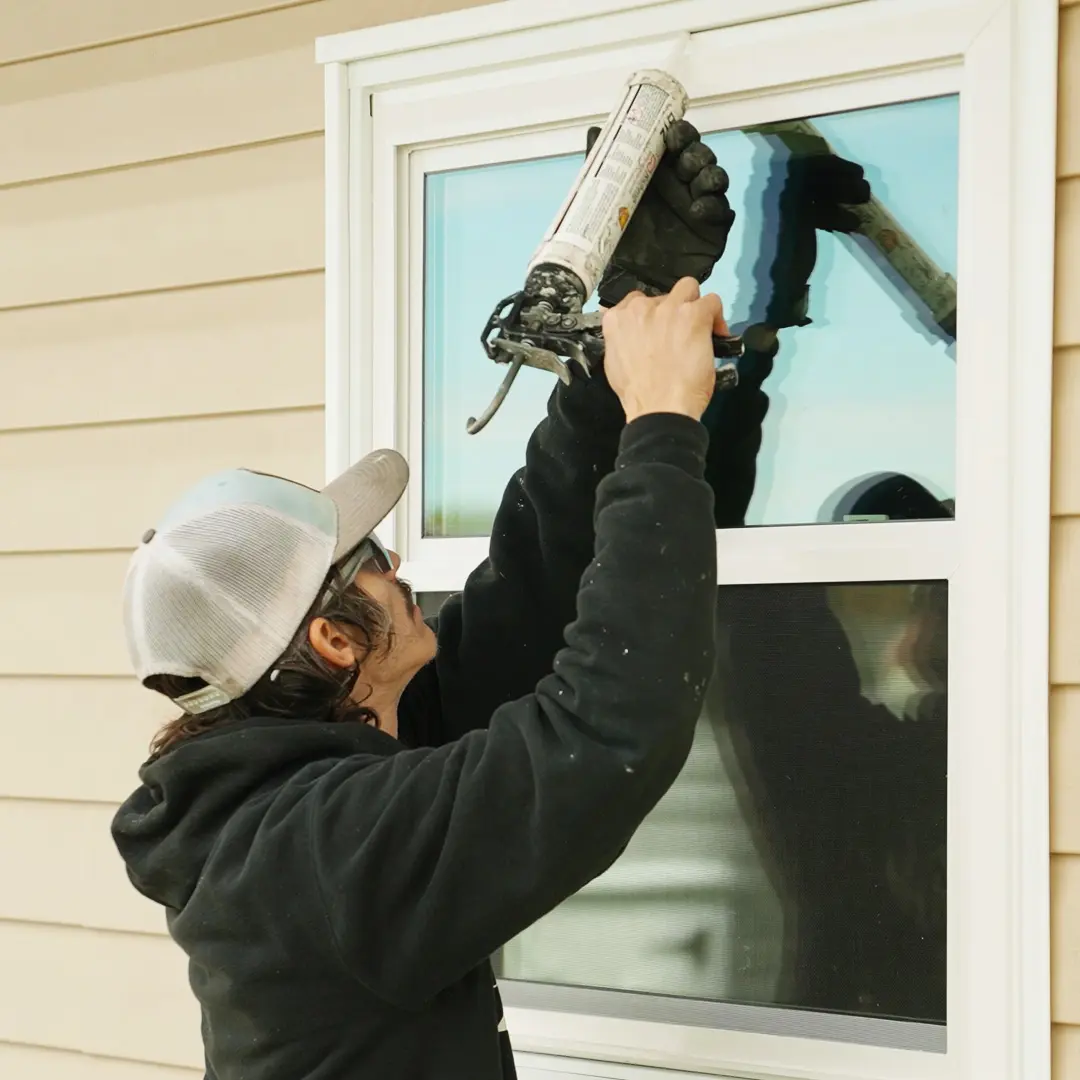
Our licensed Ohio installation crews remove existing windows, prepare each opening with proper insulation, flashing, and air sealing to Ohio Residential Code standards, and install new windows to manufacturer and code specifications. We work year-round across Ohio, including during the colder months when northeast Ohio homeowners cannot afford to wait for spring. Most full-home Ohio projects are completed in one to two days.

Step 5: Documentation, Cleanup, and Walkthrough
We remove all old materials and debris, clean every installation area, and walk through each window with you to verify fit, operation, and your complete satisfaction. We provide NFRC labels, QMID documentation, warranty registration, and all records needed for your federal tax credit, Ohio HOMES, and utility rebate applications before we leave your property.
Why Ohio Homeowners Are Making Window Investment a Priority in 2025
Four separate data points converged in 2025 to make professional window installation in Ohio both financially urgent and financially rewarding. Here is what current research shows.
12% to 13% | Ohio homeowners who install ENERGY STAR certified windows in a North-Central climate like Ohio’s can expect to reduce their annual energy bills by 12 to 13 percent, according to ENERGY STAR data. For a household spending $2,400 annually on heating and cooling, that represents $288 to $312 in annual savings, compounding every year across the 20-to-40-year life of a quality window installation. Source: ENERGY STAR / Window Universe Cleveland Energy Savings Analysis, September 2025 |
81.3% | Cleveland-area homeowners who invest in vinyl window replacement recoup an average of 81.3 percent of their project cost at resale, according to the 2025 Cost vs. Value Report for the East North Central region. That is above the national average of 75 percent, meaning Ohio homeowners get one of the strongest resale returns on window investment anywhere in the country. Source: 2025 Cost vs. Value Report, East North Central Region (includes Cleveland) / Window Universe Cleveland ROI Guide, October 2025 |
$200 to $500 | Ohio homeowners who complete a full-home window upgrade can expect annual energy bill reductions of $200 to $500, recovering their total project investment within 5 to 10 years through energy savings alone, without counting the resale value increase or the immediate comfort improvement that comes from eliminating drafts and cold zones throughout the home. Source: Window Gurus Ohio Window Replacement Strategy Guide, December 2025 / U.S. DOE Building Energy Analysis |
67% | Nearly 67 percent of homeowners in a November 2025 survey of 1,000 people reported saving between $25 and $100 per month on energy bills after having new windows professionally installed. Nearly all survey respondents reported their homes felt noticeably more comfortable immediately following the installation, reinforcing that the value of professional window installation is felt before it shows up on the utility statement. Source: This Old House Windows Survey, November 2025 (n=1,000) |
Ohio also has access to both state-administered rebate programs through the Ohio Department of Development and utility rebates from AEP Ohio, Duke Energy, FirstEnergy, and Columbia Gas, all of which can be layered with the federal energy efficiency tax credit for projects completed in 2025.
Window Services Near You: What Virtual View Windows Offers
As a full-service window company near me that serves communities from Flagstaff to Yuma, Virtual View Windows offers a comprehensive lineup of window solutions built for Arizona conditions.
Residential Window Installation
We install a full range of window styles including double hung, casement, sliding, picture, bay, bow, and awning windows. Every installation begins with a precise measurement of your rough opening and ends with professional caulking, insulation foam sealing, and a multi-point quality check.
Window Replacement for Existing Homes
Older Arizona homes, particularly those built before 2000, commonly have single-pane aluminum frames that fail to meet modern energy standards. Virtual View Windows offers both full-frame replacement and insert replacement options depending on the condition of your existing framing. Our team helps you assess which approach delivers the best value for your specific home.
Energy-Efficient Window Upgrades
All windows we install carry independent NFRC ratings and meet ENERGY STAR program criteria for the Southwest climate zone, which requires a Solar Heat Gain Coefficient (SHGC) of 0.25 or lower and a U-factor of 0.40 or below. For Arizona heat, we also recommend windows with an SHGC as low as 0.11 for west- and south-facing exposures, which delivers more than 40% greater heat resistance than the minimum ENERGY STAR standard.
Commercial Window Installation
From storefront glazing and office curtain walls to multi-unit residential buildings, Virtual View Windows has the crew size, equipment, and permitting knowledge to handle commercial projects across Arizona.
Ohio's Climate Zones and What They Demand From Your Window Company
Ohio sits at the intersection of two ENERGY STAR climate zones, and the right window specification varies meaningfully across the state. Northeast Ohio near Lake Erie faces different thermal demands than the Ohio River communities in the southern part of the state. Understanding what your windows face helps you choose correctly.
Northeast Ohio and the Lake Erie Shoreline: Cleveland, Akron, and Toledo
Northeast Ohio experiences Ohio’s harshest winter conditions, driven by lake-effect snow and cold air masses from Lake Erie and Lake Michigan that funnel across the region with particular intensity in Cuyahoga, Summit, Lucas, and Erie Counties. Cleveland averages 63 inches of annual snowfall, and the lake-effect season can extend well into April. For homes in this region, ENERGY STAR North-Central Zone certified windows with double pane Low-E glass and argon fill are the performance baseline. Triple pane is a particularly strong value upgrade for north and west-facing openings, where lake-driven wind creates sustained infiltration pressure against window frames through the long winter season.
Central Ohio: Columbus, Mansfield, and the Scioto Valley
Columbus and central Ohio experience a continental climate with cold, wet winters and hot, humid summers. January temperatures average in the low to mid-20s Fahrenheit, with occasional ice storm events that are particularly hard on aging window seals and sill flashings. The wide swing between winter heating and summer cooling demand makes dual-season window performance important for Columbus-area homeowners. Low-E coatings that minimize winter heat loss while limiting summer solar gain provide the best year-round balance for the central Ohio market.
Southeast Ohio: Appalachian Foothills and Rural Communities
Southeast Ohio’s Appalachian foothills communities including Athens, Chillicothe, Portsmouth, and Marietta experience a hillier terrain climate with colder nights, higher precipitation, and significant freeze-thaw cycling that accelerates frame and sill deterioration in older homes. Many homes in this region are older construction with original single-pane windows that represent the highest energy waste per opening of any window type. The financial case for window installation is often most dramatic in southeast Ohio, where the combination of older housing stock and higher heating bills creates the largest gap between current and potential energy performance.
Southwest Ohio: Cincinnati, Dayton, and the Ohio River Valley
Southwest Ohio including Cincinnati, Dayton, and the Ohio River Valley runs slightly warmer than the northern part of the state, with winter temperatures averaging in the upper 20s to low 30s and higher summer humidity from the Ohio River corridor. Cincinnati falls in the Mixed-Humid climate zone for ENERGY STAR purposes, which allows slightly different window performance specifications than the North-Central zone used for northern Ohio. Homeowners in southwest Ohio should confirm their exact climate zone when selecting ENERGY STAR certified products to ensure they qualify for applicable rebates.
Signs Your Ohio Home Needs a New Window Company
Two or more of these issues present in your Ohio home is a strong case for scheduling a professional window assessment with Virtual View Windows. Our in-home consultations are free, detailed, and carry no obligation to purchase.
Ohio’s climate cycle exposes window performance failures faster than most. These are the clearest signals that professional window installation has moved from desirable to necessary in your Ohio home.
Drafts felt at the frame, sill, or glass edge with windows completely closed
In Ohio’s cold months from October through April, every draft from a failed window seal is heat that your furnace generated and your utility bill paid for. Air infiltration through failing windows is one of the most direct and measurable energy losses in any Ohio home.
Condensation or frost forming on interior glass surfaces during cold weather
Interior frost is a severe performance failure signal. It means the glass surface has dropped to the dew point of interior air, which only occurs when the window’s thermal resistance has failed completely. A window this cold is not just a comfort problem. It creates a moisture risk for the surrounding wall assembly.
Foggy haze visible between the panes of a double pane window
Seal failure in an insulated glass unit eliminates the thermal benefit of the gas-filled cavity. Once the Low-E coating degrades through moisture intrusion, the window performs at single-pane levels for both insulation and UV protection. Seal failure cannot be reversed. The glass unit must be replaced.
Visible rot, warping, paint failure, or softening at the frame or surrounding sill
Ohio’s freeze-thaw cycle and spring moisture loading makes wood frame deterioration a common and accelerating problem in older homes. Rotted or warped frames allow moisture into wall assemblies, threatening insulation performance, drywall integrity, and the structural lumber behind the frame.
Windows that bind, jam, or no longer lock securely
Ohio building codes require functional egress windows in all sleeping rooms. A window that cannot be opened and closed reliably is a life-safety concern. It is also a home security vulnerability, since windows that will not latch are a common unauthorized entry point.
Unexplained increases in AEP Ohio, Columbia Gas, Duke Energy, or Dominion Energy bills
When your utility statement climbs without a change in occupancy, thermostat settings, or a documented rate increase, failing window seals are one of the most common structural causes. A free energy audit from Virtual View Windows can identify exactly which windows are contributing to your elevated costs.
Rooms that are consistently colder or hotter than adjacent spaces
Radiant cooling from cold glass surfaces in Ohio winters and solar heat gain through inadequately glazed south and west-facing windows in Ohio summers create temperature inconsistencies that HVAC systems cannot fully compensate for. These comfort complaints are a reliable leading indicator of window performance failure.
Window Styles Virtual View Windows Installs for Ohio Homes
Installing new windows with Virtual View Windows may qualify you for significant financial incentives:
- Federal Residential Clean Energy Credit: Under the Inflation Reduction Act of 2022, Arizona homeowners may claim a federal tax credit of up to $600 per year for qualifying ENERGY STAR windows through December 31, 2025.
- SRP Utility Rebate: SRP electric customers can receive $3.00 per square foot of qualifying ENERGY STAR replacement window area. A whole-home project can yield $500 to $1,500 or more in direct rebates.
- APS and Southwest Gas: Check current program offerings at your utility provider, as rebate availability changes annually.
- Arizona Weatherization Assistance Program: Income-eligible households may qualify for state-sponsored weatherization services through the Arizona Department of Housing, which can include window improvements at no cost.
Our team helps every client identify which incentive programs apply to their project before work begins, so you capture every dollar available to you.
Window Frame Materials for Ohio: A Comparison Guide
Frame material determines how your windows perform through Ohio’s cold winters, humid summers, and frequent freeze-thaw cycles. Here is how the most common options compare for Ohio-specific conditions.
Frame | Energy Perf. | Maintenance | Cost Range | Lifespan | Best For |
Vinyl (multi-chamber) | Very Good | Very Low | $500 to $700 | 20 to 40 yrs | Most Ohio homes |
Fiberglass | Excellent | Low | $700 to $1,400 | 30 to 50 yrs | Lake Erie shoreline |
Wood | Good | High | $700 to $900 | 20 to 30 yrs | Historic / Victorian homes |
Wood-clad | Very Good | Medium | $900 to $2,000 | 25 to 40 yrs | Craftsman / period homes |
Aluminum | Moderate | Low | $350 to $700 | 20 to 30 yrs | Commercial / modern builds |
For most Ohio homeowners, multi-chamber vinyl frames with double pane Low-E glass and argon fill represent the strongest combination of North-Central Zone performance, low maintenance, long service life, and value. They qualify for ENERGY STAR North-Central and Mixed-Humid zone certification and are eligible for AEP Ohio, Duke Energy, FirstEnergy, and other Ohio utility rebates when meeting applicable product specifications. The 2025 Cost vs. Value Report confirms that vinyl replacements in the East North Central region, which includes Ohio, deliver an 81.3 percent ROI at resale, higher than the national average.
Lake Erie shoreline communities in Cleveland, Lorain, Sandusky, and Erie County should consider fiberglass frames for their superior moisture resistance, which matters in the high-humidity environment created by the lake. Historic preservation district properties in Cleveland Heights, Lakewood, German Village, Hyde Park, and other designated communities may require wood or wood-clad options; confirm local requirements with your municipality before selecting frame material and before signing any contract with a window company near me.
On glass specification, all Virtual View Windows installations include Low-E coating as a standard feature. For Ohio’s North-Central Zone, Low-E coatings optimized for cold climates prioritize winter heat retention while limiting summer solar gain through the windows with the highest afternoon solar exposure. Argon gas fill between panes reduces thermal conductivity by approximately 30 percent compared to air-filled alternatives and is standard on all Virtual View Windows insulated glass units.
Federal 25C Tax Credit: 30% Up to $600, December 31, 2025 Deadline
The Energy Efficient Home Improvement Credit (25C) under the Inflation Reduction Act allows Ohio homeowners to claim 30 percent of the cost of qualifying ENERGY STAR Most Efficient windows, up to $600 for windows, for projects installed by December 31, 2025. This deadline is firm: the One Big Beautiful Bill Act signed in July 2025 ended the credit at year-end rather than extending it through 2032 as originally planned. For Ohio homeowners with window projects planned for 2025, this is the last opportunity to claim this credit, and there is no indication it will be renewed. To claim, you must report the Qualified Manufacturer Identification Number (QMID) on IRS Form 5695 with your 2025 federal tax return. This is a nonrefundable credit, meaning it reduces your tax liability but cannot create a refund if it exceeds what you owe. Virtual View Windows provides QMID documentation and all required manufacturer certifications for every qualifying installation.
Ohio HOMES Program: Up to $4,000 for Qualifying Energy Improvements
The state-administered Ohio HOMES program provides rebates for whole-home energy-saving retrofits. Rebate amounts are based on the percentage of energy savings achieved from the qualifying improvements: projects achieving 20 percent or more energy savings qualify for $2,000; projects achieving 35 percent or more qualify for $4,000. Income-qualified households at or below 80 percent of Area Median Income qualify for larger rebates, and projects that achieve 35 percent or more savings can qualify for up to $8,000 for income-qualified households. Window installation combined with air sealing and insulation is a common pathway to achieving the required savings threshold. Virtual View Windows coordinates documentation and savings modeling for clients pursuing Ohio HOMES rebates.
Ohio HEEHRA Program: Up to $14,000 for Low and Moderate Income Households
The Ohio Home Electrification and Energy Efficiency Home Rebate Act (HEEHRA) provides point-of-sale rebates for qualifying improvements for low and moderate income Ohio households. Rebates can cover up to 100 percent of qualifying improvement costs for households at or below 80 percent of Area Median Income, and up to 50 percent for households at 80 to 150 percent of AMI, with a maximum rebate of $14,000 per household. While HEEHRA primarily targets appliance electrification, improvements that include window installation as part of a comprehensive energy retrofit package may qualify under the program’s weatherization categories. Verify current eligibility guidelines at the Ohio Department of Development website.
AEP Ohio, Duke Energy, and FirstEnergy Utility Rebates
AEP Ohio customers can access rebates of $100 to $300 per window for ENERGY STAR certified window installations. Duke Energy Ohio offers similar rebate programs for customers in its service territory. FirstEnergy’s Ohio utilities, including Ohio Edison, Cleveland Electric Illuminating Company, and Toledo Edison, offer rebates for ENERGY STAR certified appliances and qualifying energy efficiency improvements. Rebate amounts and eligibility criteria vary by program cycle and utility, so confirm current availability directly with your utility provider before scheduling installation. Virtual View Windows provides all required ENERGY STAR certification documentation and paid invoice records for every utility rebate application.
Columbia Gas WarmChoice: Free Weatherization for Income-Eligible Customers
Columbia Gas of Ohio’s WarmChoice program provides free weatherization services, including window weatherizing and replacement where warranted, for income-eligible Columbia Gas customers. Service is delivered through community action organizations in each Ohio county. To apply, contact the WarmChoice provider in your county: MORPC for Franklin County, COAD for eastern and southeastern Ohio counties, and GLCAP for central and northern Ohio counties. Income guidelines for 2025 are published at ColumbiagasOhio.com. WarmChoice services are available at no cost to qualifying households and represent one of the most complete weatherization programs available to Ohio homeowners who meet the income thresholds.
Stacking the Ohio Incentive Programs: A 2025 Example
For an Ohio homeowner in AEP Ohio’s service territory installing 12 qualifying ENERGY STAR Most Efficient windows in 2025: the AEP Ohio rebate of $100 to $300 per window provides $1,200 to $3,600 directly; the federal 25C credit provides up to $600; and the Ohio HOMES program can add $2,000 to $4,000 for projects meeting the energy savings threshold. Combined, first-year incentives can reach $3,800 to $8,200 before energy bill savings begin. Annual energy savings of $200 to $500 add $2,000 to $5,000 over 10 years on top of the resale value increase of 81.3 percent of total project cost in the East North Central market. The effective first-year cost of a professionally installed Ohio window project is meaningfully lower than the sticker price suggests.
What a Window Company in Ohio Costs: 2025 Data
Understanding realistic Ohio window installation costs is the foundation of smart project planning. Ohio homeowners benefit from pricing that runs slightly below the national average in the Columbus and Cincinnati markets, with Cleveland and northeast Ohio pricing somewhat higher due to local labor rates and higher installation complexity from lake-effect weather conditions.
Window Type / Scenario | Cost Per Window (Installed) | Total Project Range |
Vinyl double hung (standard) | $500 to $700 installed | $5,000 to $7,000 (10 units) |
Wood double hung | $700 to $900 installed | $7,000 to $9,000 (10 units) |
Vinyl casement (Low-E / North-Central) | $600 to $950 installed | $6,000 to $9,500 (10 units) |
Triple pane (high-efficiency) | $800 to $1,400 installed | $8,000 to $14,000 (10 units) |
Cleveland metro average (all types) | $800 to $1,000 per window | $8,500 to $10,500 (10 units) |
Columbus / Cincinnati average | $500 to $800 per window | Slightly below national avg |
Bay or bow windows | $1,200 to $5,000+ installed | Per unit, size dependent |
The 2025 Cost vs. Value Report shows Cleveland-area homeowners paying an average of $850 to $1,000 per vinyl window installed, with full 10-window projects running $8,500 to $10,500 in the northeast Ohio market. Columbus and Cincinnati area homeowners can expect pricing slightly below the national average, consistent with the broader Cost vs. Value findings that Ohio, Kentucky, and Tennessee track below the national benchmark on window replacement costs.
The national average per window across all types and markets is $477 based on the This Old House November 2025 survey of 1,000 homeowners, with most homeowners spending between $232 and $740. The $800 to $1,000 range for Cleveland reflects the premium market pricing driven by higher local labor rates and the more demanding installation conditions created by northeast Ohio’s lake-effect climate.
Full-frame replacement is more expensive than pocket or insert replacement but delivers better long-term performance for older Ohio homes where the existing frame may have absorbed years of moisture cycling. For Ohio homes in neighborhoods with preservation restrictions, confirm whether full-frame or insert replacement is permissible under your local historic district guidelines before signing a contract with any window company near me.
ENERGY STAR certified energy-efficient windows add 10 to 15 percent to upfront materials cost but recover through rebates and energy bill savings significantly faster than standard alternatives. In the current Ohio incentive environment where AEP Ohio and Duke Energy rebates reduce the effective cost of ENERGY STAR products, the financial case for upgrading to qualifying performance levels is stronger than at any previous point.
Virtual View Windows provides transparent, itemized estimates for every Ohio project with no hidden fees. We separate materials and labor costs in our quotes specifically to simplify the IRS Form 5695 filing process for the federal 25C tax credit.
Window Styles Virtual View Windows Installs for Ohio Homes
Ohio’s housing stock spans Lake Erie colonial neighborhoods, Columbus craftsman bungalows, Cincinnati Victorian row houses, rural southeast Ohio farmhouses, and modern suburban construction throughout the state. The right window style depends on your home’s architecture, the room’s use, and the specific orientation and exposure of each opening. Virtual View Windows carries a complete selection suited to Ohio’s climate and its diverse residential architecture.
The most widely installed window style in Ohio residential construction, and for good reason. Both upper and lower sashes operate independently for flexible ventilation, and both tilt inward for easy interior cleaning, which is particularly valuable for two-story Ohio homes where exterior ladder access is impractical much of the year. Double hung windows suit Ohio’s dominant colonial, ranch, and cape-style residential architecture and are available in the full range of North-Central Zone glass specifications.
Hinged at the side and cranked open outward, casement windows compress firmly against the frame when closed. This compression seal is airtight in a way that sliding or double hung designs cannot fully match, making casement windows the top recommendation for north and west-facing openings in Cleveland and northwest Ohio, where lake-driven wind creates persistent infiltration pressure. They are also the optimal design for capturing prevailing southwest summer breezes in Columbus and Cincinnati-area homes.
Triple Pane Windows
Three glass layers with two gas-filled cavities provide the highest insulation value available in a residential window. Triple pane units achieve U-factors as low as 0.15, versus 0.30 for standard double pane units. For northeast Ohio homes in lake-effect zones, homes in Appalachian Ohio with colder overnight temperatures, and any Ohio home with significant north-facing exposure, triple pane windows provide insulation performance that is measurably and audibly superior to double pane alternatives. The investment is recovered faster in Ohio’s climate than in most southern states.
Opening horizontally along a track, sliding windows are a practical, low-maintenance choice for wider openings in Ohio basements, kitchens, and contemporary-style homes. Fewer moving parts than hung or casement designs mean more reliable year-round operation across Ohio’s wide temperature range and less maintenance exposure.
Hinged at the top and opened outward by a crank, awning windows allow ventilation during Ohio’s frequent spring rains and summer thunderstorms. They are commonly paired with fixed picture windows and are a practical choice for Ohio kitchens, bathrooms, basements, and secondary bedrooms where airflow is needed without exposure to weather. They are also a good solution for high-wall placement where standard hung or sliding styles would be difficult to reach and operate.
Projecting outward from the exterior wall, bay and bow windows add interior volume, bring in significant natural light, and create architectural distinction at the curb. In Ohio’s Victorian neighborhoods in Cleveland Heights, Lakewood, and Cincinnati’s historic districts, and in the craftsman bungalows of Columbus’s German Village and Short North, bay and bow windows are an upgrade that enhances both the character of the home and its resale value. They are specified with North-Central Zone glass packages appropriate for Ohio’s thermal requirements.
Fixed glass panels that maximize natural light and frame views with no operable components. No moving parts means no operational seal degradation over time. Ohio homes overlooking Lake Erie, the Ohio River, the hills of the Hocking Valley, or positioned to capture a natural feature use picture windows to make the view a permanent element of the interior. Triple pane glass is available for picture window applications in Ohio homes that prioritize maximum thermal performance.
Egress Windows
Required by the Ohio Residential Code for all basement bedrooms and below-grade habitable spaces, egress windows must meet minimum opening dimensions and maximum sill height requirements to function as emergency exits. Virtual View Windows installs egress windows to full compliance with the Ohio Residential Code (ORC Chapter 3781) and applicable local amendments, ensuring your basement living space is both legally compliant and provides a safe emergency exit.
Why Ohio Homeowners Choose Virtual View Windows
When searching for a window company near me in Ohio, homeowners encounter a wide spectrum of options, from national chains that use high-pressure sales tactics to small contractors without the certifications needed to qualify clients for Ohio and federal rebate programs. Here is what consistently distinguishes Virtual View Windows in the Ohio market.
We understand Ohio’s full climate picture. Our product recommendations and installation protocols are calibrated for the specific conditions your home faces, whether you are in a Lake Erie colonial in Cleveland, a craftsman in Columbus’s Short North, a Victorian in Cincinnati’s Mount Adams, or a ranch in rural southeast Ohio. We do not apply a single national standard to every situation.
We qualify clients for every rebate their project earns. AEP Ohio, Duke Energy, FirstEnergy, Columbia Gas WarmChoice, Ohio HOMES, Ohio HEEHRA, and the federal 25C credit: we track every program, provide every document, and help Ohio homeowners capture every available incentive. Many Ohio homeowners leave thousands of dollars on the table simply because their window company did not provide the required documentation at the time of installation.
Our installation crews are licensed in Ohio and follow a documented protocol that treats proper flashing, air sealing, insulation backer, and thermal performance verification as mandatory steps, not optional ones. Cutting corners on installation is where energy performance is lost and where long-term warranty claims originate. We do not cut corners.
We carry ENERGY STAR Most Efficient certified windows for Ohio’s climate zones with verified NFRC ratings and QMID documentation ready for your federal tax filing. We also separate materials and labor costs in every quote to simplify the IRS Form 5695 process for the 25C credit.
Our workmanship warranty backs every Ohio installation we complete. If anything is not performing correctly after we leave, we return and make it right. That is the standard we hold ourselves to with every Ohio homeowner we serve.
Whether you are in Cleveland, Columbus, Cincinnati, Akron, Toledo, Dayton, Youngstown, Canton, Lorain, Elyria, Mentor, Parma, Hamilton, Mansfield, or anywhere across the Buckeye State, Virtual View Windows brings certified window services near you with the expertise, credentials, and accountability your home deserves.
Frequently Asked Questions About Window Companies in Ohio
How much does a window company in Ohio charge per window?
Ohio window installation costs vary by region. Cleveland and northeast Ohio homeowners typically pay $800 to $1,000 per vinyl window installed, with full 10-window projects ranging from $8,500 to $10,500. Columbus and Cincinnati area homeowners pay somewhat less, tracking below the national average of $477 per window for most standard installations. Premium materials like fiberglass or triple pane glass add to the per-window cost. Virtual View Windows provides free, itemized estimates for Ohio homeowners so you know exactly what your project costs before committing to any work.
What rebates are available for window installation in Ohio in 2025?
Ohio homeowners can access multiple layered rebate programs in 2025. AEP Ohio and Duke Energy offer $100 to $300 per window for ENERGY STAR certified installations. The Ohio HOMES program provides $2,000 to $4,000 for whole-home improvements meeting energy savings thresholds. Ohio HEEHRA provides up to $14,000 for income-qualified households. The federal 25C tax credit offers 30 percent of qualifying window costs up to $600, but only for installations completed by December 31, 2025. Columbia Gas WarmChoice provides free weatherization including windows for income-eligible customers. Virtual View Windows handles all required documentation for every applicable program.
What type of windows are best for Ohio homes?
For Ohio’s North-Central climate zone covering northern and central Ohio, ENERGY STAR certified windows with a U-factor of 0.30 or lower are required for standard certification, and 0.20 or lower for ENERGY STAR Most Efficient designation needed for tax credits. Virtual View Windows recommends multi-chamber vinyl frames with double pane Low-E glass and argon fill as the baseline for most Ohio homes. Triple pane glass is strongly recommended for northeast Ohio locations near Lake Erie and for any Ohio home with significant north-facing exposure. Casement windows provide the most airtight seal for wind-exposed openings in lake-effect areas.
How do I find a trusted window company near me in Ohio?
Look for a window company that is licensed in Ohio, carries both liability and workers compensation insurance, installs ENERGY STAR certified products for Ohio’s specific climate zone, provides full documentation for utility and federal rebate applications, and backs its work with a product and workmanship warranty. Confirm the contractor files permits on your behalf and check the Ohio Construction Industry Licensing Board license registry. Be cautious of door-to-door sales offers and pressure tactics that rush decisions. Virtual View Windows is fully licensed in Ohio and serves communities across the state.
Do I need a permit for window installation in Ohio?
Permit requirements in Ohio vary by municipality. Like-for-like replacements in the same opening size typically require a building permit in most Ohio communities, with fees based on local schedules. Projects that enlarge an opening, create a new window location, or install egress windows in basement bedrooms require a full permit review. Ohio Residential Code requires egress windows in all basement sleeping rooms meeting minimum opening dimensions and maximum sill height. Historic preservation district properties in Cleveland Heights, Lakewood, German Village, or other designated areas may have additional approval requirements. Virtual View Windows researches all local permit requirements and files all permits for every Ohio project as part of our full-service installation process.
Choose an Ohio Window Company With Confidence: Your Next Steps

Get Your Free Estimate Today | Call or Request Online | Serving All of Ohio
Find Window Services Near You Across Ohio
Virtual View Windows provides certified window installation services throughout Ohio, covering all regions of the state from the Lake Erie shoreline to the Ohio River Valley.
- Northeast Ohio: Cleveland, Akron, Youngstown, Lorain, Elyria, Mentor, Parma, Lakewood, Cleveland Heights, Shaker Heights, and surrounding communities
- Northwest Ohio: Toledo, Findlay, Bowling Green, Defiance, Napoleon, and the Maumee Valley region
- Central Ohio: Columbus, Westerville, Dublin, Gahanna, Grove City, Hilliard, Newark, and Mansfield
- Southwest Ohio: Cincinnati, Dayton, Hamilton, Middletown, Springdale, and the Greater Miami Valley
- Southeast Ohio: Athens, Chillicothe, Lancaster, Zanesville, Marietta, and the Hocking Valley communities
- Northeast Ohio Appalachian Region: Canton, Massillon, Dover, New Philadelphia, Wooster, and Holmes County
If your community is not listed, contact us directly. We regularly expand our Ohio service coverage to meet homeowner demand and work with properties across the state, including Lake Erie shoreline homes, historic district residences, rural properties, and homes with specialized installation requirements.
Wherever you are in Ohio, searching for a window company near me should connect you with a team that understands Buckeye State winters, respects the diversity of Ohio’s housing stock, installs to code, and stands behind the work with a warranty that means something. That is what Virtual View Windows delivers to every Ohio homeowner.