
Virtual View Windows
Window Company Indiana
Indiana's Premier Window Company for Year-Round Comfort and Energy Savings
Choosing the Right Window Material for Arizona's Desert Climate
Not all window frames perform equally under Arizona conditions. Here is how the most common materials compare:

Free On-Site Estimate
A certified project advisor visits your home, measures every opening, evaluates frame and sill conditions, and provides a written, itemized quote with no pressure and no surprises.

Product Selection
We guide you through window styles, frame materials, glass packages, and color options suited to your home's architecture and your energy goals.

Custom Order and Delivery Confirmation
Your windows are ordered to your exact specifications. Before scheduling installation, we inspect every unit at delivery to verify accuracy and confirm there are no defects.
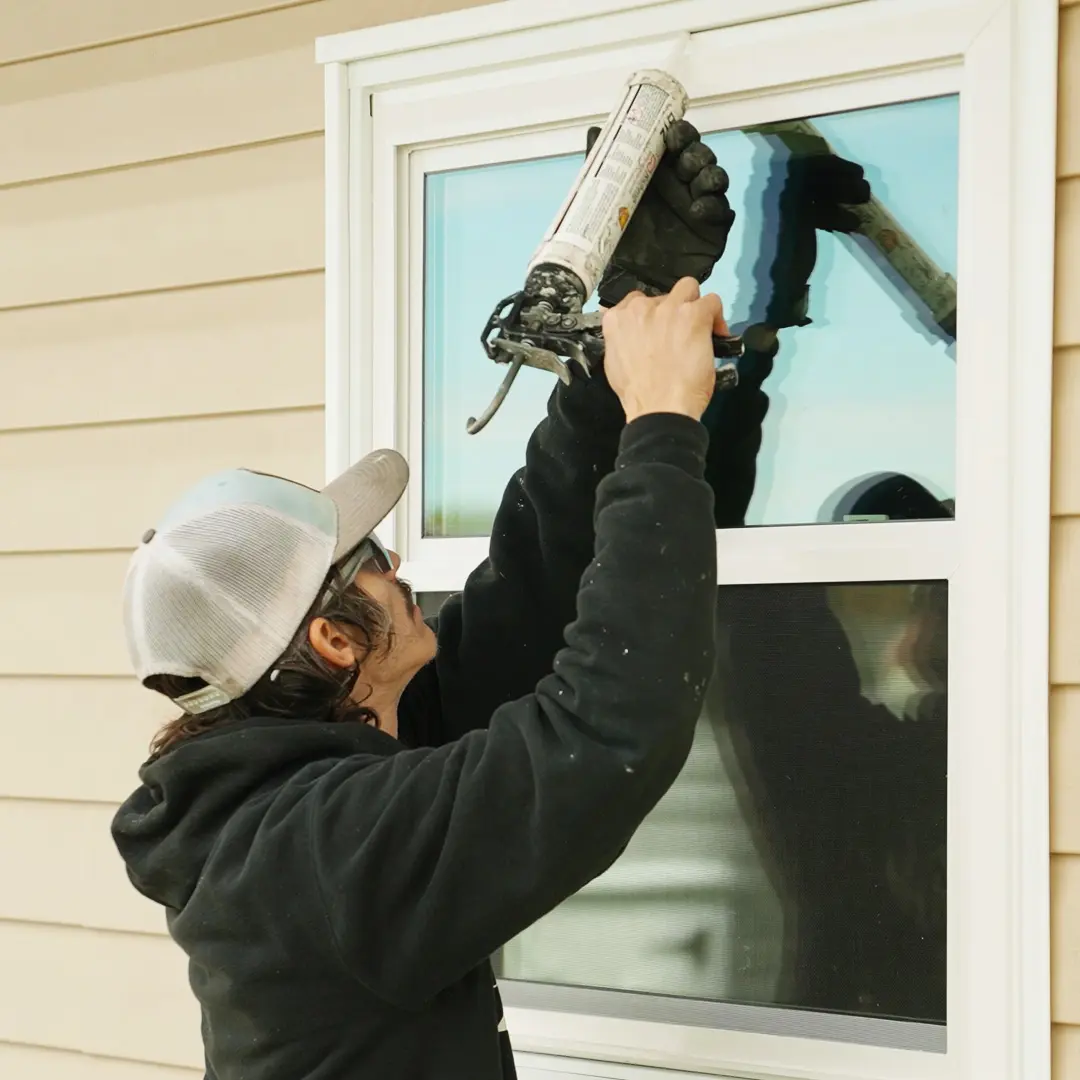
Professional Installation
Our licensed Arizona installation crews work cleanly and efficiently. All interior surfaces are protected, old windows are removed and disposed of responsibly, and new units are installed with commercial-grade flashing, foam insulation, and weathertight caulk.

Final Inspection and Walkthrough
We review every installed window with you before we leave, demonstrate proper operation, and provide documentation of your product warranties.
Indiana's Climate Challenge: What Outdated Windows Are Costing Hoosier Homeowners
Indiana occupies two distinct ENERGY STAR climate zones. Climate Zone 5 covers northern Indiana including South Bend, Fort Wayne, and the Lake Michigan shoreline communities, where heating degree days exceed 6,000 annually and brutal lake-effect winters test every component of a home’s building envelope. Climate Zone 4 covers central and southern Indiana including Indianapolis, Bloomington, and Evansville, where the heating load is significant but humid summer cooling demand becomes equally critical.
The U.S. Department of Energy reports that 25 to 30 percent of a home’s heating and cooling energy escapes through windows. For the average Indiana household spending over $1,800 annually on energy, that translates to $450 to $540 disappearing through underperforming windows every single year. According to a 2025 national homeowner survey conducted by This Old House, the average cost of a window replacement project across the United States is $6,353, with a per-window average of $477. For most Indiana homes, that investment pays for itself within 10 to 12 years through energy savings, before accounting for any utility rebates or federal tax credits that can meaningfully reduce the out-of-pocket cost.
The compounding effects of Indiana’s climate on aging windows accelerate deterioration faster than homeowners typically expect. The wide seasonal temperature swings between northern Indiana winters and summer heat cause insulated glass unit seals to expand and contract repeatedly. When those seals fail, argon or krypton gas escapes and is replaced by ambient air, which carries moisture. The result is the foggy, condensation-trapped glass that is a visible indicator of a window that has lost the majority of its insulating value and can no longer be recovered through any cleaning or treatment. At that stage, replacement is not a choice but a necessity.
Indiana's Window Energy Code: What the 2020 Indiana Residential Code Requires
Indiana’s building code framework is governed by the 2020 Indiana Residential Code, which the Indiana Department of Homeland Security Office of the State Building Commissioner administers. This code is based on the 2018 International Residential Code and International Energy Conservation Code with Indiana-specific amendments. Every new window installation and permitted replacement in Indiana must satisfy the fenestration performance requirements established under this code.
For Climate Zone 5 in northern Indiana, the code requires replacement windows to achieve a maximum U-factor of 0.30 and a maximum Solar Heat Gain Coefficient (SHGC) of 0.40. For Climate Zone 4 covering central and southern Indiana including the Indianapolis metro, the code requires the same maximum U-factor of 0.30 with an SHGC of 0.40. The U-factor measures the rate of non-solar heat transfer through the window assembly. A lower U-factor means better insulation against Indiana winters. The SHGC measures how much solar heat passes through the glass. For Indiana’s mixed climate where both summer cooling and winter heating drive energy costs, an SHGC in the 0.25 to 0.40 range balances solar heat rejection in summer with passive solar gain opportunity in winter.
All products installed by Virtual View Windows carry current NFRC certification and meet or exceed the 2020 Indiana Residential Code requirements for both Indiana climate zones. In 2025, the IRS also requires homeowners claiming the federal 25C Energy Efficient Home Improvement Credit to report a Qualified Manufacturer Identification Number (QMID) for each installed window on their tax return. Virtual View Windows provides QMID documentation for every client as part of our standard project closeout to ensure full tax credit eligibility.
Window Services Near You: What Virtual View Windows Provides Across Indiana
From Indianapolis’s dense residential neighborhoods to the lake-effect communities of northern Indiana to the rolling terrain of the south-central region, Virtual View Windows provides complete window services near you for homeowners and commercial property owners statewide. Our product line is specified for Indiana’s climate zone requirements and our installation protocols are built for the performance demands of Hoosier seasons.
Whether you are replacing a single failed window or upgrading every opening in your home, Virtual View Windows handles the full scope of residential window installation. Every project begins with a detailed opening-by-opening assessment that evaluates frame condition, rough opening dimensions, existing weatherseal integrity, and the orientation of each window relative to Indiana’s prevailing wind and solar exposure. We install double-hung, casement, sliding, awning, picture, bay, bow, and specialty shape windows across the full range of frame materials and finishes.
Insert replacement, also called pocket installation, places a new window unit inside an existing structurally sound frame, preserving interior and exterior trim and minimizing project disruption. Full-frame replacement removes the entire existing window assembly down to the rough opening and is appropriate for frames showing water damage, wood rot, or dimensional distortion from years of Indiana freeze-thaw cycling. Virtual View Windows evaluates every opening individually and recommends the correct approach rather than applying a standardized method that may not suit the actual condition of your home.
All windows we install are NFRC certified and meet or exceed the 2020 Indiana Residential Code requirements for Zone 4 and Zone 5. Our standard Zone 5 specification for northern Indiana homes includes dual-pane low-E glass with argon gas fill in multi-chamber vinyl or fiberglass frames, delivering U-factors comfortably within the 0.30 threshold. For homes in the northern Indiana lake communities, particularly those with large north-facing exposures, triple-pane options with krypton gas fill are available and deliver U-factors as low as 0.19 for maximum cold-weather comfort.
Indiana building codes require egress windows in all sleeping rooms for emergency escape, with specific minimum net clear opening dimensions. Basement egress window installations often require excavation to create a proper window well meeting code depth and drainage requirements. Virtual View Windows handles the full scope of egress installation including sizing verification, permit coordination, excavation coordination, and compliant installation with proper flashing and drainage.
Our commercial division serves office buildings, retail storefronts, multi-family residential properties, condominium complexes, and institutional buildings across Indiana. We manage permitting, work directly with general contractors and property management teams, and schedule installations on occupied buildings with minimal tenant disruption. Commercial projects in Indiana’s major urban centers including Indianapolis and Fort Wayne involve municipality-specific permitting requirements that our team navigates as standard practice.
Indiana Window Company Incentives: Rebates and Tax Credits Available in 2025
Hoosier homeowners investing in energy-efficient windows through a qualified window company in Indiana in 2025 have access to a strong set of financial programs that reduce out-of-pocket project costs significantly. Here is every program currently applicable to window improvements in Indiana:
- Federal Energy Efficient Home Improvement Credit (25C): Through December 31, 2025, Indiana homeowners may claim 30 percent of the cost of qualifying ENERGY STAR windows as a nonrefundable federal income tax credit, up to $600 for windows and skylights per tax year. The credit applies to the primary residence only. In 2025, the IRS requires reporting a Qualified Manufacturer Identification Number (QMID) for each installed window product. Virtual View Windows provides full QMID documentation for every project.
- Duke Energy Indiana Window Rebate: Duke Energy Indiana residential customers can earn a rebate of $4 per square foot of window area, up to $800, on qualifying professionally installed high-performance windows on east-, west-, and south-facing exposures. Updated as of May 7, 2025, the program now requires completion of a free Home Energy Check within the last 24 months as a prerequisite to qualify. The Home Energy Check is available at no cost through Duke Energy’s Home Energy Improvement portal. Virtual View Windows helps clients coordinate the Home Energy Check timing before installation to preserve rebate eligibility.
- NIPSCO Residential Rebate Program: NIPSCO customers in northern Indiana can access residential energy efficiency rebates for air sealing and insulation improvements through NIPSCO’s rebate program. Air sealing work performed in conjunction with window installation can qualify for rebate consideration. NIPSCO rebate processing is conducted on a first-come, first-served basis with limited annual funding.
- Indiana Energy Saver Program (HOMES and HEAR): Launched May 14, 2025, the Indiana Energy Saver Program administered by the Indiana Office of Energy Development provides two streams of funding through IndianaEnergySaver.com. The HOMES rebate rewards whole-home retrofits achieving a minimum of 20 percent predicted energy savings. Window installation paired with air sealing and insulation improvements can contribute to the qualifying threshold. The HEAR stream provides point-of-sale rebates for income-eligible households at or below 150 percent of Area Median Income.
- Indiana Weatherization Assistance Program (IWAP): Income-qualified Indiana homeowners may receive free home weatherization services through the Indiana Housing and Community Development Authority in coordination with local community action agencies. Qualifying improvements include window air sealing and related building envelope measures that complement window installation projects.
Virtual View Windows prepares complete NFRC documentation, QMID product records, Duke Energy rebate forms, and Indiana Energy Saver Program supporting materials for every client as part of our standard project closeout. No eligible savings go uncaptured.
Choosing the Right Window Frame Material for Indiana's Mixed Continental Climate
Indiana’s continental climate, with cold winters driven by Canadian air masses and humid summers influenced by Gulf moisture, exposes weaknesses in window frame materials that perform adequately in more moderate climates. Selecting the right frame material for Indiana conditions affects not just energy performance but long-term seal integrity, maintenance requirements, and warranty longevity.
Multi-Chamber Vinyl
Multi-chamber vinyl remains the most widely installed window frame material among Indiana window companies and has a well-documented track record in the state’s Zone 4 and Zone 5 conditions. The essential performance qualifiers for Indiana vinyl are chamber count and corner construction. Three-chamber or greater vinyl profiles create multiple insulating air cavities within the frame, improving thermal resistance. Fusion-welded corners eliminate the mechanical joints that represent the primary air infiltration failure points in vinyl frames during Indiana’s winter temperature drops when frames contract significantly. Lower-grade single-chamber vinyl or mechanically joined corner systems should be avoided for Indiana installations regardless of price advantage. Virtual View Windows carries only multi-chamber vinyl with welded corners specified for Indiana climate zone performance.
Fiberglass Frames
A 2025 national homeowner survey found that 38 percent of homeowners selected fiberglass for their most recent window project, reflecting a growing recognition of fiberglass performance advantages over vinyl for homes in mixed continental climates like Indiana’s. Fiberglass expands and contracts at nearly the same rate as glass, which protects insulated glass unit seals from cumulative stress damage during Indiana’s wide seasonal temperature swings. Fiberglass frames also deliver slightly higher insulating R-values than vinyl and resist UV-induced surface degradation more effectively, making them the preferred specification for south-facing Indiana exposures subject to intense summer solar loading. The tradeoff is a higher upfront cost that most Indiana homeowners in their long-term residence recover within the warranty period.
Composite Frames
Composite window frames that combine wood fiber reinforcement with polymer or vinyl outer shells deliver a middle ground between vinyl’s affordability and fiberglass’s thermal stability. The same 2025 survey found that 23 percent of homeowners selected composite, suggesting it is a meaningful category for homeowners seeking premium aesthetics with better dimensional stability than standard vinyl. Composite frames perform well in Indiana’s mixed climate when manufactured with fully sealed exterior surfaces that resist moisture infiltration during the state’s spring snowmelt season.
Thermally Broken Aluminum
Standard aluminum frames conduct heat at a rate that makes them unsuitable for conditioned living spaces in Indiana’s Zone 4 or Zone 5 without a thermal break. Thermally broken aluminum systems use an insulating barrier within the frame profile to reduce heat conduction and are a viable specification for contemporary architectural applications, commercial storefronts, and mid-rise residential buildings where slim sight lines are a design priority. Virtual View Windows offers thermally broken aluminum products for appropriate applications but does not recommend them as a primary residential window frame solution in Indiana’s climate zones.
How to Choose the Right Window Company Near Me in Indiana
Indiana’s home improvement market includes a wide spectrum of window companies, from nationally franchised operations to regional installers to single-operator businesses. The quality gap between a licensed, insured, code-compliant window company and one cutting corners on permitting, product specification, or weathersealing is significant and not always visible until years after installation.
Before committing to any window company near me in Indiana, verify the following:
- Indiana Home Improvement Contractor Registration: Indiana requires home improvement contractors to hold a valid registration under the Home Improvement Fraud statute administered through the Indiana Attorney General’s Office. Contractors performing residential projects valued over $150 must be registered. Verify registration before signing any contract.
- General Liability and Workers Compensation Insurance: Request current certificates of insurance before any work begins. Confirm that both general liability coverage and workers compensation are active. An uninsured contractor exposes the homeowner to personal liability for any property damage or worker injury that occurs during the project.
- NFRC Product Certifications and QMID Documentation: All windows proposed for your project should carry current NFRC labels. In 2025, request QMID documentation for every product being installed if you plan to claim the 25C federal tax credit.
- Duke Energy Home Energy Check Coordination: If you are a Duke Energy Indiana customer planning to claim the window rebate, confirm that your selected window company understands the Home Energy Check prerequisite and can help coordinate the sequencing to preserve your rebate eligibility.
- Written Itemized Contract: Indiana home improvement contractors are required by statute to provide a written contract for projects over $150. The contract must describe the scope of work, materials with specifications, price, payment schedule, start and completion dates, and warranty terms. Any contractor who resists providing this documentation should be disqualified.
- Verifiable Reviews on Third-Party Platforms: Look for reviews on Google, Houzz, and the Better Business Bureau rather than relying solely on testimonials hosted on the contractor’s own website. Look for patterns in both positive and negative reviews related to product quality and installation craftsmanship.
Virtual View Windows maintains active Indiana Home Improvement Contractor registration, full general liability and workers compensation insurance, NFRC-certified product documentation with QMID records for 25C credit purposes, and Duke Energy rebate coordination as standard components of every project. All credentials are available to clients before any contract is signed.
Frequently Asked Questions About Window Companies in Indiana
How much does a window company in Indiana charge for installation?
Window installation in Indiana typically costs between $400 and $1,200 per window fully installed, depending on window size, style, frame material, and glass package. According to a 2025 national homeowner survey, the average total window replacement project costs approximately $6,353. Whole-home projects with ten or more windows frequently qualify for volume pricing. Virtual View Windows provides free, detailed, no-obligation on-site estimates that specify every window by product, NFRC rating, and complete installed price.
What energy code requirements apply to windows in Indiana?
Indiana’s 2020 Indiana Residential Code governs window installation statewide. Climate Zone 5 in northern Indiana and Zone 4 covering Indianapolis and the south both require a maximum window U-factor of 0.30 and SHGC of 0.40 for replacement and new construction windows. All Virtual View Windows products are NFRC certified and meet these requirements for both Indiana climate zones.
Does Duke Energy offer a rebate for window installation in Indiana?
Yes. Duke Energy Indiana residential customers can earn a rebate of $4 per square foot of window area, up to $800, on professionally installed high-performance windows on east-, west-, and south-facing exposures. As of May 7, 2025, the program requires completing a free Home Energy Check within the last 24 months before installation. Virtual View Windows helps clients coordinate the Home Energy Check timing to preserve full rebate eligibility.
What is the Indiana Energy Saver Program and can it help with windows?
The Indiana Energy Saver Program, launched May 14, 2025 at IndianaEnergySaver.com, is administered by the Indiana Office of Energy Development and funded through the federal Inflation Reduction Act. The HOMES rebate stream provides financial incentives for whole-home retrofits achieving a minimum of 20 percent predicted energy savings. Window installation combined with air sealing and insulation improvements can contribute to qualifying savings. Income-eligible households at or below 150 percent of AMI may also qualify for the HEAR stream.
How do I find a reliable window company near me in Indiana?
Verify Indiana Home Improvement Contractor registration through the Indiana Attorney General’s Office. Confirm current general liability and workers compensation insurance certificates. Request NFRC product certifications and QMID documentation if you are claiming the 25C federal tax credit. Ask about Duke Energy rebate coordination if you are a Duke Energy Indiana customer. Request a written itemized contract before signing. Virtual View Windows provides window services near you across Indiana with full registration, insurance, certified products, and complete rebate documentation support. Contact us to schedule your free estimate.
Connect with Indiana's Window Company Built for Hoosier Homes and Hoosier Winters
