
Virtual View Windows
Window Replacement Tennessee
Window Replacement Tennessee: SHGC-First Specs, TVA EnergyRight Rebates, and Beating the Heat That Drives Your AC Bill
Tennessee runs on air conditioning for roughly five months of every year. From Memphis in the west, where humid subtropical heat arrives in May and does not let go until October, to Nashville’s middle corridor of summer temperatures that routinely reach the mid-90s with dew points that make them feel hotter, to Knoxville’s east Tennessee valley where the Appalachian ridgelines provide only modest relief from a summer that rivals any in the Southeast, the Volunteer State’s cooling demand shapes every energy decision a homeowner makes.
Windows sit at the center of that challenge in ways that most Tennessee homeowners have not fully quantified. The U.S. Department of Energy estimates that 25 to 30 percent of a home’s heating and cooling energy escapes through windows. In Tennessee’s cooling-dominated climate, the more specific problem is solar heat gain, the sunlight and radiant heat that pass through inadequately specified glass and load your AC system continuously from May through September. ENERGY STAR certified window replacement can shrink heating and cooling costs by an average of up to 13 percent nationwide according to ENERGY STAR, and for the average Nashville home, the Window Source of Nashville estimates that figure translates to $200 to $500 in annual savings over the 20 to 25 year lifespan of quality replacement windows.
At Virtual View Windows, we specialize in professional window replacement across Tennessee, serving homeowners in Nashville, Franklin, Brentwood, Murfreesboro, Memphis, Germantown, Knoxville, Maryville, Chattanooga, Clarksville, and communities throughout the state. This guide covers current 2025 Tennessee window replacement costs, the TVA EnergyRight rebate program and how its Quality Contractor Network delivers rebates to homeowners, the South-Central ENERGY STAR zone glass specifications that make Tennessee window replacement different from most other states, and the full four-region Tennessee breakdown that shapes the right window choice for your specific home and location. If you have been searching for window replacement near me in the Volunteer State, this is your Tennessee-specific resource.
The Virtual View Windows Tennessee Replacement Process
Every Tennessee window replacement project with Virtual View Windows follows a five-step process built for South-Central zone performance specifications, TVA EnergyRight rebate documentation, and Tennessee residential building code compliance.

Step 1: Free In-Home Assessment
A certified Virtual View Windows consultant visits your Tennessee home, measures every opening precisely, evaluates existing frame condition and current SHGC and U-factor performance, documents your Tennessee climate sub-zone and each opening's solar orientation, and reviews all product options suited to your architecture, budget, and zone-specific performance requirements. We evaluate which windows are contributing the most to summer solar heat gain and prioritize replacement candidates accordingly. No cost, no pressure, and no obligation.

Step 2: TVA EnergyRight and Incentive Documentation Setup
We confirm your local power company's participation in TVA EnergyRight, identify the current rebate amount for qualifying window products in your ZIP code, confirm your eligibility for co-funded local utility rebates through NES, KUB, MLGW, MTE, or your local cooperative, and document any remaining federal 25C credit eligibility for qualifying 2025 installations. As a TVA Quality Contractor Network member, we handle the rebate submission to TVA EnergyRight on your behalf after project completion. Step 3: SHGC-

Step 3: SHGC-Verified Window Specification and Fabrication
Your replacement windows are specified with the ENERGY STAR South-Central zone requirements confirmed: SHGC 0.23 or lower, U-factor 0.28 or lower, argon-filled Low-E double pane, and NFRC certification for TVA rebate eligibility and federal 25C credit documentation. Your windows are fabricated to the precise dimensions of your rough openings. Tennessee's post-war housing stock frequently uses non-standard sizing that requires custom fabrication to eliminate the air gaps that off-the-shelf sizing creates around the frame perimeter.
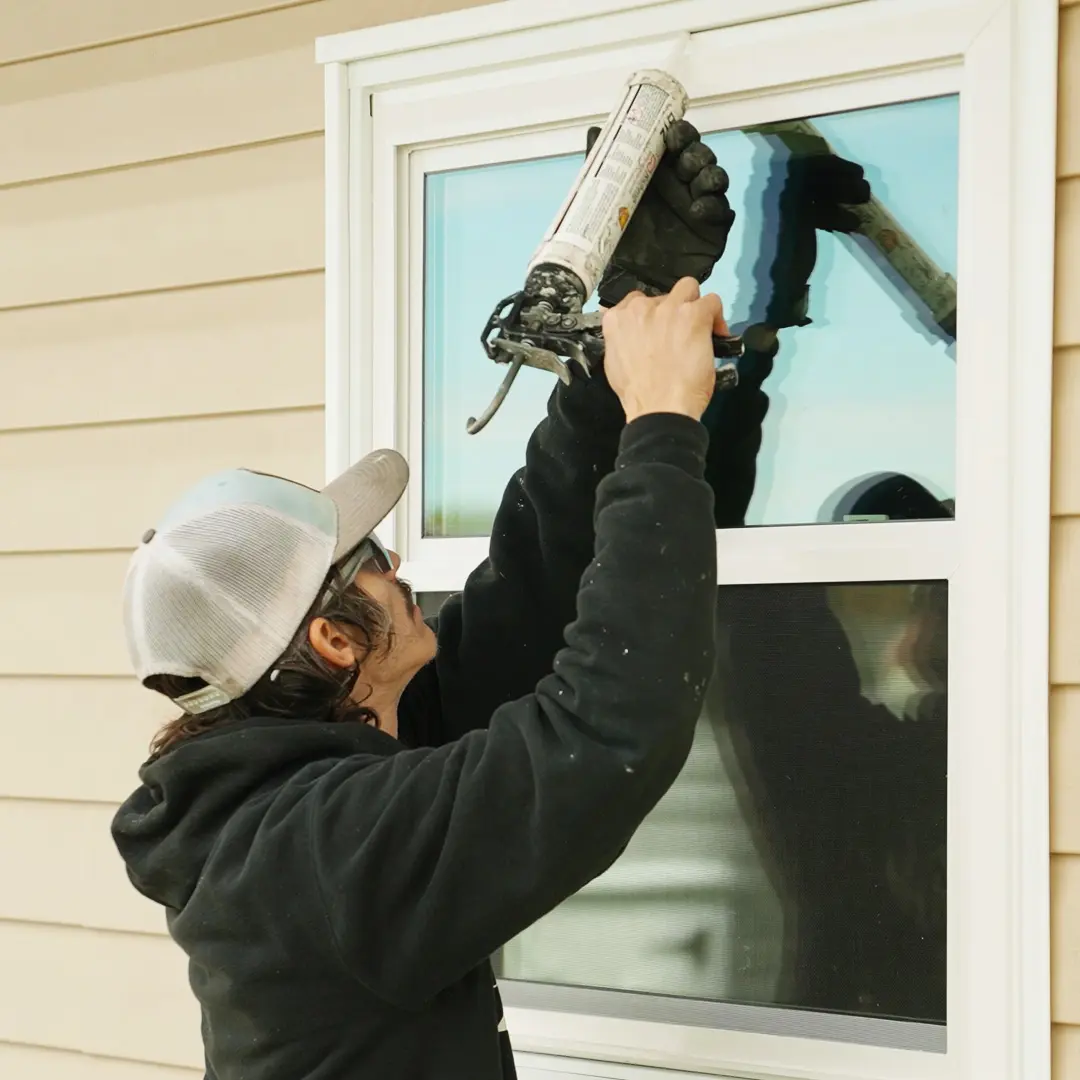
Step 4: Licensed Tennessee Installation
Our licensed Tennessee installation crews complete every replacement to manufacturer specification and Tennessee residential building code standards, including proper air sealing, caulking, and weatherstrip installation that eliminates infiltration at the frame perimeter. For projects that require permits, we file all required documentation before beginning work.

Step 5: Documentation, TVA Rebate Submission, Cleanup, and Walkthrough
We remove all old windows and debris, clean every installation area, and walk through each window with you to verify operation, locking function, and complete satisfaction. We then submit your TVA EnergyRight rebate to TVA on your behalf, with documentation of qualifying product specifications, installation date, and contractor credentials. We provide NFRC labels, QMID documentation for federal 25C credit filing, warranty registration, and all documentation before leaving your property.
Tennessee's AC-Driven Energy Problem: Why SHGC Matters More Here Than in Any Northern State
Four data points define the window replacement opportunity for Tennessee homeowners in 2025. Each is specific to Tennessee’s climate, documented from independent sources, and directly tied to the AC-dominated energy challenge that defines the state.
25 to 30% | The U.S. Department of Energy estimates that 25 to 30 percent of a home’s heating and cooling energy is lost through windows. In Tennessee, where cooling season runs five months or longer and HVAC systems account for a disproportionate share of household energy use, that loss is primarily driven by solar heat gain through under-specified glass rather than by the winter heat loss that dominates the calculation in northern states. An aging single-pane window or early double-pane unit with no Low-E coating allows far more solar heat into your home than current ENERGY STAR South-Central zone specifications permit. Source: U.S. Department of Energy / Window Depot of Nashville Energy Efficiency Guide 2025 |
$200 to $500/yr | The average Nashville home saves $200 to $500 per year on energy bills after professional window replacement with energy-efficient products, according to the Window Source of Nashville’s 2025 analysis. Over the 20 to 25 year lifespan of quality replacement windows, that compounds to thousands of dollars in cumulative savings. In a state where the average Tennessee household spends a significant share of its energy budget on cooling, the savings come disproportionately from reduced air conditioning load during the long Tennessee summer. Source: Window Source of Nashville Complete 2025 Guide / Window Depot Nashville Oct 2025 |
Up to 40% | Tennessee homeowners can save up to 40 percent on energy costs by replacing old windows with properly specified ENERGY STAR products, according to the Homeyou Tennessee window data compiled from 302 Nashville projects and 270 Memphis projects as of January 2026. The key to capturing this level of savings in Tennessee is the correct SHGC specification for the South-Central ENERGY STAR zone, which requires SHGC 0.23 or lower to limit solar heat gain during the state’s intensive cooling season. Incorrectly specified windows with too-high SHGC deliver a fraction of this savings even if they carry an ENERGY STAR label. Source: Homeyou Nashville Window Replacement Cost Data Jan 2026 / Homeyou Memphis Window Replacement Data Jan 2026 |
13% | ENERGY STAR certified windows, doors, and skylights can shrink energy bills by an average of up to 13 percent on heating and cooling costs nationwide compared to non-certified products, according to ENERGY STAR program data. In Tennessee’s South-Central climate zone, where cooling cost is the primary driver, the correct SHGC specification in an ENERGY STAR certified window produces this savings primarily by reducing the solar heat load on your AC system from May through September. That monthly reduction in cooling load is the most direct financial benefit of window replacement in the Volunteer State. Source: ENERGY STAR Residential Windows, Doors and Skylights Program Data / U.S. DOE RESFEN 6.0 Calculations |
Tennessee’s window replacement decision is fundamentally a cooling-season decision. The state sits in ENERGY STAR’s South-Central climate zone, where SHGC takes priority over U-factor in a way that inverts the calculation that governs window choices in Minnesota, Oregon, or Pennsylvania. Getting the SHGC specification right is the single most important technical choice a Tennessee homeowner makes when selecting replacement windows.
Window Styles Virtual View Windows Replaces Across Tennessee
Tennessee’s residential stock spans Nashville’s mid-century brick homes and contemporary suburban construction, Memphis’s post-war bungalows, Knoxville’s 1950s and 1960s ranch homes, and East Tennessee’s mountain community properties. The right window style for each of these settings depends on the home’s architecture, the room’s function, and the specific orientation and solar exposure that drives the heat gain calculation in each Tennessee climate zone.
The most commonly replaced window style in Tennessee’s residential stock. Both upper and lower sashes operate independently for ventilation control, and both tilt inward for interior cleaning. In Tennessee’s older housing stock, double hung windows in the original wood or aluminum frames are by far the most common replacement opportunity. Upgrading to vinyl or fiberglass ENERGY STAR double hung units with SHGC 0.23 or lower delivers the most direct energy improvement available in these homes, because the original frames typically have no Low-E coating and no effective solar control. Double hung windows with correct South-Central zone glass packages suit virtually every Tennessee architectural style, from Nashville craftsman bungalows to Memphis ranch homes to Knoxville post-war colonials.
Hinged at the side with an outward-opening crank mechanism, casement windows create a tight compression seal against the frame when closed that is measurably superior to the weatherstripping contact of double hung alternatives. In Tennessee, where casement windows are described by the Window Source of Nashville as sealing extremely tight when closed for superior AC efficiency during hot summers when the AC runs constantly, the compression seal difference is directly relevant to energy performance. Casement windows also capture Middle Tennessee’s pleasant evening breezes for natural ventilation during the transitional seasons, reducing AC runtime in spring and fall. They are the recommended window style for Tennessee homes where air conditioning efficiency is the primary performance priority.
Sliding windows operate horizontally and work well in rooms with limited space or where a contemporary look is preferred. They are a popular choice in modern Brentwood and Murfreesboro construction, where horizontal architectural lines and clean profiles are characteristic of the housing style. Sliding windows operate without cranks or lifting, making them accessible for homeowners with limited mobility. When specified with South-Central zone Low-E glass packages, they provide a practical and cost-effective window replacement option for rooms where double hung or casement styles are not architecturally appropriate.
Projecting outward from the exterior wall to add interior volume and natural light, bay and bow windows are popular in Nashville’s craftsman and traditional suburban homes, in Memphis’s better-appointed mid-century ranches, and throughout East Tennessee’s residential neighborhoods. When specified with South-Central zone glass packages in vinyl or fiberglass frames, bay and bow installations deliver both the architectural character Tennessee homeowners seek and the solar control performance the climate requires. The orientation of the projection determines the SHGC priority: south-facing bay windows require the strictest solar control specification.
Fixed glass panels that frame Tennessee’s views and maximize natural light without ventilation capability. In East Tennessee, where ridge and valley views from Knoxville, Maryville, and the Blue Ridge communities provide genuine scenic rewards, picture windows make those views a permanent architectural element. In Nashville’s newer contemporary homes in Berry Hill, Germantown, and the urban core, large picture windows are a period-defining design feature. When specified with spectrally selective glass, picture windows can maximize view and natural light while minimizing the solar heat gain that large fixed glass areas would otherwise contribute to the AC load.
Required by Tennessee’s Residential Building Code for all basement bedrooms and below-grade habitable spaces, egress windows must meet minimum opening dimensions and maximum sill height requirements for emergency exit use. In Tennessee, where basement conversion for additional living space has become increasingly common in Nashville’s hill-country suburbs and in East Tennessee’s mountain communities, egress window installation is a frequent component of renovation projects. Virtual View Windows installs egress windows to full Tennessee Residential Building Code compliance, including the permit and inspection requirements of each municipal jurisdiction where we work.
Signs Your Tennessee Home Needs Window Replacement Now
Tennessee’s summer climate makes certain window performance failures visible, audible, and financially measurable faster than in more temperate states. These seven signals indicate that window replacement near me in Tennessee has moved from optional to necessary.
Rooms near south, east, or west-facing windows that feel consistently hotter than the rest of the house during summer
Solar heat gain through old glass is the most direct physical symptom of inadequate SHGC specification in a Tennessee home. When a room adjacent to large south-facing windows is noticeably warmer than the adjacent hallway on a July afternoon in Nashville or Memphis, the window glass is the primary heat source that your AC system is fighting. This is a problem of incorrect SHGC specification, not inadequate AC capacity.
AC running longer, more frequently, or failing to reach target temperature during Tennessee summers
If your air conditioning system has been inspected and confirmed to be functioning correctly, but it runs continuously during the Tennessee summer without consistently reaching the thermostat setpoint, solar heat gain through under-performing windows is one of the most common structural contributors. Windows that allow excessive solar heat into the home continuously refresh the heat load that your AC removes, creating a treadmill that the system cannot get ahead of.
Higher-than-expected utility bills that coincide with summer months.
The Homeyou Tennessee data shows that homeowners can save up to 40 percent on energy costs by replacing inadequate windows. For a Tennessee household where summer electricity bills regularly exceed winter heating costs by a significant margin, aging windows with poor SHGC performance are a likely contributor. Virtual View Windows can assess how much of your summer cooling bill is attributable to window solar heat gain.
Fog, condensation, or haze between the panes of an existing double-pane window
Inter-pane seal failure eliminates the insulating benefit of the gas fill and degrades the Low-E coating. A fogged double-pane window in a Nashville or Memphis home performs at single-pane levels, meaning zero effective solar control, zero Low-E performance, and zero argon gas insulation. In Tennessee’s summer climate, a fogged window is an active heat source in every room where one is installed.
Drafts or air infiltration felt at window frame edges during winter
While Tennessee’s winter is less severe than northern states, cold spells are real across the state, and Knoxville and East Tennessee mountain communities experience genuine winter heating demands. Air infiltration through weatherstripping failures or frame deterioration creates both comfort problems and heating efficiency losses that compound the year-round energy impact of aging windows.
Squeaking, sticking, or inability to properly close and latch windows
In Tennessee’s older housing stock, wood frame expansion from the state’s summer heat and humidity is a predictable operational failure. A window that does not close and latch properly in a Tennessee home is an air infiltration point during winter cold snaps and a security concern year-round. In sleeping rooms below a certain floor level, a non-operable window is also an egress safety concern under Tennessee’s residential building code.
Visible warping, swelling, paint failure, or deterioration in window frames
Wood and aluminum frames in Tennessee homes exposed to the sustained summer heat and humidity that characterize the state’s climate deteriorate faster than in dry-climate or mild-climate states. Wood frames in Memphis homes exposed to years of high humidity and summer heat may show paint failure, swelling, and operational binding that signal that the frame has absorbed moisture and is approaching structural failure. Aluminum frames in older homes conduct heat directly into the home, making them both an energy liability and a comfort problem in Tennessee’s summer.
Tennessee's South-Central Climate Zone: Why SHGC Comes First
Most window replacement guides found online are written from a national perspective that blends cold-climate and warm-climate priorities into a generic set of recommendations. Tennessee homeowners need a different framework, because the state’s climate makes the conventional cold-climate approach actively counterproductive.
What SHGC Means and Why Tennessee Leads With It
The Solar Heat Gain Coefficient (SHGC) measures the fraction of solar radiation that passes through a window into your home, on a scale from 0 to 1. A lower SHGC means less solar heat enters through the glass. In Tennessee’s South-Central ENERGY STAR climate zone, the certification requirement for basic ENERGY STAR qualification is SHGC 0.23 or lower, one of the strictest solar control requirements in the country. The International Residential Code requires SHGC 0.25 or lower for hot climates in zones 0 to 3. Tennessee sits in zone 3A to 4A, making solar control through low SHGC the primary performance specification for any window replacement in the state.
Tennessee homeowners who purchase windows marketed for northern climates, or who accept a salesperson’s generic national recommendation, frequently end up with windows that have SHGC values of 0.30 to 0.40, which is appropriate for Minnesota’s passive solar needs but inadequate for Memphis or Nashville’s cooling-dominated summer. Each additional 0.10 of SHGC above the South-Central target adds measurable solar heat load to your AC system across the five-month Tennessee cooling season.
Low-E Coatings for Tennessee's Summer-First Climate
Low-E (low-emissivity) coatings on the inner surfaces of the glass unit are the primary technology that achieves both the low SHGC and low U-factor that Tennessee windows require. For Tennessee’s cooling-dominant climate, a solar-control Low-E coating that reflects solar radiation while maintaining reasonable visible light transmittance is the correct specification. This is different from the balanced Low-E recommended for Oregon’s Zone 4C marine climate, where capturing winter solar gain is an equal priority. Modern energy-efficient replacement windows combine argon gas fill between the panes with solar-control Low-E to provide the comprehensive thermal package that qualifies for ENERGY STAR South-Central certification and TVA EnergyRight rebate eligibility.
U-Factor: Still Important in Tennessee, but Secondary to SHGC
The U-factor measures how quickly heat transfers through the entire window assembly. Lower U-factor means better insulation. For Tennessee’s South-Central zone, ENERGY STAR requires U-factor 0.28 or lower for basic certification. While this is an important specification for the heating season that Tennessee does experience, particularly in Knoxville and the East Tennessee mountain communities, it is the secondary performance target behind SHGC for most of the state. Virtual View Windows recommends U-factor 0.27 or lower for Nashville and Memphis installations, and U-factor 0.25 or lower for Knoxville and East Tennessee communities where winters are meaningfully colder than the western half of the state.
Spectrally Selective Glass: Tennessee's Premium Specification
Spectrally selective glass uses advanced coating technology to transmit high levels of natural visible light while blocking a significantly larger fraction of solar infrared heat than conventional Low-E coatings achieve. For Tennessee homes with large south, east, or west-facing glass areas in Nashville’s newer suburban construction or Memphis’s large-windowed 1990s and 2000s homes, spectrally selective glass provides the best combination of natural light and solar heat rejection available. It delivers SHGC values as low as 0.20 to 0.22 while maintaining visible transmittance significantly higher than tinted glass alternatives, making it the premium specification for Tennessee homeowners who want maximum cooling season performance without the darkened appearance of tinted products.
Window Frame Materials for Tennessee: Heat Resistance and Dimensional Stability First
Tennessee’s sustained summer heat creates frame material performance differences that matter more than in moderate-climate states. The right frame for a Memphis bungalow that sees sustained 95-degree summer days with high humidity is not the same as a casual national recommendation. Here is how the options compare for Tennessee’s climate.
Frame Material | Heat Resist. | Energy Perf. | Lifespan | Tennessee-Specific Notes |
Vinyl (multi-chamber) | Excellent | Very Good | 20 to 40 yrs | Best TN value; resists heat warp; 32% of buyers |
Fiberglass | Excellent | Excellent | 30 to 50 yrs | Top choice; withstands 285 F; TN summer-proof |
Composite | Very Good | Excellent | 30 to 50 yrs | Great all-round South-Central performer |
Wood (exterior sealed) | Good | Moderate | 15 to 25 yrs | High maint. in TN humidity; not recommended |
Aluminum (single-pane) | Poor | Poor | 20 yrs | Conducts heat; worst choice for TN summers |
Clad wood (alum/fiber ext.) | Very Good | Good | 25 to 40 yrs | East TN mountain homes; historic districts |
Window Depot Nashville identifies vinyl as lasting longer in Tennessee’s climate compared to aluminum or wood specifically because vinyl resists the warping and rot that heat and humidity cause in wood and the heat conduction that makes aluminum a thermal liability in summer. Fiberglass goes further: the Marvin Replacement specification data shows that Ultrex fiberglass maintains its shape and does not soften or melt even at temperatures of up to 285 degrees Fahrenheit, while vinyl can begin to soften at 163 degrees. In Tennessee’s peak summer heat, when roof valleys and exterior walls reach temperatures well above ambient air temperature, this dimensional stability difference is relevant to long-term frame performance.
Aluminum single-pane windows represent the worst possible combination for Tennessee’s summer: a highly heat-conductive frame material that transfers outdoor heat directly into the home, surrounding a single glass layer with no Low-E coating, no gas fill, and no solar control. Any aluminum single-pane window in your Tennessee home is not just an energy cost problem. It is actively worsening the solar heat load on your AC system every clear summer day. It is the highest-priority replacement candidate in any Tennessee home.
For Tennessee’s historic neighborhoods, where East Nashville craftsman homes, Memphis Midtown bungalows, and Knoxville’s Fourth and Gill district properties have architectural character that homeowners and preservation organizations care about, clad wood frames with aluminum or fiberglass exterior cladding provide the period-appropriate interior finish without exposing an exterior wood surface to Tennessee’s sustained outdoor heat and humidity. They are the recommended option when architectural compatibility is a genuine requirement.
Tennessee's Four Regions: One State, Four Window Replacement Priorities
Tennessee stretches over 400 miles from west to east, crossing climate gradients that produce genuinely different window performance priorities across the state. Memphis’s riverfront humidity is not Nashville’s middle Tennessee heat, and neither resembles the mountain climate of Johnson City or Gatlinburg. A window specification that captures every available energy saving in Memphis may be slightly underspecified for Kingsport’s cold winters.
TN Region | Climate Character | Housing Stock | Window Specification Priority |
Nashville Metro / Middle TN | Zone 3A/4A border; humid subtropical; hot summers, mild winters | Post-war ranch and brick homes; 1990s to 2010s suburban; Franklin, Brentwood, Murfreesboro new construction | SHGC 0.23 or lower (south-central ENERGY STAR); U-factor 0.28 or lower; low-E solar control coating priority; casement for AC efficiency |
Memphis / West TN | Zone 3A; hottest and most humid in TN; heavy AC season | Mid-century brick bungalows; 1940s to 1960s ranch homes; Germantown, Collierville newer suburban | SHGC 0.23 or lower; U-factor 0.28 or lower; solar reflective glass critical; vinyl recommended over wood in high humidity |
Knoxville / East TN Valley | Zone 4A; humid continental; hot summers, colder winters than west TN | 1950s to 1970s ranch; post-war brick; Maryville, Oak Ridge, Farragut newer construction | SHGC 0.23 to 0.25; U-factor 0.27 or lower; balanced solar control + winter insulation; fiberglass recommended |
East TN Blue Ridge / Mountain Communities | Zone 4A to 5A; milder summers; coldest TN winters; higher elevation | Older mountain homes; Gatlinburg-area vacation and residential; Johnson City, Kingsport, Bristol | U-factor 0.25 or lower; triple pane worth serious consideration; fiberglass resists temperature extremes |
Nashville Metro and Middle Tennessee
Middle Tennessee’s Nashville metro, including Franklin, Brentwood, Murfreesboro, Clarksville, and the rapidly developing suburbs of Williamson and Rutherford counties, sits at the border of ENERGY STAR zones 3A and 4A. The dominant housing stock in the Nashville suburbs is the post-war ranch and brick home from the 1950s through 1970s, alongside the significant wave of new construction from the 2000s through the present that has accompanied Nashville’s population boom. The priority specification for Nashville is the full South-Central ENERGY STAR package: SHGC 0.23 or lower, U-factor 0.28 or lower, argon-filled Low-E double pane, with casement windows particularly well suited to the air-sealing demands of a Nashville home running AC continuously through the summer. Modern homes in Brentwood and Franklin frequently feature large glass areas that make solar-control glass specification especially high-value.
Memphis and West Tennessee
Memphis sits in zone 3A, the hottest and most humid climate zone in Tennessee. The West Tennessee city experiences summer conditions that rival the Deep South, with sustained heat and humidity making the cooling season both longer and more energy-intensive than anywhere else in the state. The dominant residential stock includes mid-century brick bungalows from the 1940s through 1960s and post-war ranch homes, many of which still have original single-pane windows or early double-pane units installed in the 1980s and 1990s. In Memphis and the surrounding Shelby County and Germantown suburbs, the SHGC specification is the most critical choice: every window in a Memphis home benefits from SHGC 0.23 or lower, and east and west-facing windows where afternoon sun exposure is heaviest are priority targets for the lowest SHGC products available. Vinyl frames are strongly recommended in Memphis over wood because the city’s sustained summer heat and humidity accelerate wood deterioration and paint failure in ways that vinyl resists.
Knoxville and East Tennessee Valley
Knoxville and the East Tennessee Valley communities of Oak Ridge, Maryville, Farragut, and Lenoir City sit in zone 4A, where winters are meaningfully colder than in Nashville or Memphis. Knoxville averages more than 14 inches of snowfall annually, compared to fewer than 5 inches in Nashville and essentially none in Memphis. This colder winter profile makes the U-factor specification more important in East Tennessee than elsewhere in the state, though SHGC remains the primary concern for the long summer season. The Homeyou data from 1,659 completed Knoxville window installation projects shows that homeowners saving up to 40 percent on energy costs from new windows represent a realistic outcome for East Tennessee homes upgrading from single-pane originals. Knoxville’s post-war housing stock, including the 1950s and 1960s ranch homes that define much of Maryville and Farragut, frequently features the original wood or aluminum frames that most benefit from full replacement with vinyl or fiberglass ENERGY STAR products.
East Tennessee Blue Ridge and Mountain Communities
East Tennessee’s Blue Ridge communities, including Johnson City, Kingsport, Bristol, Greeneville, and the Gatlinburg and Pigeon Forge corridor, experience some of Tennessee’s most variable and challenging climate conditions. Higher elevation temperatures, mountain microclimate variation, and noticeably colder winters than the valley communities below make U-factor specification more important here than in the rest of the state. Johnson City and Kingsport regularly experience winter temperatures below zero degrees Fahrenheit. For mountain community homeowners and vacation property owners in the Great Smoky Mountains region, triple pane windows with U-factor 0.25 or lower represent the strongest long-term thermal investment, and fiberglass frames are the recommended material because of their dimensional stability across the large temperature range these communities experience.
What Window Replacement Costs in Tennessee: 2025 Data by City
Tennessee window replacement costs vary meaningfully by city and metro market, reflecting local labor rates, housing type, and project complexity. Here is what current 2025 data from completed Tennessee projects shows.
Window Type / Market | Cost Range (2025) | Source / Data Basis |
Nashville avg window replacement | $367 to $424 per window | Homeyou 302 Nashville projects, Jan 2026 |
Nashville range | $338 to $453 per window | Manta Davidson County 2025 data |
Nashville labor-only cost | $100 to $300 per window | Window Depot Nashville, Oct 2025 |
Nashville vinyl install (Davidson Co.) | $1,181 to $1,555 full cost | Manta Nashville 2025 data |
Memphis avg window replacement | $360 to $416 per window | Homeyou 270 Memphis projects, Jan 2026 |
Knoxville avg (under 5 windows) | $450 per window avg | Homeyou 1,659 Knoxville projects |
Knoxville 5 to 10 windows range | $350 to $650 per window | Homeyou Knoxville cost guide 2025 |
TN statewide full project avg | $4,982 full project | Homeyou TN statewide 2025 data |
Volume discount (10+ windows) | 10% to 25% less per window | Nashville window company discount average |
The Nashville data from Homeyou, based on 302 completed projects valid through January 2026, shows a tightly clustered average of $367 to $424 per window for standard replacements. This is meaningfully below the national average of $477 from the 2025 This Old House survey, making Nashville one of the more cost-competitive window replacement markets in the Mid-Atlantic and South. The Manta Davidson County data shows a slightly wider range of $329 to $440, reflecting the spread between lower-complexity suburban replacements and Nashville’s premium construction neighborhoods.
Memphis falls in a similar cost range of $360 to $416 per window based on Homeyou’s 270 completed Memphis projects as of January 2026. Knoxville data from 1,659 completed projects shows an average of $450 per window for under-five-window projects, falling to $350 to $650 for five-to-ten-window projects as volume discounts take effect. The statewide full project average of $4,982 from Homeyou’s Tennessee-wide data represents the realistic all-in cost for a standard Tennessee home window replacement project.
Volume savings are available across all Tennessee markets. Most Nashville window companies offer discounts for multiple simultaneous window replacements. Virtual View Windows provides volume pricing that reduces the per-window cost for homeowners replacing five or more windows in a single project, because labor is amortized across a larger number of units and material procurement is consolidated. For a 10-window Nashville home upgrading from original single-pane wood frames to vinyl ENERGY STAR double-pane units, the difference between a single coordinated project and two sequential five-window projects can represent meaningful total cost savings.
Labor-only costs in Nashville run $100 to $300 per window according to Window Depot Nashville’s October 2025 guide, which confirms that the installed price data above includes both materials and labor. Tennessee does not generally require building permits for like-for-like window replacements in the same opening size and location. Nashville’s permit office confirms that replacement windows in an existing opening without structural changes typically do not require a permit, though enlarging openings or creating new window locations does. Virtual View Windows verifies permit requirements for each specific Tennessee municipality where we work.
Why Tennessee Homeowners Choose Virtual View Windows
Searching for window replacement near me in Tennessee connects you with a wide range of options. Here is what consistently distinguishes Virtual View Windows across the Tennessee market.
We are a TVA EnergyRight Quality Contractor Network member. That specific credential means we submit rebate applications on your behalf, our installations meet TVA’s documented quality standards, and every qualifying Tennessee homeowner receives their EnergyRight rebate without having to navigate the application process independently. Non-network contractors cannot offer this rebate submission service.
We specify for Tennessee’s South-Central zone requirements. SHGC 0.23 or lower as the primary specification target. Solar-control Low-E glass that blocks summer solar heat rather than passive-solar-collection glass that captures it. U-factor 0.27 or lower for Knoxville and East Tennessee installations where winter performance matters more. We do not apply a northern-climate specification to Tennessee homes, which would deliver products that perform well in Minnesota but fail to maximize Tennessee’s cooling-season savings opportunity.
We know Tennessee’s regional differences. Memphis’s cooling-first priority. Nashville’s AC-efficiency focus with modern construction challenges. Knoxville’s balanced summer and winter demands. East Tennessee mountain community triple-pane recommendations. A specification for a Gatlinburg home is different from a specification for a Germantown home, and we make that distinction correctly.
Our workmanship warranty backs every Tennessee installation. If any issue arises after project completion, we return and make it right. We are committed to every Tennessee homeowner we serve, from the first free assessment to every year afterward.
Whether you are in Nashville, Franklin, Brentwood, Murfreesboro, Clarksville, Memphis, Germantown, Collierville, Knoxville, Maryville, Oak Ridge, Chattanooga, Hixson, Johnson City, Kingsport, Bristol, Jackson, Cookeville, or anywhere across Tennessee’s 95 counties, Virtual View Windows brings window services near you with the South-Central zone expertise, TVA EnergyRight credentials, and professional accountability your home deserves.
Frequently Asked Questions About Window Replacement in Tennessee
How much does window replacement cost in Tennessee?
Window replacement in Tennessee costs an average of $367 to $424 per window in Nashville based on 302 completed projects tracked through January 2026. Memphis averages $360 to $416 per window. Knoxville runs approximately $450 per window for smaller projects and $350 to $650 for five to ten window projects. The statewide full project average is $4,982. Tennessee window replacement costs are generally below the national average of $477 per window, making the state a relatively affordable market. Volume discounts of 10 to 25 percent per window are available for homeowners replacing five or more windows in a single project. Virtual View Windows provides free, itemized estimates for every Tennessee homeowner.
What is the TVA EnergyRight rebate for window replacement in Tennessee?
TVA EnergyRight offers rebates for qualifying window replacements through its Quality Contractor Network, with rebate amounts varying by local power company. The program is available to homeowners throughout TVA’s seven-state service territory, which includes all of Tennessee. To qualify, the window replacement must be completed by a TVA Quality Contractor Network member, and the products must meet TVA’s qualifying efficiency standards. Virtual View Windows is a member of the TVA Quality Contractor Network and submits the rebate application on behalf of every qualifying Tennessee client. Enter your ZIP code at energyright.com to see current rebate amounts from your specific local power company.
What SHGC should replacement windows be for Tennessee homes?
Tennessee falls in ENERGY STAR’s South-Central climate zone, which requires SHGC 0.23 or lower for basic ENERGY STAR certification. SHGC measures how much solar heat passes through the glass, and a lower number means less heat enters your home. In Tennessee’s cooling-dominated climate, where summer solar heat gain drives AC costs from May through September, SHGC is the most important window performance specification. U-factor of 0.28 or lower is the secondary specification for basic ENERGY STAR South-Central certification. For Knoxville and East Tennessee mountain communities with colder winters, target U-factor 0.25 or lower. For Memphis, where the cooling season is longest, SHGC 0.23 or lower is the non-negotiable first specification.
What SHGC should replacement windows be for Tennessee homes?
Like-for-like window replacements in existing openings generally do not require a building permit in Tennessee, including in Nashville. No permit is required in Nashville when the window opening size and location are not changed, according to the Nashville Metro permit office. Projects that enlarge an existing opening, create a new window location, or involve structural changes to the surrounding framing do require permits. Egress window installations in basement bedrooms require permits and inspections under Tennessee’s Residential Building Code. Requirements vary by municipality, so Virtual View Windows verifies specific requirements for every Tennessee jurisdiction where we work and handles permit applications for any project that requires them.
What type of windows last longest in Tennessee's hot, humid climate?
Fiberglass frames last the longest in Tennessee’s summer climate, with a service life of 30 to 50 years, because fiberglass maintains its structural shape at temperatures up to 285 degrees Fahrenheit and does not warp, soften, or rot in sustained heat and humidity. Multi-chamber vinyl is the most cost-effective choice, lasting 20 to 40 years, and is specifically identified by Window Depot Nashville as outlasting aluminum and wood in Tennessee’s climate because it resists warping and rot. Avoid aluminum single-pane windows in any Tennessee residential application: aluminum conducts heat directly into the home, has no Low-E coating, provides zero solar control, and represents the worst possible specification for Tennessee’s cooling-dominated summer climate.
Your Next Step: Tennessee Window Replacement That Starts With the Right Specification

Get Your Free Estimate Today | Call or Request Online | Serving All of Tennessee
Find Window Services Near You Across Tennessee
Virtual View Windows provides certified window replacement services throughout all of Tennessee, from the Mississippi River communities of West Tennessee to the Great Smoky Mountains of the east.
- Nashville Metro and Middle Tennessee: Nashville, Franklin, Brentwood, Murfreesboro, Smyrna, La Vergne, Clarksville, Gallatin, Hendersonville, and Lebanon
- Memphis and West Tennessee: Memphis, Germantown, Collierville, Bartlett, Cordova, Arlington, and surrounding Shelby County communities
- Knoxville and East Tennessee Valley: Knoxville, Maryville, Oak Ridge, Farragut, Lenoir City, Alcoa, Powell, and Anderson County
- Chattanooga and Southeast Tennessee: Chattanooga, Hixson, Cleveland, Dalton border communities, and Bradley County
- East Tennessee Blue Ridge: Johnson City, Kingsport, Bristol, Elizabethton, Greeneville, and Morristown
- Central Tennessee Corridor: Cookeville, Murfreesboro, Columbia, Tullahoma, and the Upper Cumberland region
If your Tennessee community is not listed, contact us directly. We serve homeowners throughout all of Tennessee’s 95 counties and work regularly with communities across the state, from mountain vacation properties in the Smokies to rural West Tennessee farmhouses with original single-pane windows.
Wherever you are in Tennessee, searching for window replacement near me should connect you with a team that understands the South-Central ENERGY STAR zone, the state’s four distinct regional climate sub-zones, TVA EnergyRight rebate documentation, and the diverse housing stock that defines the Volunteer State. That is exactly what Virtual View Windows delivers.