Virtual View Windows
Window Company Grand Junction, CO
Window Company Grand Junction, Colorado: High-Desert Performance Between the Colorado National Monument and Grand Mesa
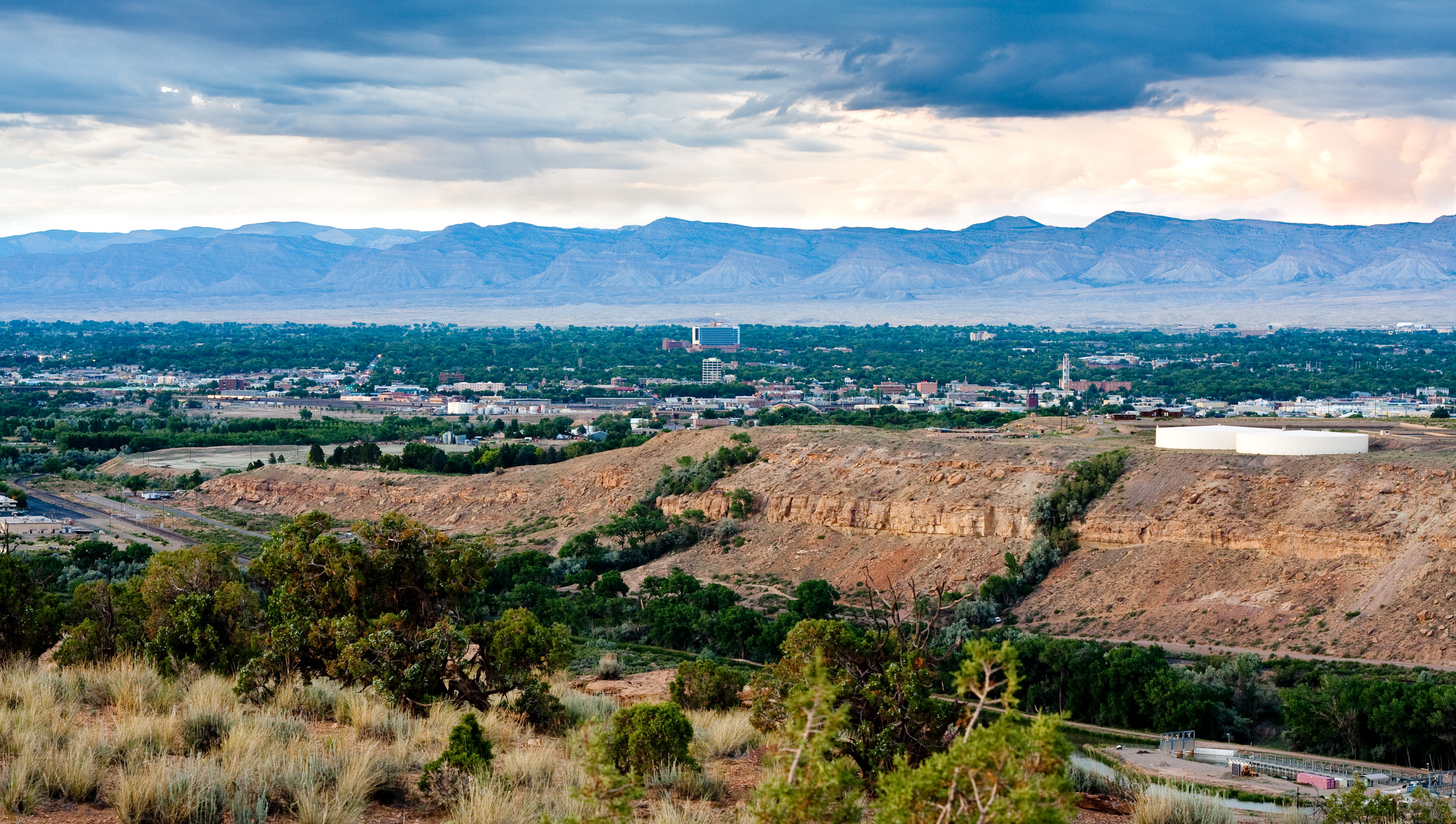
Grand Junction sits at 4,583 feet above sea level at the confluence of the Colorado and Gunnison Rivers, framed by the stunning red sandstone walls of Colorado National Monument to the southwest and the world’s largest flat-top mountain, Grand Mesa, to the east. It is one of the most visually dramatic places in Colorado to own a home, and one of the most climatically demanding for the windows that protect it.
High-altitude UV intensity. Summers that push 100 degrees in the valley. Winters where temperatures drop into the single digits and the wind comes off Grand Mesa with nothing to slow it. Seasonal temperature swings that can exceed 90 degrees in a single year. Hail events from Colorado’s weather systems. Grand Junction’s climate demands a window company with the specific product knowledge and installation expertise to deliver windows that hold up through all four of these forces across all four seasons.
Virtual View Windows is a Grand Junction window company built around the performance requirements of the Western Slope. We install Colorado energy code-compliant products, guide Mesa County homeowners through the incentive programs that reduce project cost, and back every installation with a lifetime warranty and zero payment until every window meets your approval.
How Virtual View Windows Handles Every Grand Junction Project
Our Grand Junction process addresses the Colorado energy code compliance, altitude specification, and incentive documentation requirements specific to Mesa County.

Step 1: Free Estimate and Colorado Code Status Review
Contact Virtual View Windows online or by phone. We gather your window count, preferences, and address. We immediately confirm whether your project will be ordered and installed before or after January 1, 2026 and advise on how that timing affects product selection and tax credit eligibility. You receive a written estimate typically within one business day.
Step 2: Altitude and Glass Package Specification
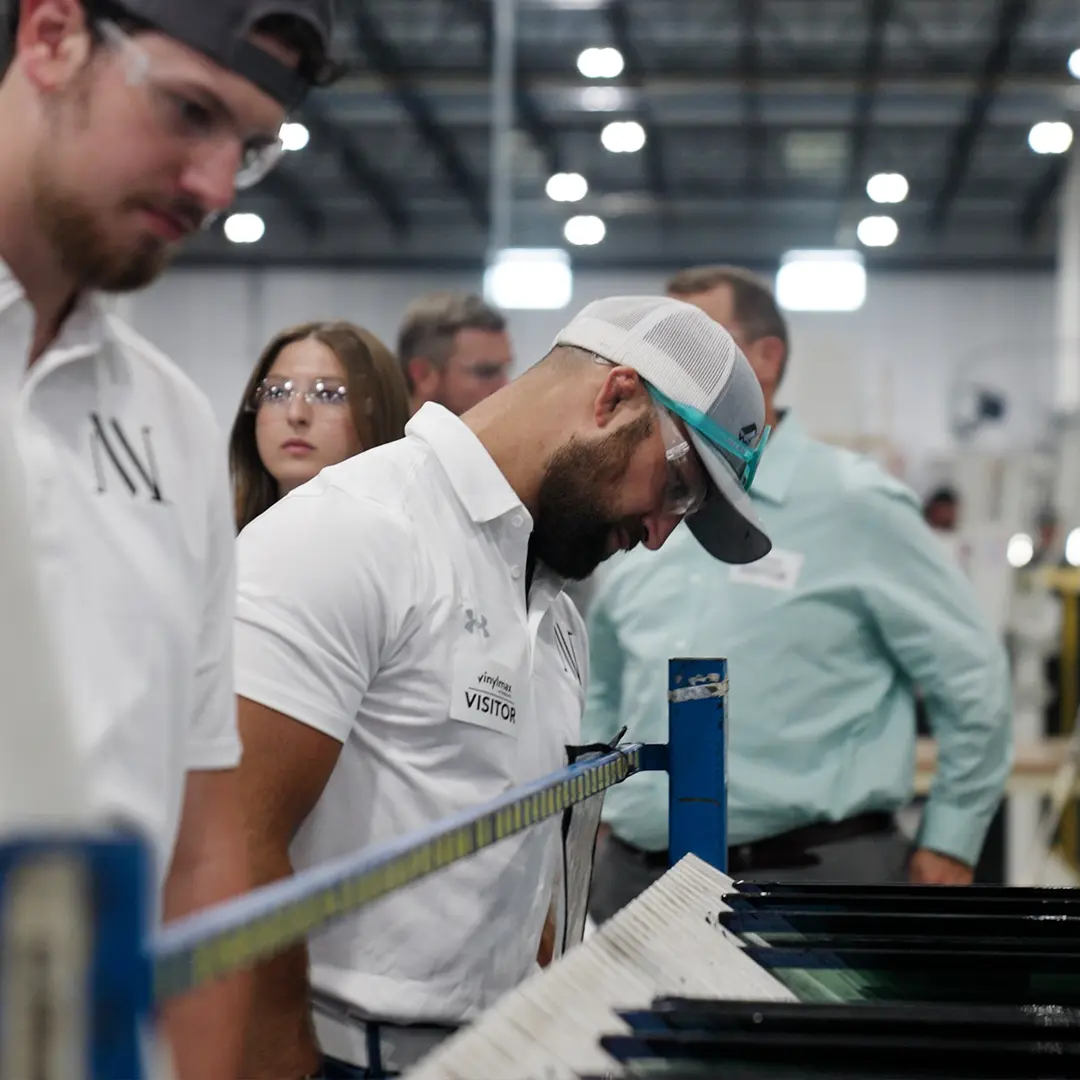
We specify altitude-compensated insulated glass units from manufacturers experienced with Colorado high-altitude conditions for your Grand Junction project. We select glass packages that balance summer SHGC management on west- and south-facing windows with winter U-factor performance, following the Colorado Energy Office's four-season specification guidance.

Step 3: Custom Window Manufacturing
Your windows are ordered to your exact rough opening measurements with altitude-compensated IGU specification confirmed. Standard vinyl lead times are two to four weeks. Fiberglass, custom shapes, and Northern Climate Zone-certified products may require additional time. We confirm your installation date when the order ships.
Step 4: Installation Day
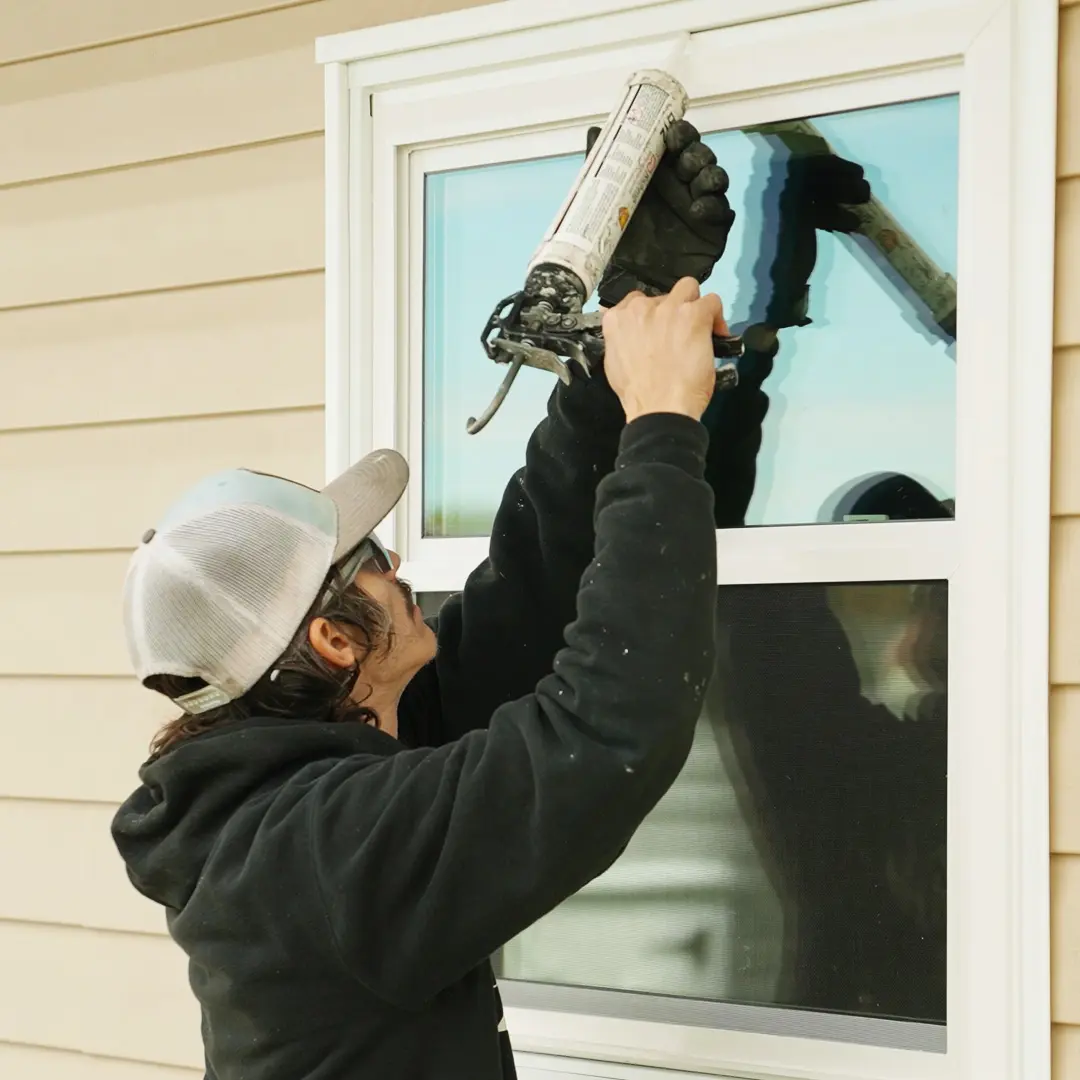
Our Colorado-licensed installation crew arrives with all tools, high-altitude rated sealants, and trim supplies. We remove existing windows, inspect each rough opening for the UV-induced seal deterioration and weatherstripping decay common in older Grand Junction homes, and install your new windows to manufacturer specifications and Colorado energy code air sealing requirements. Most Grand Junction projects of 10 to 15 windows in a single-story ranch home are completed in one day.

Step 5: Documentation and Final Approval
We remove all debris, conduct a room-by-room walkthrough, and deliver your NFRC labels, ENERGY STAR certification documents, product identification numbers for tax credit filing, Xcel rebate documentation, and Colorado code compliance confirmation. No payment until every window passes your personal approval.
Grand Junction's Four-Season Climate and What It Demands from Your Windows
The data on window replacement in Raleigh is compelling. Whether your priority is saving on energy costs, increasing your home’s resale value, or simply living more comfortably through the Triangle’s demanding summers and cool winters, the numbers make a strong argument for acting in 2025.
66.4% ROI | Vinyl window replacement return on investment in Raleigh. Source: JLC Cost vs. Value Report 2024 (Angi) |
57% ROI | Wood window replacement return on investment in Raleigh. Source: JLC Cost vs. Value Report 2024 (Angi) |
$5,954 avg. | Average total window replacement cost in Raleigh for a standard home project. Source: Angi, 2025 |
$3,420-$3,984 | Amount Raleigh homeowners recoup at resale from a $6,000 window replacement project. Source: Angi / JLC 2024 |
25-30% | Share of home heating and cooling energy lost through inefficient windows. Source: U.S. Department of Energy |
Up to 13% | Reduction in heating and cooling costs with ENERGY STAR-certified window replacement. Source: ENERGY STAR / D&R International |
Up to 40% | Potential reduction in energy costs when replacing single-pane windows with efficient modern units. Source: Energy Saver NC program data |
$208M+ | NC Energy Saver program funding available statewide since January 2025 for qualifying home energy upgrades. Source: NC DEQ / energysavernc.org |
7.25% | Combined Raleigh sales tax rate applied to materials and labor on window replacement projects. Source: City of Raleigh |
Window Styles Virtual View Windows Installs Across Grand Junction
Grand Junction’s architectural range spans late 19th-century brick commercial buildings in the downtown Civic Center corridor to mid-century ranch homes across the Mesa and Ridges neighborhoods to contemporary Western Slope designs facing the Colorado National Monument’s red canyon walls. Virtual View Windows installs every major window style, custom-ordered to your exact rough opening dimensions.
Grand Junction’s most commonly installed window style across all residential neighborhoods and eras. Both sashes tilt inward for interior cleaning, which is practically important in Grand Junction’s dusty desert valley environment where exterior cleaning requires working in 100-degree summer heat or winter cold. Standard vinyl double hung replacement windows run $400 to $500 installed per HomeBlue’s 2025 Grand Junction data.
Crank-operated and side-hinged, casement windows create a compression seal that provides superior resistance to the dust infiltration from Grand Junction’s frequent high-desert wind events. When open, they capture the spring and fall breezes that make the Grand Valley genuinely pleasant between the extremes of summer and winter. A strong choice for contemporary homes in the Redlands and Grand Mesa Estates areas.
Horizontal-operating sashes suit the ranch-style and contemporary horizontal homes common across Grand Junction’s North Avenue corridor and the Clifton and Orchard Mesa areas. Practical for wide horizontal openings and available with altitude-compensated double-pane glass packages meeting Colorado’s energy code requirements.
Grand Junction’s views rank among the most spectacular of any residential setting in Colorado: the Book Cliffs, Colorado National Monument’s red sandstone walls, the Grand Mesa’s flat top, and the Colorado River valley. Picture windows are fixed-frame and non-operable, maximizing these views without air or thermal leakage. Their zero air infiltration makes them the most energy-efficient window style for any opening in Grand Junction’s climate.
Bay windows project outward from the wall plane, expanding interior views and creating architectural presence. In Grand Junction’s ranch and colonial homes, a south-facing bay window can capture passive solar heat gain during winter months, directly reducing heating costs during the coldest weeks of January and February. Virtual View Windows installs bay and bow windows with the comprehensive flashing required to protect against the spring moisture events that track across the Western Slope.
Top-hinged and swinging outward, awning windows ventilate effectively while protecting against the afternoon rain events that arrive with Grand Junction’s summer thunderstorm season and the occasional moisture associated with Grand Mesa’s weather systems. Frequently used in basement installations and as companion windows above fixed picture units.
Grand Junction’s Western Slope architectural vocabulary includes arched openings, circular accents, and the distinctive proportions of territorial and mission revival homes. Virtual View Windows sources specialty shape windows for these openings in altitude-compensated, Colorado energy code-compliant glass packages.
Grand Junction's Four-Season Climate and What It Demands from Your Windows
Grand Junction’s climate sits at a rare intersection: a high-desert valley with summer heat approaching Phoenix levels, winter cold approaching mountain levels, and a four-season variability that challenges window performance in ways that no single-climate city faces simultaneously.
Summer Heat and High-Altitude Solar Intensity
The Grand Valley’s summer temperatures regularly exceed 100 degrees Fahrenheit, and Grand Junction’s elevation of 4,583 feet delivers solar radiation intensity significantly higher than cities at sea level. Colorado’s high-altitude environment means intense sun exposure that accelerates the degradation of inferior frame materials and weatherstripping compounds, as documented by Clearview Distributors’ 2025 Colorado window analysis. A window company that specifies only U-factor without addressing Solar Heat Gain Coefficient for Grand Junction’s summer cooling season is optimizing for winter performance while ignoring the climate’s most intense seasonal demand from June through August.
Colorado Energy Code: The January 2026 Transition
Colorado passed House Bill 23-1161, which establishes that beginning January 1, 2026, residential windows sold in Colorado must meet ENERGY STAR Northern Climate Zone performance standards. For Grand Junction homeowners planning a window company project in 2025 or early 2026, this is a directly relevant regulatory change. Windows installed in late 2025 under the existing code framework may qualify for the 25C federal tax credit (available for 2025 tax year filings). Windows installed after January 1, 2026 must meet the new Northern Climate Zone criteria. A window company that does not understand this transition cannot advise Grand Junction homeowners on how to time their project most advantageously.
Western Slope Wind and Winter Cold
Grand Mesa, rising to over 10,000 feet immediately east of Grand Junction, funnels winter cold air into the Grand Valley through the Book Cliffs corridor and across the mesa rim. Grand Junction’s January average low temperatures dip to 18 degrees Fahrenheit, with wind events that test window weatherstripping and frame seals differently than the still-cold conditions of cities like Cincinnati or Columbus. Air infiltration around improperly installed window frames is a direct driver of heating costs in Grand Junction’s Xcel Energy-served homes. Virtual View Windows specifies warm-edge spacer systems and comprehensive air sealing at every rough opening as standard practice on all Mesa County projects.
Hail Risk and Glass Durability
Grand Junction sits in a region affected by Colorado’s active hail weather patterns from spring convective storms and the occasional severe weather event that tracks across the Western Slope. While Grand Junction does not face the extreme hail frequency of the Front Range corridor, hail damage to window glass and frames is a real consideration for Mesa County homeowners. Laminated or tempered glass options and durable frame materials that resist impact are worth discussing with any Grand Junction window company as part of a comprehensive glass package selection.
Altitude and Insulated Glass Unit Performance
Grand Junction’s 4,583-foot elevation is a real window specification factor that is unique to this market. At elevations above approximately 4,000 feet, the pressure differential between the sealed interior of a double-pane insulated glass unit (IGU) and the lower exterior atmospheric pressure can create convex bowing of the glass panes if the unit is not properly altitude-compensated during manufacturing. Clearview Distributors’ Colorado window analysis specifically notes that above 5,000 feet, glass units can experience performance problems that reduce efficiency and lifespan. Grand Junction sits just below that threshold but is close enough that altitude-compensated IGUs from experienced manufacturers are the recommended product specification for any Grand Junction window company project.
Colorado's New Window Energy Code and What It Means for Grand Junction Homeowners
Colorado took a significant step in residential energy efficiency with House Bill 23-1161, which establishes statewide minimum performance requirements for residential windows sold in Colorado. For Grand Junction homeowners, understanding this transition is critical for making informed project timing and product selection decisions.
What Changes on January 1, 2026
Beginning January 1, 2026, all residential windows sold in Colorado must meet ENERGY STAR Northern Climate Zone performance criteria. This transition, documented by 1st Choice Windows and Siding in their 2025 Colorado energy code analysis, applies to products included in the ENERGY STAR program specifications for residential windows and doors. Historic buildings may qualify for limited exemptions if alternate materials are necessary to maintain historic appearance.
The Northern Climate Zone ENERGY STAR specification requires generally a U-factor of 0.27 or below and a Solar Heat Gain Coefficient of 0.40 or above for qualifying products. The higher SHGC target for Northern Climate Zone windows is intentional: in Grand Junction’s cold winters, allowing passive solar heat gain through south-facing windows during December through February contributes measurably to heating comfort and reduces heating costs. The Colorado Energy Office specifically declined to regulate SHGC in its recommendation, acknowledging that in cooler Colorado climates like Grand Junction, a higher SHGC is useful to offset winter heating load.
How This Affects Grand Junction Project Timing
Grand Junction homeowners planning a window company project have a specific decision window in late 2025 and early 2026:
- Projects completed and invoiced in 2025: Products may still qualify for the pre-January 2026 specification. ENERGY STAR Most Efficient certification (required for the 25C federal tax credit) remains the standard for 2025 tax year filings. Virtual View Windows confirms which products in your quote qualify.
- Projects ordered in late 2025 for installation in early 2026: All products must meet the new Northern Climate Zone specification by January 1, 2026, regardless of when the project was quoted.
- Projects initiated in 2026: Full Northern Climate Zone compliance required. Virtual View Windows installs only compliant products for all Grand Junction projects.
The Performance Benefits for Grand Junction
The Northern Climate Zone specification represents a genuine improvement for Grand Junction homeowners regardless of the compliance timeline. ENERGY STAR windows meeting Northern Climate Zone criteria deliver measurably lower U-factors for better insulation through Mesa County winters, balanced SHGC specifications appropriate for Grand Junction’s mix of cold winters and hot summers, and improved air leakage performance that reduces the air infiltration heating losses documented by the U.S. Department of Energy at 25 to 30 percent of residential energy waste.
Virtual View Windows maintains current knowledge of Colorado’s window energy code transition under HB 23-1161. We confirm which products in every Grand Junction project quote meet the pre-2026 code, the post-January 2026 Northern Climate Zone standard, and ENERGY STAR Most Efficient criteria for tax credit purposes. You will not receive a product recommendation from us that creates a code compliance issue.
Grand Junction Window Company Market Data for 2025
Here is what current market research from Grand Junction, Mesa County, and Colorado-specific sources shows for homeowners considering a window company in 2025.
$396-$465 | Average window company cost per window in Grand Junction (490 completed projects, valid through April 2026). Range $361 to $500. Source: Homeyou Grand Junction, 2025/2026 |
$427-$502 | Average window replacement cost per window in Grand Junction (23 completed projects). Source: Homeyou Grand Junction, Jan 2026 |
$400-$500 | Standard vinyl double hung window installed, Grand Junction Colorado. Source: HomeBlue Grand Junction, 2025 |
$600-$900 | Standard wood double hung window installed, Grand Junction Colorado. Source: HomeBlue Grand Junction, 2025 |
$1,218-$14,895 | Project cost range for window installation in Mesa County 2025. Source: Manta Mesa County, 2025 |
$1,998-$2,333 | Average window installation project cost in Grand Junction (401 completed projects). Source: Homeyou Grand Junction, Dec 2025 |
$4,982 std. | Standard whole-home window project cost in Grand Junction, with most homeowners paying $389 to $539 per window. Source: Homeyou Grand Junction, 2025 |
$3,900-$4,800 | 10-window vinyl project, 1,000 sq ft Grand Junction home. Source: HomeBlue Grand Junction, 2025 |
$5,800-$7,200 | 15-window vinyl project, 1,500 sq ft Grand Junction home. Source: HomeBlue Grand Junction, 2025 |
$7,700-$9,700 | 20-window vinyl project, 2,000 sq ft Grand Junction home. Source: HomeBlue Grand Junction, 2025 |
$70-$150/hr | Labor cost per hour for Grand Junction window installation. Source: Homeyou Grand Junction, 2025 |
Top 5 ROI | Window replacement consistently ranks in the top 5 home improvement returns on investment. Source: Homeyou Grand Junction, 2025 |
Up to 40% | Potential energy cost savings replacing old windows with new efficient units. Source: Homeyou Grand Junction, 2025 |
Jan 1, 2026 | Colorado HB 23-1161 requires all residential windows sold in CO to meet ENERGY STAR Northern Climate Zone standards starting this date. Source: 1st Choice Windows and Siding / Colorado Energy Office, 2025 |
Up to $14,000 | Colorado HEAR program rebates for qualifying low-to-moderate income households for eligible efficiency upgrades. Launched November 2025. Source: Colorado Energy Office, 2025 |
$600 | Federal 25C Energy Efficient Home Improvement Credit for qualifying window installations completed in 2025 tax year. Source: EnergySmart Colorado, 2025 |
Window Company Cost Breakdown for Grand Junction, Colorado
Window company pricing in Grand Junction, Colorado reflects Mesa County’s construction labor market and material costs. Here are current benchmarks from multiple Grand Junction-specific sources based on hundreds of completed local projects.
Window Type and Material | Low (Installed) | High (Installed) |
Vinyl double hung (standard) | $400 | $500 |
Vinyl double hung (GJ metro avg., 490 projects) | $396 | $465 |
Vinyl double hung (replacement avg., 23 projects) | $427 | $502 |
Wood double hung (standard) | $600 | $900 |
Fiberglass double hung | $650 | $1,200 |
Casement window (vinyl) | $450 | $850 |
Picture window (vinyl) | $300 | $800 |
Awning window (vinyl) | $400 | $750 |
Bay or Bow window | $1,200 | $4,000+ |
Sliding window (vinyl) | $150 | $350 |
Specialty / custom / arched shape | $500 | $2,000+ |
Whole-Home Window Project Cost for Grand Junction Homes
Project Scope |
Under 5 windows (single-room project) |
5 to 10 windows (standard GJ home) |
10 windows, 1,000 sq ft home (vinyl) |
15 windows, 1,500 sq ft home (vinyl) |
20 windows, 2,000 sq ft home (vinyl) |
Standard whole-home project (all sizes) |
Key Cost Factors for Grand Junction Window Projects
- Frame material: Premium UV-resistant vinyl is standard. Fiberglass adds longevity for thermal cycle resistance across Grand Junction’s wide annual temperature range.
- Colorado energy code compliance: Windows ordered after January 1, 2026 must meet ENERGY STAR Northern Climate Zone standards. Virtual View Windows confirms compliance for all products.
- Altitude-compensated IGU: Pressure-equalized insulated glass units are recommended for Grand Junction’s 4,583-foot elevation. This specification protects long-term seal performance.
- Project size: Volume discounts apply. Homeyou documents $350 to $650 per window for 5 to 10 simultaneous installations vs. $450 average for under-5-window projects.
- Window style: Bay, bow, and specialty shapes cost significantly more than standard rectangles. Views toward Colorado National Monument or Grand Mesa often make bay window investments particularly compelling.
Colorado Energy Incentives for Grand Junction Homeowners
Grand Junction homeowners have access to multiple financial incentive programs that reduce the net cost of qualifying window company projects. Here is the complete 2025 and 2026 picture for Mesa County.
Colorado HEAR Program (Launched November 2025)
The Colorado Energy Office launched the Home Electrification and Appliance Rebate (HEAR) program in November 2025, funded by the Inflation Reduction Act. Qualifying Mesa County households with income at or below 150 percent of the area median income can access rebates for qualifying home efficiency upgrades. For low-income households at or below 80 percent of AMI, up to 100 percent of project costs may be covered for qualifying upgrades. Moderate-income households (80 to 150 percent of AMI) can access rebates at 50 percent of qualifying upgrade costs, up to $14,000 maximum. A registered contractor must install qualifying upgrades. Contact the Colorado Energy Office at COenergyrebates@guidehouse.com or call (866) 336-0016 for eligibility screening.
Colorado Energy Savings Navigator
The Colorado Energy Savings Navigator, referenced by EnergySmart Colorado, is a free digital tool that connects Grand Junction homeowners to more than 600 energy rebates primarily through utility companies and 18 different energy bill assistance programs. Virtual View Windows recommends every Grand Junction homeowner check the Navigator at the Colorado Energy Office’s website before scheduling a window project, as local utility programs and amounts change periodically.
Xcel Energy Programs
Xcel Energy serves most of the Grand Junction metropolitan area. Xcel may offer residential efficiency rebates for qualifying ENERGY STAR window replacements through their residential programs. Colorado utility rebates for ENERGY STAR-certified window replacements in the $50 to $100 per window range have been available through participating Colorado utilities, as documented by Clearview Distributors’ 2025 Colorado window analysis. Check current Xcel Energy window rebate availability at xcelenergy.com or by contacting Xcel directly.
Colorado Weatherization Assistance Program
Income-eligible Mesa County homeowners may qualify for the Colorado Weatherization Assistance Program administered through the Colorado Energy Office and local community action agencies. The WAP provides comprehensive home energy efficiency improvements for qualifying households at no cost. Contact your local Mesa County community action agency for eligibility screening.
Federal Energy Efficient Home Improvement Credit (2025 Tax Year)
Grand Junction homeowners who complete qualifying ENERGY STAR window installations during the 2025 calendar year may claim the 25C Energy Efficient Home Improvement Credit on their 2025 federal tax filing. EnergySmart Colorado documents that through the 2025 tax year, households may qualify for up to $1,200 in total credits, with a cap of $600 per measure (windows). The credit equals 30 percent of qualifying installation costs. Note: This applies to 2025 calendar year installations. The federal 25C credit status for 2026 and beyond should be confirmed with a tax professional as of the time of your project. Virtual View Windows provides NFRC documentation, ENERGY STAR product labels, and product identification numbers for all qualifying window installations.
How Grand Junction's Four Seasons Demand Balanced Window Performance
Grand Junction’s four-season climate is genuinely balanced between heating and cooling demands, which is why the Colorado Energy Office declined to mandate a specific SHGC value for window products in Colorado, leaving the specification to the designer based on project orientation and climate context. Here is how the four seasons translate to specific window performance priorities.
Season | Grand Junction Conditions | Window Performance Priority |
Summer (Jun-Aug) | 100+ F, intense high-altitude UV, afternoon thunderstorms. Grand Mesa provides some temperature moderation. | SHGC management for west and south elevations. Low-E coating critical for UV protection. Argon fill standard. Air leakage control to keep conditioned air in. |
Fall (Sep-Nov) | Dramatic daily temperature swings 70 F days to 30 F nights. Colorado’s hail season peak. Wind off Grand Mesa increasing. | Thermal cycling stress on seals. Warm-edge spacer system protects IGU seals. Impact-resistant glass worth considering. Weatherstripping performance begins to matter. |
Winter (Dec-Feb) | Single-digit overnight lows. Wind events off Grand Mesa. Occasional snow and ice. Xcel Energy heating costs peak. | U-factor performance is dominant. Target U-0.27 or below per Northern Climate Zone. Higher SHGC (0.35-0.40) on south-facing windows captures passive solar gain. Air sealing critical. |
Spring (Mar-May) | Rapid warm-up, variable conditions, returning hail risk. Dust and pollen events off the desert valley floor. | Dust infiltration testing around frame seals. Hail resistance of glass relevant. Transition back to SHGC management as summer approaches. |
Window Frame Materials for Grand Junction's High-Desert Climate
Grand Junction’s frame material performance context differs from both the coastal markets (Portland, Virginia Beach) and the Great Lakes markets (Akron, Cincinnati) in this series. The dominant considerations are UV degradation resistance, thermal cycling range stability, and low-maintenance durability.
Vinyl: Grand Junction's Volume Standard
Vinyl dominates Grand Junction’s window market by installation volume, with standard double hung replacement windows running $400 to $500 installed per HomeBlue’s 2025 data. For Grand Junction’s high-altitude UV exposure, the quality of the UV inhibitor package in the vinyl formulation matters more than in lower-elevation markets. Premium vinyl with TiO2-based UV inhibitors resists the color fade and embrittlement that affects lower-grade vinyl after 10 to 15 years of Grand Junction’s intense solar exposure. Homeyou’s Grand Junction data confirms vinyl lifespans of 20 to 40 years. For Colorado’s new Northern Climate Zone code requirements effective January 2026, premium vinyl frames with qualified glass packages meet all code thresholds comfortably.
Fiberglass: Best Thermal Stability for Grand Junction's Swings
Grand Junction’s annual temperature range from single-digit winter lows to 100-degree summer highs represents one of the most extreme frame material stability tests in this entire series. Fiberglass expands and contracts less than vinyl across this range, protecting seal integrity and hardware alignment through decades of Western Slope thermal cycling. Fiberglass accepts exterior paint and resists UV degradation without special formulations. Cost runs approximately $650 to $1,200 per window installed. Lifespan commonly reaches 30 to 50 years in Colorado’s climate.
Wood and Wood-Clad: Grand Junction Considerations
Grand Junction’s high-desert climate is considerably drier than the Great Lakes and Mid-Atlantic markets in this series. Relative humidity in the Grand Valley frequently drops below 20 percent in summer and winter, which reduces the wood rot risk that makes untreated wood impractical in Portland or Baltimore. Well-maintained wood windows are more viable in Grand Junction’s arid climate than in humid markets. Wood-clad windows with fiberglass or aluminum exteriors provide the aesthetic benefits of wood interior finishes without requiring exterior maintenance, and they are compatible with the passive solar design principles that make south-facing windows particularly valuable in Grand Junction’s winter climate.
Altitude-Compensated Insulated Glass Units: The Grand Junction Requirement
At 4,583 feet, Grand Junction sits close enough to the altitude threshold where insulated glass unit pressure management matters. When a double-pane sealed unit is manufactured at low elevation and transported to Grand Junction, the lower atmospheric pressure at altitude creates a slight positive pressure inside the IGU that can push the glass panes outward if the unit is not altitude-compensated. Reputable IGU manufacturers address this through capillary tubes or pressure equalization during manufacturing for high-altitude installations. Virtual View Windows specifies altitude-compensated units from Colorado-experienced manufacturers for all Grand Junction projects, protecting seal integrity and long-term performance.
Why Grand Junction Homeowners Choose Virtual View Windows
Grand Junction window company market is small by major metro standards, which means the product knowledge gap between the best and the rest is more visible here. Here is what Virtual View Windows brings to every Mesa County project.
Colorado Energy Code Expertise
Virtual View Windows maintains current knowledge of HB 23-1161’s January 2026 transition requirements and can advise Grand Junction homeowners on which products meet the pre-2026 specification, the post-January 2026 Northern Climate Zone standard, and ENERGY STAR Most Efficient criteria for 25C tax credit eligibility. We do not recommend products that will fail Colorado’s new energy code requirements.
Altitude-Aware Product Specification
Grand Junction’s 4,583-foot elevation puts it close enough to the altitude threshold where IGU pressure management matters. Virtual View Windows specifies altitude-compensated insulated glass units from manufacturers experienced with Colorado high-altitude conditions. We confirm that every double-pane unit in your project is pressure-equalized for Mesa County’s elevation, protecting seal integrity and long-term performance.
Four-Season Balanced Glass Packages
We do not apply a cold-climate template or a hot-climate template to Grand Junction projects. We specify glass packages that balance SHGC for summer solar management on west- and south-facing windows with the U-factor performance needed for winter heating efficiency, guided by the Colorado Energy Office’s recognition that Grand Junction’s four-season balance requires custom specification rather than a single statewide SHGC mandate.
Xcel Energy Rebate Documentation
Xcel Energy serves most of the Grand Junction metro area. Xcel offers residential efficiency rebate programs that may include window improvements as part of comprehensive home efficiency upgrades. Virtual View Windows identifies which products on your project qualify for Xcel rebate programs and provides the documentation required for your rebate application. Grand Junction homeowners can also use the Colorado Energy Savings Navigator, a free digital tool that identifies more than 600 energy rebates from Colorado utilities, to check current incentive availability before scheduling their window project.
Written Estimates Without High-Pressure Tactics
Grand Junction homeowners deserve the same straightforward, written pricing that every Virtual View Windows customer receives. We deliver accurate estimates that reflect real Mesa County labor rates and product costs, without requiring a multi-hour sales presentation or same-day decision pressure. No payment until every window is in place and approved.
Lifetime Warranty Through Grand Junction's Climate Extremes
Every Grand Junction project Virtual View Windows completes carries a lifetime warranty on both the installed product and our workmanship. Summer UV intensity, winter cold from Grand Mesa, and the thermal cycling of a four-season high-desert climate test every window installation over time. Our warranty is built to hold up through those tests.
Frequently Asked Questions About Window Companies in Grand Junction, Colorado
How much does a window company charge in Grand Junction, Colorado?
Window company pricing in Grand Junction averages $396 to $465 per window based on Homeyou’s data from 490 completed Grand Junction projects, with a range of $361 to $500. Homeyou’s replacement window data from 23 local projects shows $427 to $502 per window. HomeBlue documents $400 to $500 for standard vinyl double hung installation. For less than 5 windows, the average is $450 per window. For 5 to 10 simultaneous windows, prices drop to $350 to $650. The standard whole-home project costs $4,982 with a range of $1,831 to $2,500 for smaller projects. A 10-window vinyl project runs $3,900 to $4,800 and a 20-window project $7,700 to $9,700. Virtual View Windows provides free written estimates with no payment until every window is approved.
What is Colorado's new window energy code and how does it affect Grand Junction homeowners?
Colorado House Bill 23-1161 requires all residential windows sold in Colorado to meet ENERGY STAR Northern Climate Zone performance standards beginning January 1, 2026. For Grand Junction homeowners, this means windows ordered and installed after January 1, 2026 must meet the Northern Climate Zone specification, which generally requires a U-factor of 0.27 or below. Projects completed in 2025 may still qualify for the 25C federal tax credit (up to $600 for ENERGY STAR Most Efficient qualifying windows on 2025 tax filings). Virtual View Windows confirms which products in your quote meet the pre-2026 code, the post-January 2026 Northern Climate Zone standard, and ENERGY STAR Most Efficient criteria for tax credit eligibility.
Do I need a permit for window installation in Grand Junction, Colorado?
Like-for-like window replacements that do not alter the rough opening size typically do not require a building permit in Grand Junction per HomeBlue’s permitting guidance. However, permit requirements may apply if the window size changes, if the replacement is in a historic district, or if the project involves structural modifications. It is best practice to confirm current City of Grand Junction or Mesa County permit requirements for your specific project with your contractor before work begins. Virtual View Windows confirms permit requirements for your specific address and handles the application when required. Reputable and experienced Grand Junction window companies will know the current permit process and handle it as part of their service.
What type of windows are best for Grand Junction's climate?
Grand Junction’s four-season high-desert climate requires balanced window specifications. For winter performance, target U-factor of 0.27 or below (Northern Climate Zone standard effective January 2026). For summer performance, Low-E glass with appropriate SHGC management on west- and south-facing windows reduces solar heat gain during Grand Junction’s 100-degree summer season. Altitude-compensated insulated glass units are recommended at Grand Junction’s 4,583-foot elevation. Premium vinyl with UV-resistant formulation or fiberglass frames provide the best durability against Grand Junction’s high-altitude UV intensity and extreme annual temperature range. For south-facing windows, a higher SHGC of 0.35 to 0.40 captures passive solar heat gain in winter, directly reducing Xcel Energy heating costs.
What energy rebates are available for window companies in Grand Junction?
Grand Junction homeowners have access to several 2025 and 2026 incentive programs for energy-efficient window installation. The Colorado HEAR program, launched November 2025, provides rebates up to $14,000 for qualifying low-to-moderate income Mesa County households. Xcel Energy, which serves most of Grand Junction, may offer residential rebates for ENERGY STAR-certified window replacements. The Colorado Energy Savings Navigator identifies more than 600 Colorado utility rebates by address. The federal 25C credit (up to $600 for 2025 tax year filings) applies to qualifying ENERGY STAR window installations completed in 2025. The Colorado Weatherization Assistance Program provides no-cost efficiency upgrades for income-qualified households. Virtual View Windows provides all required documentation for applicable programs at project completion.
Grand Junction and Western Slope Communities We Serve
Virtual View Windows provides window services near you and operates as a window company near you throughout Grand Junction and the greater Mesa County and Western Slope region. Our service area includes:
- Grand Junction neighborhoods: Redlands, Grand Mesa Estates, North Avenue corridor, Orchard Mesa, Clifton, Palisade, Fruitvale, Bookcliff
- Mesa County communities: Fruita, Loma, Mack, Whitewater, Gateway, Collbran, DeBeque
- Western Slope region: Montrose, Delta, Olathe, Cedaredge, Hotchkiss, Paonia, Glenwood Springs, Rifle, Silt, New Castle
Unsure whether we serve your address? Contact us and we confirm coverage within one business day.