
Virtual View Windows
Window Company Pennsylvania
Window Company Pennsylvania Replacing Windows in One of America's Oldest Housing States
No state in the Mid-Atlantic carries the weight of its own building history the way Pennsylvania does. The median age of a Pennsylvania home is 57 years, according to the Pennsylvania Housing Finance Agency’s 2023 Comprehensive Housing Study. A full quarter of occupied housing units in the commonwealth were built before 1940. More than half of Pennsylvania’s entire housing stock is over 50 years old, according to the PA Department of Community and Economic Development’s 2024 Housing Action Plan. These are not just historical curiosities. They are structural facts with direct financial consequences for Pennsylvania homeowners trying to manage heating costs in the winter, humidity in the summer, and the long-term integrity of their homes.
Windows sit at the center of that challenge. The U.S. Department of Energy estimates that 25 to 30 percent of residential heating and cooling energy use is lost through windows. In older Pennsylvania homes, particularly those built before 1980, single-pane windows and early double-pane units from the 1990s that have lost their gas fill are contributing to energy bills that have climbed significantly. Winter 2025-2026 brought residential electricity rate increases of 5 to 16 percent across Pennsylvania providers, driven partly by a dramatic spike in PJM capacity auction costs. The average Pennsylvania household now spends roughly $160 per month on electricity alone, according to SavingAdvice.com’s February 2026 analysis.
Virtual View Windows is Pennsylvania’s licensed window company, serving homeowners across the commonwealth from Philadelphia and its surrounding boroughs to Pittsburgh’s historic neighborhoods, the Lehigh Valley, and the Central PA Susquehanna corridor. This guide covers current 2025 Pennsylvania window costs, the full PA incentive stack including the PHFA HEELP loan at 1 percent fixed interest, PECO and PPL EnergySavePA rebates, and the Penn Energy Savers Program, and everything you need to choose the right window company near me for your specific PA home, architecture, and climate zone.
The Virtual View Windows Pennsylvania Installation Process
Every Pennsylvania window project with Virtual View Windows follows a six-step process built specifically for the commonwealth’s housing age, historic district requirements, energy code standards, and incentive program documentation needs.
Step 1: Free In-Home Assessment
A certified Virtual View Windows consultant visits your Pennsylvania home, measures every opening precisely, evaluates existing frame condition and surrounding rough opening health, assesses lead paint risk in pre-1978 homes, identifies your Pennsylvania climate zone and regional housing type, and reviews all product options suited to your architecture, budget, and zone-specific performance requirements. No cost, no pressure, no obligation.
Step 2: Incentive and Financing Documentation Setup
We identify every incentive your project qualifies for: PHFA HEELP loan eligibility and application support, KEEP Home Energy Loan qualification, PECO or PPL EnergySavePA rebate tier based on your utility service territory, Penn Energy Savers Program eligibility if launched, and any remaining federal 25C credit for 2025 installations. We separate materials and labor costs in every estimate specifically to simplify IRS Form 5695 filing and utility rebate applications.

Step 3: Custom Window Fabrication
Your windows are manufactured to the precise dimensions of your rough openings. Pennsylvania's pre-war housing stock in Philadelphia and Pittsburgh routinely requires non-standard custom sizing. Off-the-shelf windows that are nominally close to original dimensions leave the air gaps that defeat the thermal purpose of the replacement and that PA energy codes require to be eliminated.
Step 4: Permit Research and Historic District Coordination
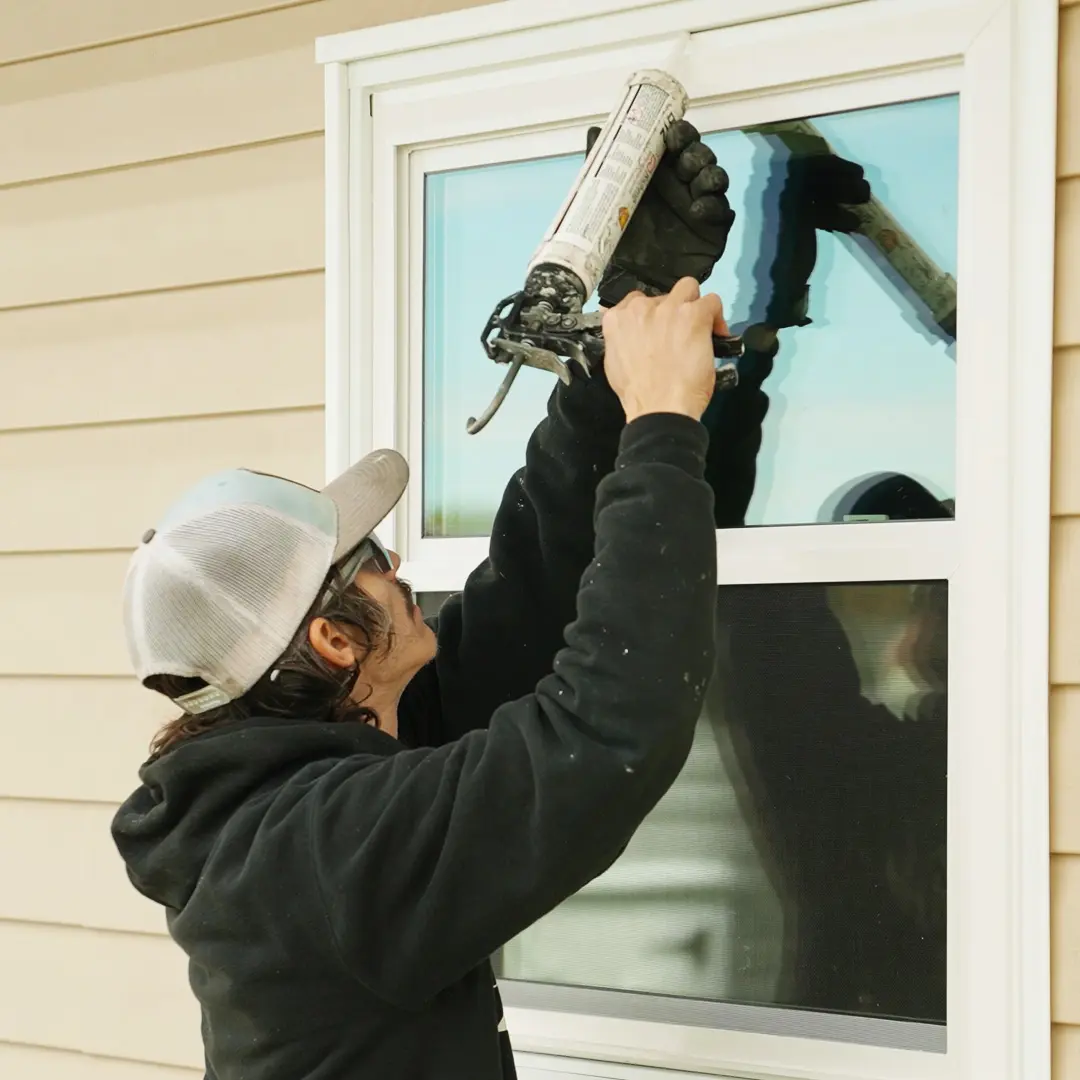
We research permit requirements for your specific Pennsylvania municipality, file all required permits before installation begins, and coordinate with historic preservation review authorities where applicable. For projects in Philadelphia's Historic Commission review areas or Pittsburgh's PHLF-designated neighborhoods, we ensure product selection and installation approach satisfy applicable preservation requirements before fabrication.
Step 5: RRP-Certified Lead-Safe Installation
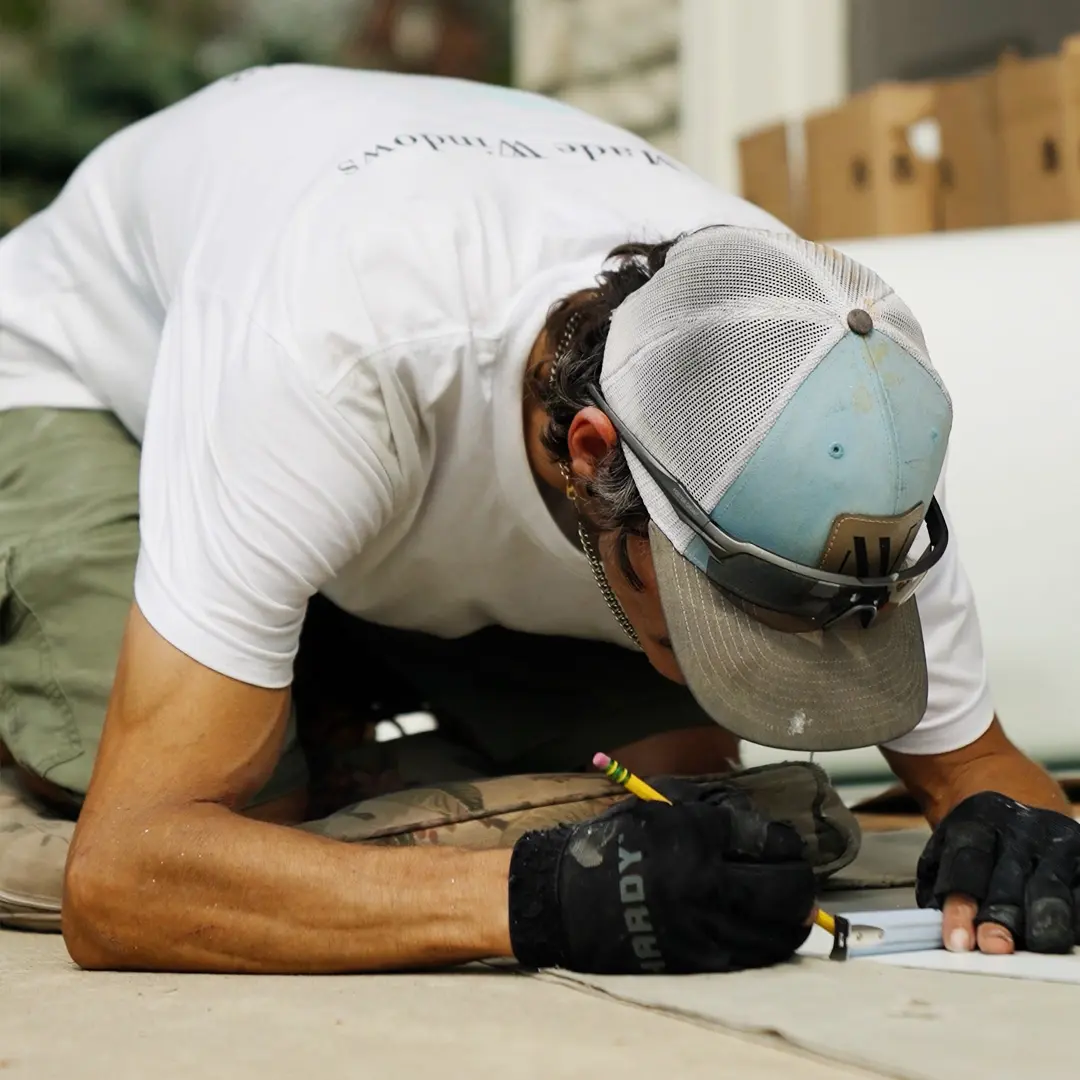
For Pennsylvania homes built before 1978, our RRP-certified installation crews follow federally required lead-safe work practices during window removal and frame preparation. Containment, wet methods, and appropriate cleanup protocols protect your household and comply with EPA RRP regulations. Every pre-1978 Pennsylvania project receives documented RRP compliance as standard procedure.
Pennsylvania's Aging Housing Crisis: Why Your Windows Are Working Harder Than They Should
Four data points define the window company opportunity for Pennsylvania homeowners in 2025. Each is documented, Pennsylvania-specific, and directly tied to the financial and structural consequences of the state’s extraordinary housing age.
57 yrs | The median age of a Pennsylvania home is 57 years, according to the Pennsylvania Housing Finance Agency’s 2023 Comprehensive Housing Study. A quarter of all occupied PA housing units were built before 1940. More than half of the state’s housing stock is over 50 years old. The original windows in these homes were installed to construction standards that predate modern energy codes, insulated glass technology, Low-E coatings, and ENERGY STAR performance requirements. In most cases, they were single-pane or early double-pane units never designed to meet the thermal demands Pennsylvania homeowners now face with 21st-century energy costs. Source: PHFA 2023 Comprehensive Housing Study / PA Department of Community and Economic Development 2024 Housing Action Plan |
25 to 30% | The U.S. Department of Energy estimates that heat gain and loss through windows accounts for 25 to 30 percent of residential heating and cooling energy use in American homes. In older Pennsylvania homes built before 1980, which represent nearly half of the state’s housing stock, that figure is often higher because original building materials were not designed for modern energy efficiency standards. Single-pane windows still common across Schuylkill County, the Lehigh Valley, and much of Central PA offer almost no insulation value. Even double-pane windows from the 1990s have typically lost their inert gas fill and seal integrity. Source: U.S. Department of Energy / BUILD Magazine Pennsylvania Housing Analysis, February 2025 |
5% to 16% | Pennsylvania residential electricity rates increased between 5 and 16 percent across providers in Winter 2025-2026, driven partly by an 833 percent spike in PJM capacity auction costs. The average PA household now spends roughly $160 per month on electricity alone. Pennsylvania families spend on average more than $2,000 annually on total energy bills according to Unique Heating and Cooling’s PA energy analysis. For homeowners whose homes are losing 25 to 30 percent of that energy through aging windows, the compounding math is stark: every year of inaction on window replacement costs more than the year before it. Source: SavingAdvice.com Pennsylvania Energy Analysis, February 2026 / Unique Heating and Cooling PA Energy Report |
$750 avg | The average cost per window for a standard Pennsylvania replacement is $750, according to McClellands Roofing and Contracting’s 2025 PA guide. Full project costs statewide range from $3,150 at the low end to $12,600 for comprehensive installations, per RenoVetted’s PA cost calculator. In Philadelphia, Angi’s July 2025 data shows full projects averaging $5,233, ranging from $2,495 to $8,197. These costs are substantially reducible through Pennsylvania’s PHFA HEELP loan program at 1 percent fixed interest, PECO and PPL EnergySavePA rebates of $25 to $75 per window, and the KEEP Home Energy Loan program financing up to $25,000 for qualifying PA homeowners. Source: McClellands Roofing PA 2025 / Angi Philadelphia July 2025 / RenoVetted PA Cost Calculator 2025 |
Pennsylvania’s housing age is not an inconvenience. It is the core context that shapes every window company decision in the commonwealth, from the products chosen to the installation approach, from the permit research required in Philadelphia’s historic districts to the custom sizing that 1920s Pittsburgh row homes demand.
Window Styles Virtual View Windows Installs Across Pennsylvania
Pennsylvania’s housing diversity demands the full range of window styles. From the original double-hung wood windows of Philadelphia’s colonial row houses to the large casement openings of Pittsburgh’s craftsman homes, from the picture windows of Lehigh Valley ranches to the basement egress requirements of renovated Central PA farmhouses, Virtual View Windows supplies and installs every style required for Pennsylvania’s extraordinary range of residential architecture.
The dominant window style in Philadelphia’s row house stock and across Pennsylvania’s pre-war residential inventory. Double hung windows allow both upper and lower sashes to operate independently for ventilation, with both sashes tilting inward for interior cleaning without exterior access. In Philadelphia’s densely packed row house neighborhoods, where exterior ladder access to upper-floor windows is often impractical, tilt-in double hung cleaning is not a convenience feature. It is an operational necessity. Specified in fiberglass or clad wood for older Philadelphia homes, or in high-quality vinyl for budget-focused projects, double hung windows suit the architectural character of Pennsylvania’s most common pre-war housing styles.
Hinged at the side with an outward-opening crank mechanism, casement windows provide a tighter compression seal against the frame than double hung alternatives. In Pittsburgh’s craftsman-influenced homes and in Pennsylvania’s more modern suburban construction, casement windows are the preferred choice for rooms where maximum ventilation and airtight weatherproofing are both priorities. The compression seal is particularly valuable in Pennsylvania’s cold winters, where air infiltration through a failed weatherstrip creates both an energy cost and a moisture delivery problem.
Pennsylvania’s long, cold winters and the energy cost trajectory in the commonwealth make triple pane windows a practical investment for a broader range of PA homeowners than in more moderate climates. With U-factor reaching as low as 0.15, triple pane windows provide measurably superior thermal performance for north-facing and wind-exposed openings, for homes in Central PA’s coldest communities, and for any Pennsylvania homeowner whose primary goal is maximum long-term energy cost reduction rather than minimum upfront cost.
Fixed glass panels that maximize natural light and views. In Pennsylvania’s ranch and Cape Cod suburban stock from the 1950s through 1970s, picture windows in the living room front wall are a period-defining feature. Replacing aging single-pane picture windows with high-performance Low-E double pane units provides the largest single-window thermal improvement available in these homes, given the large glass area involved. South-facing picture windows with moderate SHGC also contribute meaningful passive solar heat gain during Pennsylvania’s long heating season.
Hinged at the top with an outward-opening crank, awning windows provide ventilation during Pennsylvania’s frequent spring and fall rain without allowing water to enter. They are a standard choice for Pennsylvania kitchens, bathrooms, and utility rooms, and are often combined with fixed picture windows to create light-filled glass walls with ventilation capability. The compression seal when closed provides weather resistance well suited to Pennsylvania’s Variable weather.
Popular in the Victorian and Craftsman homes that define Pittsburgh’s historic residential neighborhoods and appear throughout Pennsylvania’s pre-war housing stock, bay and bow windows project outward from the exterior wall to add interior volume and light. In Philadelphia’s narrow row houses where interior square footage is limited, a bay window in the front parlor adds architectural presence while capturing south-facing winter light. When specified with Zone 5A glass packages in fiberglass or clad wood frames, bay and bow installations deliver both the architectural enhancement these homes deserve and the thermal performance Pennsylvania’s climate demands.
Signs Your Pennsylvania Home Needs a Window Company Now
Pennsylvania’s climate and housing age make certain window failure modes more visible and more financially urgent than in newer construction states. These eight signals indicate that searching for a window company near me in Pennsylvania has moved from a future consideration to a current priority.
Drafts felt at the frame edges with windows fully closed
In Pennsylvania’s Zone 5A winter, every cubic foot of heated air escaping through a failed window seal is energy that your utility bill already paid for. With PA electricity rates rising 5 to 16 percent in Winter 2025-2026 and natural gas prices following a similar upward trend, the monthly cost of air infiltration through aging window seals is growing faster than at any time in the past decade.
Fog, condensation, or haze between the panes of a double-pane window
Inter-pane condensation means the insulated glass unit’s seal has failed, eliminating the thermal benefit of the gas fill and degrading the Low-E coating. A fogged double-pane window from a 1990s Pennsylvania home installation performs at single-pane levels. In a state where a quarter of all homes were built before 1940, this failure mode is common and financially consequential.
Interior condensation forming on glass surfaces during Pennsylvania winters
persistent condensation on interior glass means the window surface temperature is consistently below the dew point of your indoor air. In Pennsylvania’s cold winters, this repeated moisture contact degrades wood frames, warps trim, and in older homes with original plaster walls, contributes to moisture infiltration into the wall assembly behind the window.
Visible rot, paint failure, or softness at the frame, sill, or surrounding trim
Pennsylvania’s humidity cycling creates predictable wood deterioration in original window frames. Once softness is present at the frame or sill, moisture has already entered the surrounding rough opening. In a home built before 1960, this often means the structural framing around the window needs assessment before replacement windows are installed.
Windows that bind, warp, swell, or no longer operate and latch correctly
In Pennsylvania’s pre-war housing stock, wood frame swelling from decades of humidity cycling is one of the most common operational failures. A window that will not close and latch fully in a Pennsylvania winter is both an air infiltration problem and a security concern. In sleeping rooms below a certain floor level, a non-operable window is also an egress safety issue under Pennsylvania’s Uniform Construction Code.
Energy bills increasing beyond documented rate changes
When your PECO, PPL, Duquesne Light, or Columbia Gas bill climbs beyond what rate increases explain, failing window seals are among the most common structural contributors. The average PA household spends more than $2,000 per year on energy. With Pennsylvania homes losing 25 to 30 percent of heating and cooling energy through windows, the monthly cost of inaction compounds with every rate adjustment.
Cold or uncomfortable zones near large windows during Pennsylvania's heating season
The radiant cooling effect of cold glass surfaces during Pennsylvania’s four-to-five-month heating season creates discomfort zones in rooms adjacent to large, inefficient windows. If family members consistently avoid the rooms with the most exterior glass in winter, window thermal performance is the most likely structural cause rather than a heating system issue.
Pennsylvania's Climate Zone 5A: What It Requires From Your Windows
The majority of Pennsylvania falls in ENERGY STAR’s Climate Zone 5A, a cold-humid designation that reflects the state’s combination of cold, snowy winters and hot, humid summers. Zone 5A requires windows that work as hard at keeping summer heat out as they do at keeping winter heat in, which creates a balanced glass specification challenge unlike the simple cold-weather-priority of northern states or the simple cooling-priority of southern states.
U-Factor: Pennsylvania's Primary Performance Metric
U-factor measures the rate of heat transfer through the entire window assembly. Pennsylvania’s energy code under the International Energy Conservation Code specifies U-factor 0.35 or lower for replacement windows in Philadelphia, with most of the commonwealth requiring U-factor 0.30 or lower. The ENERGY STAR Zone 5A specification requires U-factor 0.27 or lower for the basic certification, and U-factor 0.20 to 0.22 for the Most Efficient designation. RenoVetted’s Pennsylvania specification guide identifies U-factor 0.25 or lower as essential for Zone 5A, with triple pane worth serious consideration for Central PA and Zone 6 communities in the northern tier. Virtual View Windows recommends U-factor 0.27 or lower for standard Philadelphia and Pittsburgh installations, and U-factor 0.22 or lower for Central PA and northern Pennsylvania communities.
SHGC: Pennsylvania's Balanced Cooling and Heating Equation
The Solar Heat Gain Coefficient determines what fraction of solar radiation passes through the glass into the home. Pennsylvania’s Zone 5A climate creates a genuine tension: south-facing windows benefit from higher SHGC to capture passive solar heat gain during Pennsylvania’s cold winters, but east and west-facing windows in Philadelphia need lower SHGC to manage summer solar heat gain during the region’s hot, humid July and August. RenoVetted’s Zone 5A specification identifies higher SHGC on south windows as capturing free solar heat in winter. For most Pennsylvania homes, a SHGC of 0.25 to 0.35 provides a practical balance for the mixed Zone 5A conditions, with south-facing windows in Central PA homes benefiting from SHGC closer to 0.35 for passive solar collection.
Triple Pane for Pennsylvania's Coldest Communities
Triple pane windows with a third glass layer and two gas-filled cavities are the highest-performance option for Pennsylvania homes and represent the best investment for Central PA homeowners in Zone 5A communities with the coldest winter conditions. High-performance double-pane units achieve U-factor of 0.30 or lower, while triple pane units can reach U-factor as low as 0.15. For Pittsburgh homes with north-facing or wind-exposed openings, and for Central PA coal-era homes where heating cost is the dominant household expense, the thermal performance premium of triple pane justifies the cost over the project lifetime.
Window Frame Materials for Pennsylvania: Matching Material to Housing Stock and Climate
Pennsylvania’s Zone 5A climate and the age of its housing stock create a frame material selection environment where both thermal performance and architectural compatibility matter. The best window frame for a 1920s Philadelphia row house is not the same as the best frame for a 1965 Pittsburgh ranch.
Frame Material | Moisture Resist. | Energy Perf. | Lifespan | PA-Specific Notes |
Vinyl (multi-chamber) | Very Good | Very Good | 20 to 40 yrs | Best value for PA Zone 5A homes |
Fiberglass | Excellent | Excellent | 30 to 50 yrs | Angi top pick for Philly climate |
Clad wood (aluminum or fiber ext.) | Very Good | Good | 25 to 40 yrs | Historic Philly / Pittsburgh districts |
Composite | Excellent | Excellent | 30 to 50 yrs | Premium all-round PA performer |
Wood (exterior-sealed) | Good | Moderate | 15 to 25 yrs | High maint. in PA humid summers |
Aluminum single-pane | Poor | Poor | 20 yrs | Not recommended for PA Zone 5A |
Angi’s Philadelphia analysis explicitly identifies clad wood and fiberglass as the best materials for Philadelphia’s climate, which experiences hot, humid summers and cold winters. Fiberglass frames, with their 30-to-50-year lifespan and dimensional stability across Pennsylvania’s 60-plus-degree seasonal temperature range, are the premium choice for any PA home where long-term performance is the priority. They expand and contract at nearly the same rate as glass, maintaining frame-to-glass seals through the full Pennsylvania thermal cycle more reliably than vinyl.
Clad wood frames, which use an aluminum or fiberglass exterior cladding over an interior wood frame, are the most architecturally appropriate choice for Philadelphia’s historic row house districts and Pittsburgh’s Victorian neighborhoods. They provide the wood interior finish that period-appropriate restoration requires while protecting the structural frame from Pennsylvania’s outdoor humidity. For historic district projects in Philadelphia or Pittsburgh, clad wood often satisfies Historical Commission review requirements that fully modern frame materials might not.
Multi-chamber vinyl remains the most popular and most cost-effective choice for the majority of Pennsylvania homeowners, and it performs well in Zone 5A conditions when properly specified. For homes outside historic districts where architectural compatibility is not a review requirement, moisture-rated multi-chamber vinyl with Low-E double pane glass represents the best combination of performance, durability, and value for most Pennsylvania window projects. Avoid single-wall vinyl, which lacks the thermal break performance of multi-chamber construction and is insufficient for Pennsylvania’s cold winters.
Pennsylvania's Four Regions: Why a Single Window Solution Does Not Work Across the Commonwealth
Pennsylvania is a state of four distinct residential worlds, each with its own climate character, housing stock age, architectural style, and window specification requirements. A window company that treats a Philadelphia colonial row house the same as a Schuylkill County coal-era bungalow or a Pittsburgh Victorian foursquare is not providing Pennsylvania-specific expertise. It is providing a national template that does not account for the most important details.
PA Region | Climate Character | Housing Stock | Window Specification Priority |
Philadelphia Metro + SE PA | Zone 5A; hot-humid summers + cold winters | Colonial row houses, Victorian twins, Craftsman, 1920s to 1950s brick construction | Clad wood or fiberglass; U-value 0.30 or lower; SHGC balanced 0.25 to 0.35; historic preservation code check required |
Pittsburgh + Western PA | Zone 5A; cold winters, high humidity, lake-effect influence | Victorian neighborhoods (Shadyside, Mt. Lebanon), Foursquares, post-war ranches, newer suburban | Vinyl or fiberglass; U-value 0.25 or lower; permit required in city limits; coal-era housing requires custom sizing |
Lehigh Valley + Allentown Corridor | Zone 5A; moderate humidity; colder inland winters than Philly | Mix of 1900s to 1960s rowhouses and single-family; industrial-era housing stock | Vinyl multi-chamber or composite; U-value 0.25 or lower; PECO or PPL rebate eligible depending on location |
Central PA / Susquehanna Corridor | Zone 5A to 6; coldest winters in PA; rural and small-town housing | Coal-era housing (Schuylkill County, Lebanon Valley), farmhouses, agricultural communities | Triple pane strongly recommended; U-value 0.22 or lower; KEEP loan financing often most practical for this region |
Philadelphia Metro and Southeastern Pennsylvania
The Philadelphia metro is home to one of the densest concentrations of pre-1940 housing in the United States. Colonial row houses built from the 1880s through the 1930s with 3-inch-thick brick walls. Victorian twin homes from the same era in neighborhoods like West Philadelphia, Germantown, and Chestnut Hill. Post-war rowhouses in South Philly and the Northeast that are now 70-plus years old. Many of these homes still have their original single-pane wood-frame windows, and those that were updated in the 1980s or 1990s often have double-pane units that have long since lost their performance.
Angi’s Philadelphia analysis explicitly identifies clad wood and fiberglass as the best materials for Philadelphia’s climate, which combines hot, humid summers with cold winters in ENERGY STAR Climate Zone 5A. Philadelphia’s Department of Licenses and Inspections requires permits for window replacements involving structural changes, and properties in historic districts face additional review requirements that make contractor familiarity with local code essential. Virtual View Windows knows Philadelphia’s historic district requirements and helps homeowners navigate the permit process as part of every project.
Pittsburgh and Western Pennsylvania
Pittsburgh’s historic neighborhoods, including Shadyside, Mt. Lebanon, Point Breeze, Squirrel Hill, and Bethel Park, contain some of the most architecturally diverse pre-war housing stock in western Pennsylvania. Victorian foursquares, American Craftsman homes, and early colonial revivals built between 1890 and 1950 are common throughout the inner suburbs. These homes frequently present the same non-standard opening sizes that Energy Swing Windows identifies as a defining challenge for Pittsburgh window projects, where a single project of unique sizing can cost upward of $14,000 due to the complexity.
Within Pittsburgh city limits, building permits are required for window replacement, and projects involving historic neighborhoods may have additional requirements. Suburban homes in North Hills and Greensburg tend toward modern construction with standardized sizing that reduces installation complexity and cost. The Pittsburgh vinyl double-hung window range runs $500 to $2,500 per window depending on customization and efficiency ratings, according to Energy Swing’s 2025 cost guide. Replacing windows saves up to 40 percent on energy costs in Pittsburgh, according to the same source.
Lehigh Valley and the Allentown Corridor
The Lehigh Valley, including Allentown, Bethlehem, and Easton, represents one of Pennsylvania’s most significant concentrations of 1900s to 1960s industrial-era housing. Rowhouses from the steel and manufacturing era, single-family homes built for industrial workers, and mid-century ranches and Cape Cods make up the primary housing stock. This corridor sits at the boundary between PECO and PPL Electric service territories, meaning available utility rebates vary by specific address. The Lehigh Valley’s colder inland winters compared to Philadelphia make U-value 0.25 or lower the practical standard, with EnergySavePA rebates from the appropriate utility provider available for qualifying products.
Central PA and the Susquehanna Corridor
Central Pennsylvania, including Harrisburg, Lancaster, York, the Schuylkill Valley, and the Susquehanna corridor towns of Selinsgrove, Sunbury, and Lewisburg, represents the Pennsylvania housing market most directly challenged by the combination of cold winters, aging coal-era housing stock, and limited access to the utility rebate programs concentrated in the eastern corridor. This region experiences some of Pennsylvania’s coldest winters, with Schuylkill County and the northern Susquehanna Valley routinely seeing snowfall totals exceeding 75 centimeters per season. Triple pane windows with U-value 0.22 or lower represent the most significant per-window energy improvement available to Central PA homeowners. The KEEP Home Energy Loan, financing up to $25,000 for qualifying improvements including windows, is often the most practical financing pathway for homeowners in this region who are beyond the PECO and PPL service footprints.
Window Company Costs in Pennsylvania: 2025 Data by Region
Pennsylvania window project costs vary by region, housing type, frame material, and the age-related complications common in the commonwealth’s pre-war housing stock. Here is what current 2025 data shows across the state.
Window Type / Scenario | Cost Range (2025) | Source / Notes |
Standard vinyl double-hung (PA statewide avg) | $750 per window | McClellands Roofing PA 2025 |
Philadelphia metro project average | $5,233 full project | Angi Philadelphia July 2025 |
Philadelphia project range | $2,495 to $8,197 | Angi Philadelphia July 2025 |
Pittsburgh vinyl double-hung range | $500 to $2,500 installed | Energy Swing Windows Pittsburgh 2025 |
Vinyl window 10-window home (Pittsburgh) | $4,200 to $5,200 total | HomeBlue Pittsburgh Cost Guide 2025 |
PA statewide full-home range | $3,150 to $12,600 | RenoVetted PA Cost Calculator 2025 |
Volume discount (full-home project) | 15% to 30% less per window | vs. individual replacements |
Historic home premium (Philadelphia/Pittsburgh) | 15% to 30% cost adder | Older pre-1940 homes; non-standard sizing |
The Philadelphia project range from Angi of $2,495 to $8,197, with an average of $5,233, reflects the wide span between a straightforward vinyl replacement in a modern suburban home and a complex historic row house project requiring custom sizing, Historic Commission review, and lead-safe work protocols. The historic home premium of 15 to 30 percent identified in Pittsburgh applies equally to Philadelphia’s pre-1940 housing stock.
Volume savings are significant across all Pennsylvania markets. Replacing all windows in a single project reduces the per-window cost by 15 to 30 percent compared to individual replacements, because installation labor is spread across a larger number of units and materials procurement is consolidated. For a 15-window Philadelphia row house replacing original single-pane wood frames with fiberglass Low-E double pane units, the difference between a single coordinated project and three sequential five-window projects can represent $3,000 to $5,000 in total cost.
Off-season scheduling from October through February offers the best availability and most flexible scheduling across Pennsylvania markets. Winter scheduling is practical for window replacement when an experienced contractor uses appropriate cold-weather installation materials and procedures. Virtual View Windows works year-round across Pennsylvania and does not require homeowners to delay until spring to access contractor availability or pricing benefits.
The PHFA HEELP loan at 1 percent fixed interest for 10 years can make even a comprehensive full-home window project financially accessible to Pennsylvania homeowners who would otherwise find the upfront cost prohibitive. At 1 percent interest, a $7,500 loan generates approximately $65 per month in payments, which for many homeowners is less than the monthly energy savings from the new windows. Virtual View Windows coordinates HEELP loan applications for qualifying projects and builds the loan documentation into every applicable Pennsylvania estimate.
Why Pennsylvania Homeowners Choose Virtual View Windows
Searching for a window company near me in Pennsylvania connects you with a large and varied field of options. Here is what consistently distinguishes Virtual View Windows in the Pennsylvania market.
We know Pennsylvania’s housing. The specific challenges of Philadelphia row house window sizing, Pittsburgh Victorian foursquare openings, Lancaster County farmhouse construction, and Lehigh Valley industrial-era housing are not abstractions for us. They are the actual conditions our crews work in every week. Our assessments reflect that knowledge because we have encountered every version of it in practice.
We are a PHFA HEELP approved contractor. That credential means we can coordinate the 1 percent fixed-rate loan application process for qualifying Pennsylvania homeowners as part of every project estimate. For many PA homeowners, the HEELP loan transforms a window project from a financial barrier into a monthly payment that is competitive with their monthly energy waste. Most window companies in Pennsylvania cannot offer this because they are not enrolled in the program.
We are RRP-certified for Pennsylvania’s pre-1978 housing stock. Because the majority of Pennsylvania’s homes were built before 1978, this is not an edge case credential. It is a baseline requirement for safe, compliant window replacement in most of the commonwealth’s established residential neighborhoods. Every pre-1978 Virtual View Windows project follows federally required lead-safe protocols with full documentation.
We research and file Pennsylvania permits. With 67 counties and hundreds of municipalities each operating their own permit process, Pennsylvania permit research is not a simple task. We handle it as a standard part of every project. We know Philadelphia’s Department of Licenses and Inspections process, Pittsburgh’s Department of Permits Licenses and Inspections requirements, and the permit procedures of county-level building offices across the commonwealth.
Whether you are in Philadelphia, Bucks County, Chester County, Montgomery County, Delaware County, Pittsburgh, Allegheny County, Allentown, Bethlehem, Easton, Lancaster, Harrisburg, York, Scranton, Erie, Reading, or anywhere across Pennsylvania’s 67 counties, Virtual View Windows brings window services near you with the PA-specific expertise, incentive credentials, and professional accountability your home and your investment deserve.
Frequently Asked Questions About Window Companies in Pennsylvania
How much does a window company charge for window replacement in Pennsylvania?
Window replacement in Pennsylvania averages $750 per window for a standard vinyl installation, according to McClellands Roofing’s 2025 PA guide. Full home projects range statewide from $3,150 to $12,600 based on RenoVetted’s PA cost calculator. In Philadelphia, Angi’s July 2025 data shows full projects averaging $5,233, ranging from $2,495 to $8,197. Pittsburgh vinyl double-hung windows run $500 to $2,500 per window depending on customization and complexity. Pre-1940 homes in historic districts typically carry a 15 to 30 percent cost premium for non-standard sizing, lead-safe protocols, and Historic Commission review. Virtual View Windows provides free, itemized Pennsylvania estimates with transparent materials and labor pricing. Window replacement in Massachusetts averages around $800 per window, above the national average of $600 (EcoWatch, February 2025). In the Boston metro, the average full-project cost is $6,587, with most homeowners spending between $2,635 and $8,755 (Angi, 2025). Statewide, most homeowners pay between $600 and $1,610 per window for a standard residential installation. High-efficiency triple pane units can reach $750 to $1,800 per window installed. Virtual View Windows provides free, itemized estimates for Massachusetts homeowners so you understand your full project cost before committing to any work.
What financing is available for window replacement in Pennsylvania?
Pennsylvania offers some of the most distinctive window financing in the Mid-Atlantic. The PHFA HEELP loan provides $1,000 to $10,000 at a fixed rate of 1 percent for 10 years with no prepayment penalty, specifically for energy efficiency improvements including windows. The KEEP Home Energy Loan provides 100 percent financing from $2,500 to $25,000 for qualifying improvements. PECO and PPL EnergySavePA rebates offer $25 to $75 per window for qualifying ENERGY STAR certified products. The Penn Energy Savers Program, funded by the IRA, is awaiting launch as of early 2026 and will provide additional rebates for low-to-moderate income households. Virtual View Windows is a PHFA HEELP approved contractor and coordinates incentive applications for every qualifying PA project.
What type of windows are best for Pennsylvania homes?
Pennsylvania falls in ENERGY STAR Climate Zone 5A, a cold-humid designation requiring windows that manage both winter heat retention and summer solar control. Angi explicitly identifies clad wood and fiberglass as the best materials for Philadelphia’s climate. Fiberglass frames are the premium recommendation for any PA home because of their 30 to 50 year lifespan and dimensional stability across Pennsylvania’s 60-plus-degree seasonal temperature range. Multi-chamber vinyl is the best value option for homes outside historic districts. For older pre-1940 Philadelphia row houses and Pittsburgh Victorians, clad wood frames satisfy both performance and historic district aesthetic requirements. Avoid aluminum single-pane windows in any Pennsylvania residential application. Target U-value 0.27 or lower for Philadelphia and Pittsburgh; U-value 0.22 or lower for Central PA.
Do I need a permit from a window company for replacement windows in Pennsylvania?
Permit requirements in Pennsylvania vary by municipality across 67 counties. In Philadelphia, a permit is not required for like-for-like window replacements in the same location and size, but is required for structural changes and costs about $65 for residential projects. Historic buildings in Philadelphia require review by the Philadelphia Historical Commission regardless of permit status. Pittsburgh requires permits for replacements within city limits. Suburban municipalities have varying requirements. Pennsylvania’s Uniform Construction Code governs egress window installations statewide and requires inspection for basement bedroom windows. Virtual View Windows researches permit requirements for every Pennsylvania municipality where we work and handles all permit applications as a standard part of every project.
How do I find a reliable window company near me in Pennsylvania?
Finding a reliable window company in Pennsylvania means looking for Pennsylvania-specific credentials: a PHFA HEELP approved contractor designation for access to 1 percent fixed-rate financing, EPA RRP certification for pre-1978 home lead-safe practices, familiarity with Philadelphia and Pittsburgh Historic Commission review requirements, and experience with the non-standard sizing common in PA pre-war housing stock. Get at least three itemized quotes that separate materials and labor. Confirm the contractor researches and files all required municipal permits. Verify they document ENERGY STAR product certification for utility rebate applications. Virtual View Windows holds all of these credentials and serves homeowners across all of Pennsylvania’s 67 counties.
Take the Next Step: Connect With Pennsylvania's Window Company That Knows the Commonwealth

Get Your Free Estimate Today | Call or Request Online | Serving All of Pennsylvania
Find Window Services Near You Across Pennsylvania
Virtual View Windows provides licensed window installation and replacement services throughout all of Pennsylvania, from the Philadelphia metro to the Pittsburgh region, the Lehigh Valley, Central PA, and the northern tier.
- Philadelphia Metro and Southeastern PA: Philadelphia, Bucks County, Chester County, Montgomery County, Delaware County, Norristown, Doylestown, Media, West Chester, and King of Prussia
- Pittsburgh and Western PA: Pittsburgh, Allegheny County, Mt. Lebanon, Bethel Park, North Hills, Greensburg, Westmoreland County, and Washington County
- Lehigh Valley and Eastern PA: Allentown, Bethlehem, Easton, Whitehall, Northampton County, and Lehigh County
- Central PA and the Susquehanna Corridor: Harrisburg, Lancaster, York, Reading, Lebanon, Dauphin County, and the Schuylkill Valley
- Northern and Central PA: Scranton, Wilkes-Barre, State College, Altoona, Bloomsburg, and surrounding communities
- Erie and Northwestern PA: Erie, Meadville, and Crawford County
If your Pennsylvania community is not listed, contact us directly. We work across all of Pennsylvania’s 67 counties and regularly extend service to communities throughout the commonwealth, including rural boroughs, small towns, historic districts, and communities that larger national window companies do not serve with genuine local expertise.
Wherever you are in Pennsylvania, searching for a window company near me should connect you with a team that understands the commonwealth’s extraordinary housing age, four distinct regional markets, Zone 5A climate specifications, PHFA HEELP loan process, and the permit and historic preservation requirements that define window projects across Pennsylvania’s most established neighborhoods. That is exactly what Virtual View Windows brings to every Pennsylvania homeowner.
Other Service Areas
- Boston MA
- Detroit MI
- Minneapolis MN
- Kansas City MI
- Springfield MI
- St Louis MI
Manchester NH
- Charlotte NC
- Greensboro NC
- Raleigh NC
- Cleveland OH
- Akron OH
- Dayton OH
- Columbus OH
- Cincinnati OH
- Oklahoma City OK
- Portland OR
- Philadelphia PA
- Pittsburgh PA
- Arlington TX
- Austin TX
- Houston TX
- Nashville TN
- Knoxville TN
- Salt Lake City UT
- St George UT
- Richmond VA
- Virginia Beach VA
- Madison WI
- Milwaukee WI