
Virtual View Windows
Window Company Washington State
Window Company Washington State: From the Rain-Soaked Puget Sound to Eastern Washington's Cold, Dry Winters, Performance Built for Both Sides of the Cascades
Selecting the right window company in Washington State starts with recognizing that the Evergreen State is divided by the Cascade Range into two dramatically different climates that demand entirely different window performance specifications. Western Washington, anchored by the Seattle, Tacoma, Bellevue, Everett, Olympia, and Bellingham metro areas, sits in ENERGY STAR’s Marine Climate Zone and records rain or overcast conditions on 150 or more days per year in the Puget Sound basin. In this environment, moisture management is the primary frame material challenge, persistent cloud cover reduces the passive solar heat gain that drives window specification decisions in drier climates, and the damp marine air creates a degradation environment for standard materials that makes frame longevity and weatherseal performance the dominant long-term performance variables. Eastern Washington communities including Spokane, Yakima, the Tri-Cities, Wenatchee, and the Palouse experience a continental climate entirely unlike western Washington: winter low temperatures in Spokane can drop below minus 10 degrees Fahrenheit, summer highs regularly exceed 100 degrees Fahrenheit in the basin communities, and the cold-dry winters of Zone 5B and Zone 6B demand window thermal performance that the mild marine west side does not require. Virtual View Windows is a dedicated window company Washington State homeowners and commercial property owners rely on throughout the entire state, serving communities on both sides of the Cascades with NFRC-certified, regionally specified window solutions matched to the actual climate where each home sits.
Whether you are searching for a window company near me in the greater Seattle area or the Eastside suburbs, looking for window services near you in Spokane or the Yakima Valley, or trying to understand the Puget Sound Energy and Snohomish County PUD window rebates that are active right now in 2026, this guide provides the current, precise information that Washington State homeowners need before they make a window investment.
Choosing the Right Window Material for Washington State Climate
Not all window frames perform equally under Washington State conditions. Here is how the most common materials compare:
Free On-Site Estimate
A certified project advisor visits your home, measures every opening, evaluates frame and sill conditions, and provides a written, itemized quote with no pressure and no surprises.
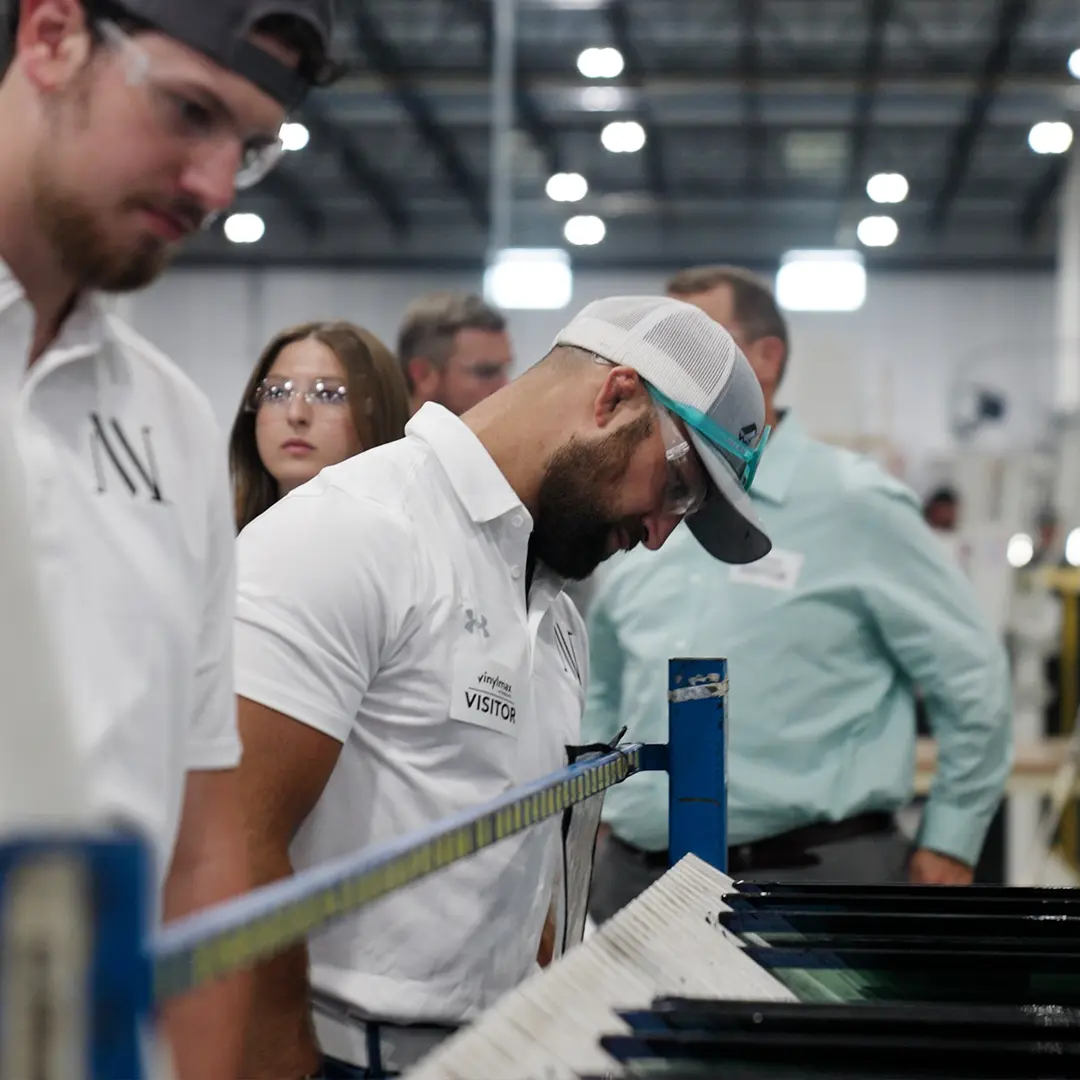
Product Selection
We guide you through window styles, frame materials, glass packages, and color options suited to your home's architecture and your energy goals.

Custom Order and Delivery Confirmation
Your windows are ordered to your exact specifications. Before scheduling installation, we inspect every unit at delivery to verify accuracy and confirm there are no defects.
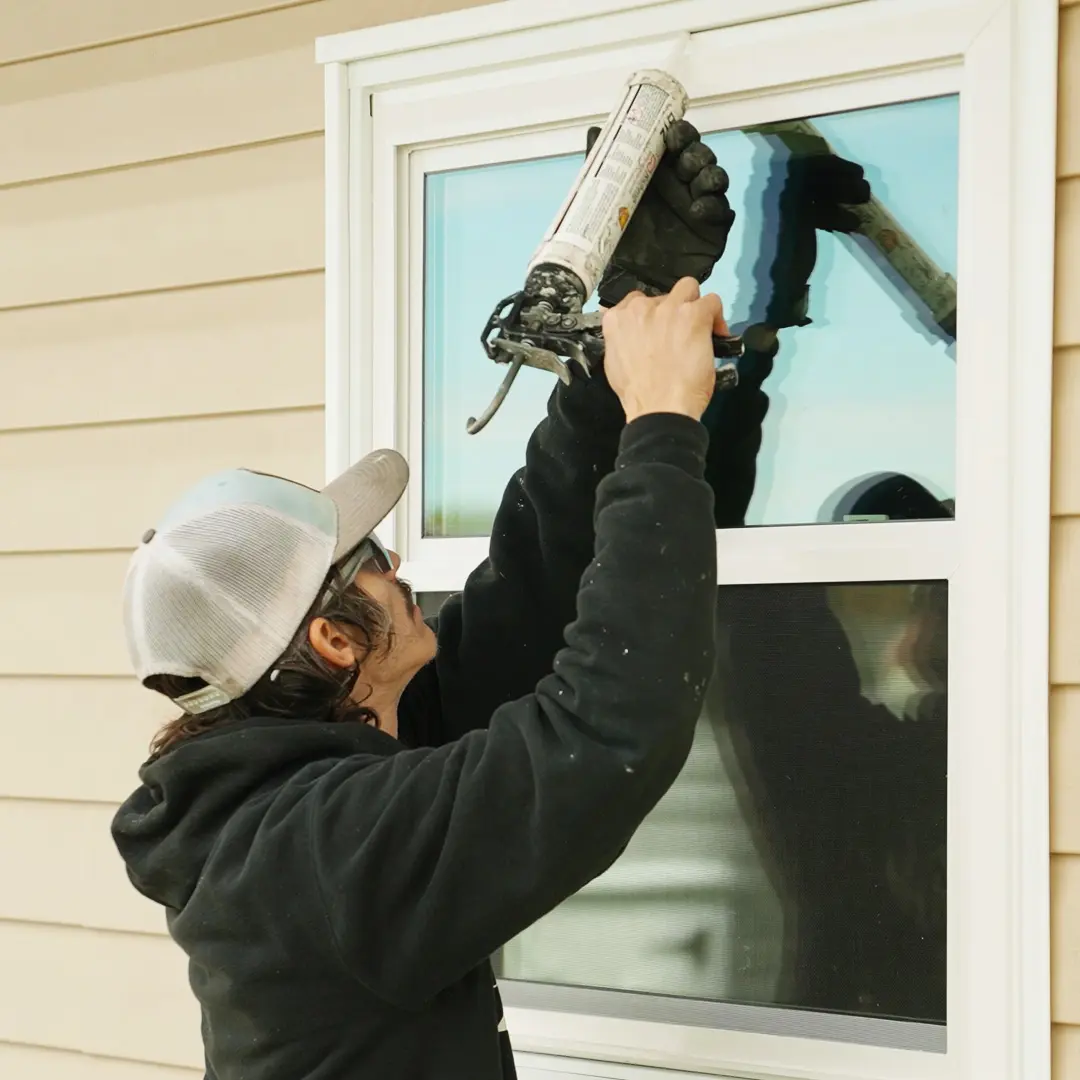
Professional Installation
Our licensed Washington State window installation crews work cleanly and efficiently. All interior surfaces are protected, old windows are removed and disposed of responsibly, and new units are installed with commercial-grade flashing, foam insulation, and weathertight caulk.

Final Inspection and Walkthrough
We review every installed window with you before we leave, demonstrate proper operation, and provide documentation of your product warranties.
Washington State's Two Climate Realities: Why a Window Company Near Me Needs to Specify Differently on Each Side of the Cascades
Washington State’s Cascade Range divides the state into two climate zones so different from each other that a window specification appropriate for a Seattle home in Zone 4C Marine can be meaningfully under-built for a Spokane home in Zone 5B continental. The U.S. Department of Energy attributes 25 to 30 percent of a home’s total heating and cooling energy consumption to windows, and in Washington that percentage carries very different dollar implications on each side of the mountains.
Western Washington’s Marine Zone 4C climate is defined not by temperature extremes but by persistent moisture. Seattle receives measurable precipitation on approximately 150 days per year and averages more than 37 inches of annual rainfall, though actual rain events are typically light and sustained rather than the heavy thunderstorm patterns of eastern states. This persistent moisture environment creates a window performance challenge that is primarily about material durability and weatherseal longevity rather than raw thermal resistance. Wood frames without proper exterior cladding absorb moisture through every annual wet season, cycling between swollen and contracted states that accelerate paint failure, wood rot, and weatherseal compression loss. The vinyl compound used in standard vinyl windows in marine environments is exposed to the UV cycling through the intermittent but intense Pacific sun between rain events, and substandard vinyl formulations degrade more quickly in the Puget Sound’s persistent moisture than in drier climates. Properly specifying western Washington windows means choosing frame materials with demonstrated moisture resistance, robust weatherseal systems, and UV-stabilized finishes that maintain their performance through the marine seasonal cycle.
Eastern Washington’s continental climate sits at the opposite performance extreme. Spokane, classified as IECC Climate Zone 5B, records January average lows below 20 degrees Fahrenheit, with overnight lows below zero occurring multiple times each winter. Yakima, the Tri-Cities of Richland, Kennewick, and Pasco, and the Columbia Basin communities experience hot summers with July highs consistently above 90 degrees Fahrenheit alongside cold dry winters where the absence of marine moisture means faster radiative cooling and harder temperature drops than the west side experiences. For Zone 5B eastern Washington homes, the window U-factor is the dominant performance variable: a U-factor of 0.25 or lower is the industry-recommended target for Spokane-area installations, and for communities in Zone 6B elevations, triple-pane units with U-factors of 0.17 to 0.20 deliver the highest available thermal resistance for the coldest eastern Washington winters. Replacing windows on a typical three-bedroom Washington home costs between $6,000 and $12,000 according to Angi’s market data, with eastern Washington projects often achieving faster payback periods due to the higher heating loads and higher natural gas rates that characterize the Spokane and Yakima markets.
Washington State Energy Code and ENERGY STAR Marine Zone: The Performance Standard Your Windows Must Meet
Washington State operates under the 2021 Washington State Energy Code (WSEC), which is the current statewide residential energy code standard and is widely recognized as one of the most energy-efficient building codes in the United States. The WSEC establishes fenestration requirements that vary by climate zone across the state’s geographic span, with Zone 4C Marine requirements applying to most of western Washington and Zone 5 or greater requirements applying to eastern Washington and higher-elevation communities.
The ENERGY STAR Marine Climate Zone certification standard requires replacement windows to achieve a maximum U-factor of 0.30 or lower and a maximum Solar Heat Gain Coefficient of 0.40 or lower for western Washington Zone 4C applications. The SHGC threshold of 0.40 or lower is notably more permissive than the North-Central Zone requirement because the Marine Zone’s lower solar intensity and heating-dominant climate benefit from passive solar heat gain through south-facing windows during the gray winter months. Puget Sound Energy’s window rebate program uses U-factor thresholds of 0.23 to 0.30 for Tier 1 rebates and 0.22 or lower for Tier 2 rebates, making those thresholds the financially relevant performance targets for PSE electric customers pursuing the maximum available rebate.
For eastern Washington Zone 5B applications, industry practice targets a U-factor of 0.25 or lower, with a more significant SHGC consideration for west- and south-facing openings in the basin communities where summer solar gain through poorly specified glass contributes meaningfully to cooling load during Yakima and Tri-Cities summers. For the highest-elevation eastern Washington communities in Zone 6B, triple-pane units with krypton gas fill and U-factors of 0.17 to 0.20 deliver the highest available thermal resistance and reduce the interior glass surface condensation that occurs on inadequately specified windows during eastern Washington’s coldest overnight periods.
Building permits are required for window installation in Washington State. Permit requirements and local code inspections vary by municipality and county. Virtual View Windows handles permit research and application as standard project scope in every Washington community we serve. All installed products carry current NFRC certification documenting U-factor, SHGC, Visible Transmittance, and Air Leakage ratings, and we provide the PSE rebate-required documentation including NFRC sticker preservation and itemized contractor invoices within the 60-day rebate application window.
Window Services Near You Across Washington State: Puget Sound, Eastern Washington, and the Mountain Communities
Virtual View Windows delivers professional window services near you across Washington State with the regional technical expertise that each side of the Cascades demands. Our statewide service model covers the full geographic range of Washington’s residential and commercial markets, from the dense urban neighborhoods of Seattle and Tacoma to the sprawling eastern Washington basin communities of Spokane and Yakima, with distinct product specifications for the marine west and continental east that reflect each region’s actual performance demands.
Full-Home Window Replacement for Western Washington
A full-home window replacement project in western Washington begins with a comprehensive opening-by-opening assessment focused on the marine climate’s specific damage mechanisms: wood frame rot, moisture infiltration behind failed head flashings, insulated glass unit seal failure accelerated by Puget Sound’s temperature cycling, and weatherseal compression loss in frames that have absorbed moisture through multiple wet seasons. Our project advisors document existing frame condition and existing window performance ratings against the Marine Zone ENERGY STAR standard, and develop a full project specification covering every window type in the home. For PSE electric customers, we identify every opening where U-factor 0.22 or lower specification qualifies for the PSE Tier 2 rebate at $100 per window up to $1,500 and preserve NFRC sticker documentation for the rebate application. For Snohomish County PUD customers, we document the existing window type (single-pane or double-pane metal frame) for each opening to calculate the rebate amount at the opening-level.
Eastern Washington Window Replacement: Spokane, Yakima, Tri-Cities, and Beyond
Eastern Washington window replacement demands a fundamentally different product specification from western Washington, and Virtual View Windows maintains the separate specification standard that each region requires. For Spokane, Spokane Valley, Liberty Lake, and Cheney properties in Zone 5B, our project advisors target U-factor 0.25 or lower as the performance baseline, with triple-pane U-factor 0.17 to 0.20 specifications recommended for homes with west- or north-facing exposures that experience the full cold radiative loss of eastern Washington’s coldest winter nights. For Avista Utilities customers, we provide documentation formatted for Avista energy efficiency program applications. For Pacific Power customers in the Yakima Valley and south-central Washington, we confirm current program rebate availability. For Grant PUD and Benton PUD service territory customers in the Columbia Basin, we research current window rebate amounts and application requirements at the time of each project estimate.
Historic and Craftsman Home Window Installation
Washington State’s historic residential neighborhoods hold some of the most architecturally significant early 20th century housing in the Pacific Northwest. Seattle’s Capitol Hill, Queen Anne, Ballard, and Madrona neighborhoods contain large concentrations of Craftsman bungalows, Arts and Crafts homes, and four-square farmhouses built between 1900 and 1930, where double-hung wood sash windows with true or simulated divided lights define the exterior character. Tacoma’s historic districts including Stadium District and North Slope, and Spokane’s South Hill and Rockwood neighborhoods, contain similar concentrations of historic residential properties where window replacement requires attention to exterior profile, sight line, and muntin pattern in addition to energy performance. For Seattle Landmarks Board-designated properties and for homes in Seattle designated historic districts, exterior alterations including window replacement are subject to design review. Virtual View Windows specifies window products appropriate for historic contexts and has experience navigating Seattle Landmarks and other Washington State historic preservation review processes.
Condominium, Multi-Unit, and HOA Window Projects
Washington State’s condominium and multi-unit residential market ranges from converted historic Seattle buildings to purpose-built high-rise towers in Bellevue and Redmond and sprawling HOA communities in Snohomish, Pierce, and Kitsap counties. Multi-unit window projects require coordination with condominium association boards for exterior modification approval, review of the governing documents for profile and color restrictions, and installation scheduling that accommodates occupied-building requirements. For large HOA-sponsored whole-building window replacement projects, Virtual View Windows provides phased installation plans with property manager communication protocols and project staging designed to minimize resident disruption. PSE rebates are available for single-family homes, townhomes, condos, and manufactured homes in PSE service territory, making multi-unit projects potentially eligible for per-window rebates on each qualifying unit.
Window Frame Materials for Washington State: Marine Climate Durability Meets Continental Cold Performance
Washington State’s two-region climate divide creates a frame material selection question that has meaningfully different answers on each side of the Cascades. Here is how the primary options compare, using each Washington region’s actual performance demands as the governing lens rather than generic claims.
Fiberglass and Composite Frames: The Premium Specification for Both Sides of Washington
Pultruded fiberglass window frames deliver the strongest long-term performance in both of Washington State’s primary climate regions, for different reasons in each. In western Washington’s marine environment, fiberglass outperforms vinyl in long-term moisture resistance, maintaining dimensional stability through the persistent moisture cycling of the Puget Sound’s wet seasons without the compression-fit loss that lower-grade vinyl develops as frames absorb and release ambient moisture over repeated annual cycles. Renewal by Andersen of Western Washington specifically highlights Fibrex composite material for its resistance to warping, swelling, and rotting in Pacific Northwest high-moisture environments. In eastern Washington’s continental climate, fiberglass handles the wide temperature range from Spokane’s below-zero winter nights to the Tri-Cities’ 100-plus-degree summer days better than vinyl, maintaining insulated glass unit seal integrity through temperature swings that cause cumulative stress damage in frames with higher thermal expansion coefficients. For Washington State homes at the premium specification level, fiberglass and fiberglass-core composite frames are the most defensible long-term investment on both sides of the state.
Multi-Chamber Vinyl: Western Washington's Most Widely Installed Frame
Fully welded multi-chamber vinyl is the most widely installed window frame material in western Washington and performs reliably in the Puget Sound marine environment when specified with the appropriate marine-grade formulation and construction standard. The critical specifications for Puget Sound applications are premium UV-stabilized vinyl compounds rated for marine moisture exposure, four-chamber or greater insulating profiles, and fully fusion-welded corners that eliminate the air infiltration failure points that develop in mechanically joined frames through repeated thermal and moisture cycling. Lake Washington Windows and Doors, one of the leading Pacific Northwest competitors, uses a proprietary installation method designed specifically for the PNW climate to manage water and moisture at every frame interface, and their Leak Armor lifetime installation guarantee reflects the market’s recognition that waterproof installation details are as important as the window specification itself in western Washington’s rain environment. For eastern Washington Zone 5B vinyl applications, cold-climate vinyl compounds with foam-enhanced frame cavities are the appropriate specification to achieve U-factor 0.25 or lower at an accessible price point.
Wood and Aluminum-Clad Frames: Historic Seattle, Tacoma, and Spokane Neighborhoods
Aluminum-clad wood-core and fiberglass-clad composite frames are the appropriate specification for Washington’s historic residential neighborhoods and for high-value residential properties where interior wood aesthetics are a design priority. In western Washington’s marine environment, unclad or inadequately cladded wood frames face the persistent moisture exposure challenge that makes them a maintenance liability over time. Aluminum-clad wood-core frames with sealed exterior assemblies and proper drainage details perform well in Pacific Northwest historic applications, maintaining the interior wood character required by historic preservation guidelines while protecting the wood core from the marine moisture that would compromise an unclad installation. For historic Capitol Hill, Queen Anne, Tacoma Stadium District, and Spokane South Hill homes where preservation review or HOA guidelines require period-appropriate exterior profiles, Virtual View Windows specifies and installs aluminum-clad and fiberglass-clad products documented to meet both historic character standards and ENERGY STAR Marine Zone energy performance requirements.
Thermally Broken Aluminum: Pacific Northwest Commercial and Architectural Residential
Thermally broken aluminum is the standard specification for Seattle’s active commercial construction and mixed-use development market, for contemporary architectural residential projects where maximum daylighting and slim sight lines are design priorities, and for the significant volume of new commercial and multifamily development concentrated in the Eastside technology corridor and Seattle’s South Lake Union, Capitol Hill, and First Hill neighborhoods. Standard aluminum without a thermal break does not meet the 2021 WSEC energy performance requirements for conditioned residential space in Zone 4C or Zone 5B. Marine-grade anodized aluminum with thermal breaks provides corrosion resistance appropriate for the Puget Sound’s marine atmosphere, which carries measurable salt and airborne moisture that affects exposed metal surfaces on buildings in the greater Sound basin. Virtual View Windows installs thermally broken aluminum commercial and architectural systems throughout Washington State’s major metropolitan markets.
Washington State Window Company Rebates and Incentive Programs: What Is Available in 2026
Washington State homeowners replacing windows in 2026 have access to some of the most accessible and well-structured utility rebate programs in the country. The combination of active PSE window rebates, Snohomish County PUD incentives, and multiple Columbia Basin utility programs creates a well-supported incentive landscape for qualifying projects, particularly in the Puget Sound and Snohomish County markets.
- Puget Sound Energy (PSE) Window Rebate Program: PSE offers cash rebates to residential electric customers for qualifying window replacements through December 31, 2026. The rebate tiers are: $50 per window for windows with a U-factor of 0.23 to 0.30, with a maximum of $750 per household; and $100 per window for windows with a U-factor of 0.22 or lower, with a maximum of $1,500 per household. Income-qualified PSE residential customers may be eligible for the Efficiency Boost program, offering up to $200 per window up to $2,000 maximum. To qualify, the property must be a single-family home, townhome, condo, or manufactured home primarily heated with electricity provided by PSE, or using a heat pump serving the majority of the main living area. If the home uses a dual-fuel hybrid system (heat pump with natural gas furnace), the home must be on PSE electric service. The rebate application must be submitted within 60 days of installation and must include the paid installation invoice with installer name, window sizes and types, and proof of U-factor rating from either a packing slip listing U-factors or the physical NFRC stickers from each installed window. Virtual View Windows preserves NFRC sticker documentation for every installed window and provides all required documentation to complete PSE rebate applications at project closeout.
- Snohomish County PUD (SnoPUD) Window Rebate: Snohomish County PUD offers window rebates for residential customers replacing qualifying windows. The program provides $100 per window for single-pane window replacements and $50 per window for double-pane metal frame window replacements with energy-efficient models. Eligibility and submission requirements should be confirmed at snopud.com before project installation, as program details are subject to change. Virtual View Windows documents existing window type (single-pane or metal-frame double-pane) at each opening during the pre-installation assessment to support SnoPUD rebate applications.
- Chelan County PUD: Chelan PUD has expanded its rebate incentives beginning in 2026 for qualifying window replacements in its service territory, which covers Chelan and Douglas counties in central Washington including Wenatchee, East Wenatchee, and the Wenatchee Valley. Contact Chelan PUD at chelanpud.org for current rebate amounts and eligibility requirements for your specific project.
- Grant PUD and Benton PUD: Grant PUD provides window replacement rebates based on window size for electrically heated homes in its Grant County service territory. Benton PUD and other Columbia Basin utilities including Cowlitz PUD, Franklin PUD, and Inland Power offer similar window rebate programs. Many Columbia Basin utility programs use similar qualifying standards and application processes. Contact your specific utility for current rebate amounts and submission requirements.
- Avista Utilities: Avista Utilities serves residential electric and natural gas customers in the Spokane metro, portions of eastern Washington, and northern Idaho. Avista offers energy efficiency programs for qualifying home improvements. Contact Avista at myavista.com or 1-800-227-9187 to confirm current window-specific rebate availability for your Spokane-area or eastern Washington project.
- Seattle City Light: Seattle City Light’s residential window rebate program is no longer available. Seattle City Light’s current residential rebate focus is on heat pump water heaters, heat pump HVAC systems, and smart thermostats. SCL does not currently offer a standalone window cash rebate for residential customers. This information is confirmed as of early 2026.
- Washington State HOMES and HEAR Programs: Washington State has been allocated IRA funding for the Home Efficiency Rebates (HOMES) and Home Electrification and Appliance Rebates (HEAR) programs. As of early 2026, these programs have not yet launched in Washington State. Homeowners interested in these programs should monitor the Washington State Department of Commerce website at commerce.wa.gov and subscribe to updates for official launch announcements. When launched, the HOMES program is expected to offer rebates for whole-home energy improvement projects where windows may qualify as part of a bundled project achieving a measured energy savings threshold.
- Washington State Weatherization Assistance Program (WAP): Income-eligible Washington State homeowners and renters may receive free weatherization services through the Washington State Department of Commerce WAP, administered through local Community Action Agencies. WAP services include window weatherization improvements for qualifying low-income households. Contact the Washington State Department of Commerce at commerce.wa.gov/growing-the-economy/energy/weatherization/ or your local Community Action Agency to determine eligibility.
Virtual View Windows documents installed window U-factor specifications for PSE and SnoPUD rebate applications, preserves NFRC sticker documentation for every installed unit, provides itemized contractor invoices formatted to meet rebate program requirements, and monitors Washington State HOMES and HEAR launch status for clients timing projects around those programs.
How to Verify a Window Company Near Me in Washington State: L&I Registration, Bonding, and Insurance
Washington State’s contractor registration framework is administered by the Washington State Department of Labor and Industries (L&I). The framework is straightforward and verifiable, making Washington one of the easier states for homeowners to confirm whether a window company near me is legally authorized to perform the work it is quoting. Understanding the requirements protects your project, your home, and your PSE rebate eligibility.
Before committing to any window company near me in Washington State, verify the following:
- Washington State L&I Contractor Registration: Any person or company advertising, offering, or performing construction, remodeling, or repair work in Washington State must register with L&I. Registration is required for any work valued over $500 in labor and materials. There are no exemptions for small residential projects. Window installation falls clearly within the scope requiring L&I registration. You can verify any Washington contractor’s registration status, bond status, insurance status, and whether there are any open complaints or violations at verify.lni.wa.gov at no cost. Every registered Washington contractor is required by state law to include their 12-digit L&I contractor registration number in all advertising, which includes websites, estimates, bid proposals, business cards, and any other marketing materials. If a window company’s website or estimate does not display an L&I registration number, that is a significant warning sign. Unregistered contractors have no right to file a mechanic’s lien if a client refuses to pay and face substantial state penalties.
- Surety Bond: General contractors must carry a $30,000 continuous surety bond (as of July 1, 2024). Specialty contractors must carry a $15,000 bond. The bond must be current and on file with L&I. Bond status is visible in the L&I contractor verification tool. The bond protects Washington consumers if a contractor fails to complete work or causes uncompensated property damage.
- General Liability Insurance: Washington requires registered contractors to carry general liability insurance with $200,000 public liability coverage and $50,000 property damage coverage, or a combined single limit of $250,000. L&I must be listed as the certificate holder on the insurance policy. Request a current certificate of insurance confirming L&I as the certificate holder and naming your property before any work begins. Insurance status is also visible in the L&I verification tool.
- Workers Compensation: Contractors with employees must comply with Washington State workers compensation requirements. Request confirmation of workers compensation coverage before any crew begins work at your property. This protects you from liability if a worker is injured on your property.
- PSE Contractor Alliance Network Membership: For PSE electric customers pursuing the PSE window rebate, confirm that the contractor understands and will satisfy the PSE rebate documentation requirements, including NFRC sticker preservation, itemized contractor invoice format, and the 60-day application submission deadline. PSE’s Contractor Alliance Network membership is a useful indicator that a contractor has experience with the PSE rebate process.
- NFRC Certification Documentation: Request NFRC product data sheets or label images for every window proposed. Confirm U-factor values before signing. For PSE Tier 2 rebates, confirm U-factor 0.22 or lower. For ENERGY STAR Marine Zone, confirm U-factor 0.30 or lower. Virtual View Windows provides NFRC documentation for every product in every estimate.
- Written Contract: Any professional Washington State window company should provide a complete written contract before any work begins, specifying the full scope, window specifications with NFRC ratings, price, payment schedule, start and completion dates, and manufacturer and workmanship warranty terms.
Virtual View Windows holds a current Washington State L&I contractor registration, maintains the required general contractor surety bond and general liability insurance with L&I as certificate holder, complies with workers compensation requirements, displays our L&I registration number in all advertising including this website, preserves NFRC window sticker documentation for PSE and SnoPUD rebate applications, and provides a complete written contract for every project before work begins. All credentials are available to clients before any commitment is made.
Frequently Asked Questions About Window Company Services in Washington State
How much does a window company charge for window replacement in Washington State?
Window replacement in Washington State typically costs between $6,000 and $12,000 for a full three-bedroom home, according to Angi’s market data. Individual window pricing varies from approximately $300 to $900 or more per window depending on size, type, frame material, and regional labor costs. Seattle and Eastside projects tend toward the higher end of the cost range. Eastern Washington markets including Spokane and Yakima generally offer more competitive pricing. Virtual View Windows provides free, itemized, no-obligation on-site estimates for every Washington State project.
What window rebates are available in Washington State in 2026?
Puget Sound Energy offers the most accessible active rebate: $50 per window for U-factor 0.23 to 0.30 (up to $750 maximum) and $100 per window for U-factor 0.22 or lower (up to $1,500 maximum), valid through December 31, 2026. PSE income-qualified customers may receive up to $200 per window. Snohomish PUD offers $100 per window for single-pane and $50 per window for metal-frame double-pane. Seattle City Light’s window rebate is no longer available. Washington HOMES and HEAR programs are not yet launched.
What ENERGY STAR climate zone is Washington State for window company specifications?
Western Washington is in the ENERGY STAR Marine Climate Zone, requiring windows with a U-factor of 0.30 or lower and SHGC of 0.40 or lower. The PSE Tier 2 rebate target is U-factor 0.22 or lower. Eastern Washington sits in Zone 5B continental (Spokane, Yakima), where industry practice recommends U-factor 0.25 or lower. High-elevation eastern WA communities approach Zone 6B, where triple-pane units with U-factor 0.17 to 0.20 are the recommended specification.
Does a Washington State window company need a contractor license?
Yes. All contractors in Washington State must register with the Department of Labor and Industries (L&I) for any work over $500 in labor and materials. General contractors must carry a $30,000 surety bond; specialty contractors carry $15,000. General liability insurance must list L&I as the certificate holder. Every contractor must display their L&I registration number in all advertising. Verify any Washington window company at verify.lni.wa.gov. Unregistered contractors have no lien rights in Washington.
How do I find a reliable window company near me in Washington State?
Verify L&I contractor registration at verify.lni.wa.gov and confirm the registration number appears in the company’s advertising. Check current bond and insurance status. For PSE customers, confirm NFRC sticker documentation capability and familiarity with the 60-day rebate application requirement. Request NFRC product data confirming U-factor values. Require a written contract before work starts. Virtual View Windows provides window services near you across Washington State with current L&I registration, bonding, insurance, NFRC documentation, and PSE and SnoPUD rebate support.
Washington State's Two Climates Deserve One Window Company That Knows Both. Connect with Virtual View Windows Today.

Get Your Free Estimate Today | Call or Request Online | Serving All of Washington State
Other Service Areas
- Boston MA
- Detroit MI
- Minneapolis MN
- Kansas City MI
- Springfield MI
- St Louis MI
Manchester NH
- Charlotte NC
- Greensboro NC
- Raleigh NC
- Cleveland OH
- Akron OH
- Dayton OH
- Columbus OH
- Cincinnati OH
- Oklahoma City OK
- Portland OR
- Philadelphia PA
- Pittsburgh PA
- Arlington TX
- Austin TX
- Houston TX
- Nashville TN
- Knoxville TN
- Salt Lake City UT
- St George UT
- Richmond VA
- Virginia Beach VA
- Madison WI
- Milwaukee WI